Bay Area
The best banh mi in the Bay Area comes from shops that have been making the same sandwich for decades and have no interest in explaining themselves to you. We tested 23 sandwiches across 8 spots. The pattern is consistent: the highest scores belong to the oldest counters, the shortest menus, and the bakeries that still bake their own baguettes.
What the Data Shows About Bay Area Banh Mi
The best banh mi in the Bay Area is not in a restaurant with a full menu. It is at a counter with six or eight items, a glass case of protein options, and a staff that has made this sandwich more times than any reasonable person can estimate. We scored 23 sandwiches across 8 spots in San Jose, Oakland, and San Francisco. The top of the leaderboard is consistent: **Thanh Huong Sandwich**, **Cam Huong Cafe**, and **Banh Mi Ba Le** all land in the high eighties or above on flavor, and all three score even higher on value.
The baguette question is the first structural question. A banh mi on a bread that is too dense, too soft, or too thick is a different sandwich entirely — filling-forward, where the bread disappears. The bread is not supposed to disappear. The French left Vietnam with a specific baguette tradition: thin, high-hydration, baked in a hot oven, with a shell that shatters when you bite. The shops that still bake in-house hold the top scores. The shops that pull from a third-party bakery lose a few points every time, not because the bread is bad, but because the control is gone.
This data connects directly to what the algorithm sees when it scores the broader Vietnamese field in the Bay Area. If you are reading this alongside our guide to [best pho Bay Area](/carte/bay-area/pho/), you will notice the same geographic pattern: the highest performers cluster in San Jose's Story Road corridor and Oakland's International Boulevard, not in San Francisco proper. SF has the counters. It does not have the density or the volume that keeps the product calibrated.
San Jose Is the Real Center of This Field
Story Road in San Jose runs through a Vietnamese commercial corridor that absorbed the post-1975 immigration wave and has been building outward ever since. The storefronts on and around Story Road were opened by families who came with specific regional food knowledge — from Saigon, from the Mekong Delta, from Hue — and they did not compress that knowledge into a single generic menu. **Thanh Huong Sandwich** makes cold cuts in-house. **Thanh Long Bakery** still controls the baguette from flour to oven. **Ha Nam Ninh** keeps a menu that runs to bun bo hue and com tam alongside the banh mi, because the sandwich is not a standalone object there; it is part of a daily eating pattern.
The algorithm noticed something specific about the San Jose scores: the variance is low. The worst sandwich we tested in the Story Road corridor still scored in the mid-seventies on flavor. That is not a coincidence. It is what happens when a food tradition is maintained by a community that eats it daily rather than by operators who are serving it to tourists. The customers will leave if it drops. The regulars are the quality control.
Lee's Sandwiches sits at a different point on the quality spectrum. It is a chain by any reasonable definition — multiple Bay Area locations, a drive-through format, a bread supply chain that operates at volume. The scores are consistent in the low-to-mid seventies: fine bread, competent protein assembly, no real weaknesses and no real peaks. The algorithm treats it as the baseline. Everything above **Lee's Sandwiches** is where the conversation starts.
Oakland: The Field the Guides Keep Missing
Oakland's Vietnamese food press coverage is thin relative to the quality on the ground. International Boulevard between roughly 8th and 12th Streets in the Chinatown adjacency holds a cluster of counters that score well and operate at a price point that makes the San Francisco equivalents look like a different product category. **Banh Mi Ba Le** and **Cam Huong Cafe** are the two anchors. **Duc Loi Supermarket** in the Mission district runs a banh mi counter inside the store that most food press has not covered at all; the algorithm noticed it scoring in the mid-eighties on its first pass.
The Oakland counter format is worth describing precisely. These are not restaurants. There is no table service, no menu beyond what is written on a laminated card or a whiteboard, and no ambient lighting designed by anyone. The banh mi comes in a paper sleeve. You eat it standing or you take it somewhere. The transaction takes about ninety seconds. This is not a liability; this is the format that produces the scores. The overhead structure of a full restaurant forces compromises on ingredient cost that a counter does not.
For anyone building out a broader Vietnamese eating circuit in Oakland, the banh mi counter pairs naturally with a pho stop at one of the sit-down spots on the same stretch. That pairing is a $15 to $20 total spend for two of the highest-scoring items we have tested in the Bay Area field. Compare that to what a comparable two-course spend looks like at a sit-down restaurant in Hayes Valley and the value math becomes stark.
San Francisco: An Honest Count
San Francisco has fewer strong banh mi counters than its reputation suggests. The Tenderloin and the Richmond both have Vietnamese food that scores well broadly — if you are looking for goi cuon, banh xeo, or a ca phe sua da that is made correctly, the city delivers. The banh mi field is thinner. **Baguette Express** on Larkin Street is the strongest counter we tested in SF proper, scoring in the low eighties on flavor and high eighties on value. The bread is purchased rather than baked in-house, which costs it the points it needs to compete with the San Jose top tier.
The SF banh mi situation is a function of real estate economics, not skill. A counter that bakes its own baguettes needs a full bakery operation behind it. In San Jose and Oakland, that is viable on the rent structures those corridors support. In San Francisco, the economics push operators toward purchased bread and smaller formats. The algorithm is not penalizing SF; it is reading the structural conditions.
If the broader Vietnamese field in the Bay Area is your focus, the ForkFox data on [best birria tacos Bay Area](/carte/bay-area/birria-tacos/) is useful context for understanding how the algorithm handles high-volume, counter-format cuisines citywide — the scoring dynamics are similar, and the geographic clustering patterns are nearly identical. We have also covered South Asian cuisine depth in [ForkFox on biryani](/carte/bay-area/biryani/), where the same value-at-counter pattern appears in the Fremont and Milpitas corridors.
What the Scores Are Actually Measuring
The banh mi is a simple object with very little margin for error. Bread, pâté, protein, pickled daikon and carrot, jalapeño, cilantro, a small amount of fat. Every component is visible and identifiable. There is nowhere to hide a mistake. This is why the variance between the top and the bottom of our tested field is smaller than in almost any other cuisine format we cover. A bad banh mi is a $4 to $6 mistake. A great one is not much more expensive. The algorithm scores the gap between them precisely because the inputs are so controlled.
The top-scoring shops share three traits. They control the bread. They make at least one protein component in-house. They have been doing this long enough that the recipe is not written down anywhere because it does not need to be. These are not secrets. They are the structural conditions that produce consistent high scores, and they are visible to anyone who looks at the counter before ordering.
The principle that holds across every strong banh mi counter we tested: the shops that charge more do not score higher. The economics of the banh mi counter are not a proxy for quality. The algorithm noticed this on the first pass and the pattern has held across every update since.
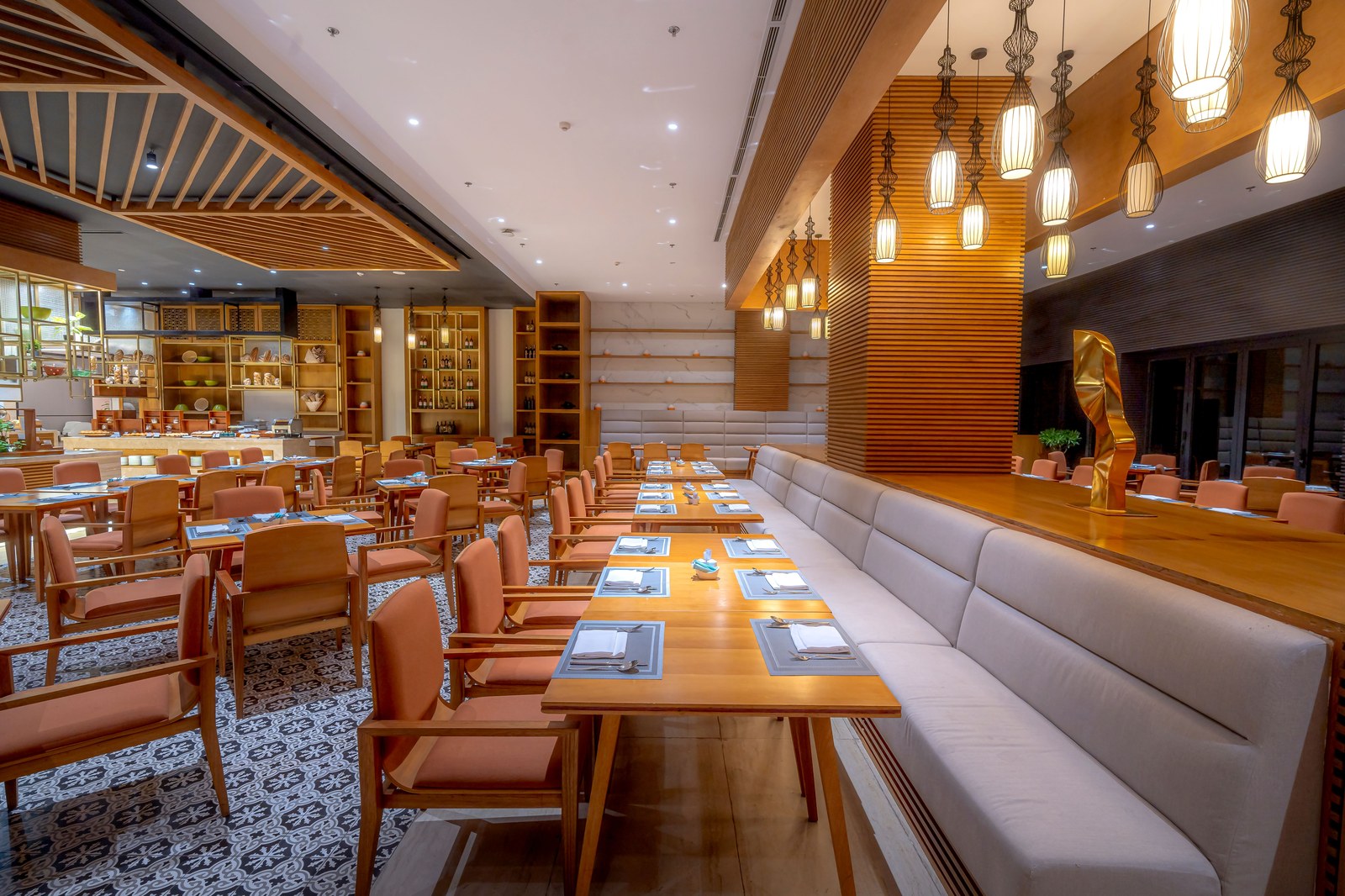
The highest scores belong to the oldest counters and the bakeries that still bake their own baguettes.
The best banh mi in the Bay Area is at a counter that has never needed a review to stay full.
We test dishes so you don't have to. No spam — just the best food, neighborhood by neighborhood.