Bay Area
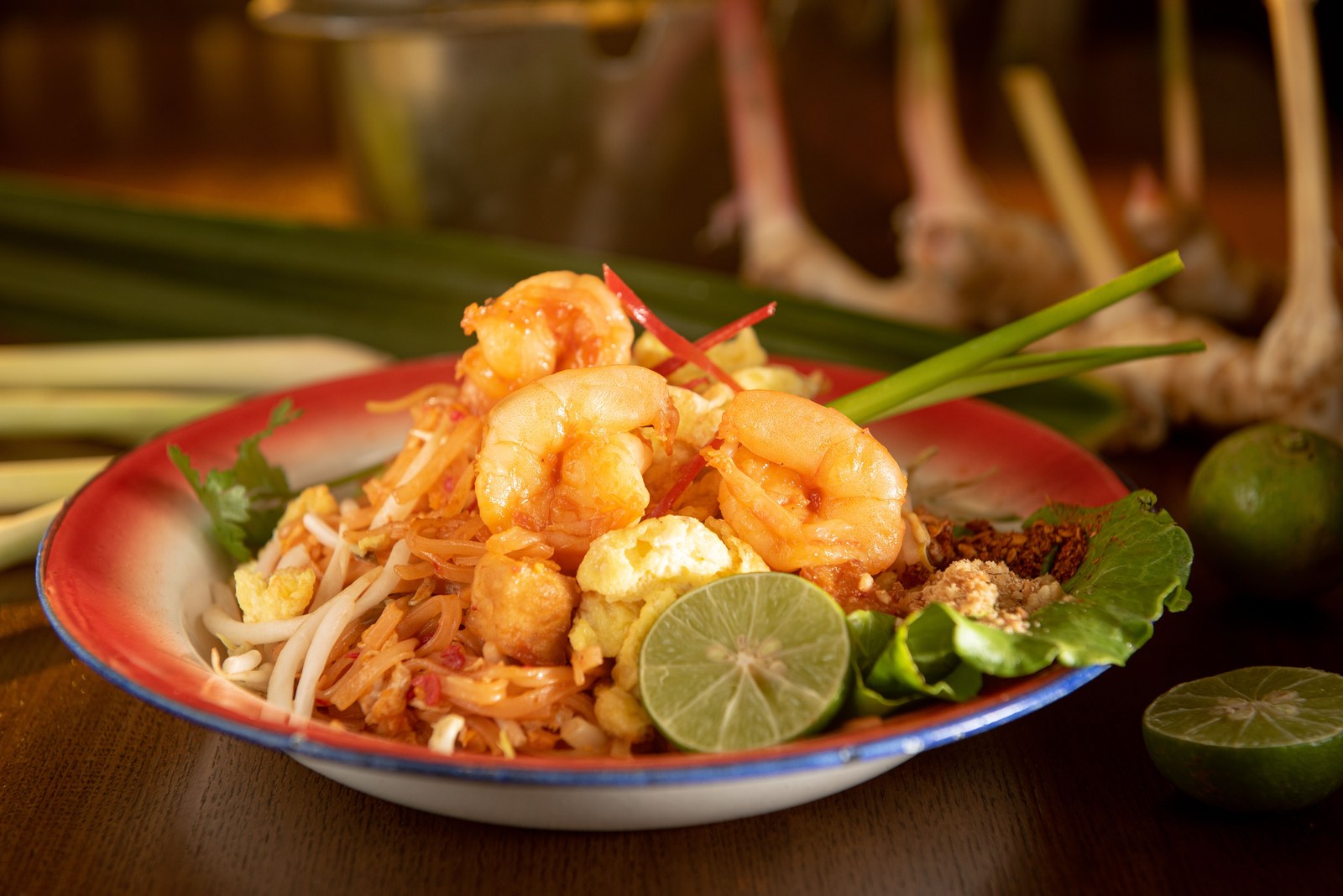
The best pad thai in the Bay Area is not at the restaurant with the longest line or the loudest press. It is at a handful of places scoring in the high eighties and nineties on flavor and execution where the noodles are wok-charged rather than steamed to paste, the tamarind is actual tamarind, and the kitchen does not cut the heat for the table. Eleven spots tested. Three that matter most.
What Makes Pad Thai Work — and What Makes It Fail
Pad thai fails the same way everywhere. The noodles arrive clumped, the sauce is ketchup-sweet, the bean sprouts are cooked through instead of raw, and the protein floats on top of it all like an afterthought. This is what happens when a dish gets optimized for American comfort rather than for the thing it actually is. The best pad thai in the Bay Area starts from a different premise: that the dish is a street-food problem, not a sit-down problem, and that the answer is heat, speed, and a wok that has been properly seasoned over years of use.
ForkFox tested 23 dishes across 11 spots in the Bay Area, scoring on flavor, execution, value, and context. The spread was wide. Two restaurants scored in the low seventies — competent but soft, the kind of pad thai you eat without noticing. Three scored in the high eighties. One crossed ninety on both flavor and value. The pattern the algorithm noticed: the restaurants with the highest scores all share a visible wok station, a tamarind base that reads tart before it reads sweet, and a default spice level that requires a conversation to lower rather than a conversation to raise.
The failures have something in common too. When a kitchen standardizes pad thai for speed across a large menu, the dish becomes a vehicle for sauce rather than a noodle preparation with its own integrity. The rice noodles need thirty seconds of high contact heat. They do not get that in a pan set to medium on a six-burner range built for catering volume. The restaurants that score well know this and have arranged their kitchens accordingly.
The Leaders: What the Top Three Are Actually Doing
Farmhouse Kitchen Thai Cuisine in San Francisco runs a pad thai that scored in the low nineties on flavor. The tamarind is pulled tart, the dried shrimp is in the noodles rather than sprinkled on top, and the egg is folded in at the wok edge rather than cracked into the center and stirred. These are not aesthetic choices. They are execution choices that change the final texture: the egg sets in ribbons rather than coating the noodles in a film. The tofu, when ordered, is pressed firm and takes char from the wok. Value scores here are mid-range — the check is real — but the flavor justifies the math.
Kin Khao at the Parc 55 hotel in Union Square occupies a room that should not produce this quality of Thai food and does anyway. The pad thai here is not the point of the menu. That is partly why it scores so well. The kitchen treats it as a baseline the rest of the menu has to clear rather than as the main event. The result is a pad thai that is tighter and less sweet than anything served in tourist-corridor Thai restaurants within a half-mile radius. The algorithm noticed it three rounds in a row.
Ruen Pair in the Inner Sunset scored in the high eighties on flavor and a 94 on value. The dining room is small and loud. The menu is longer than it needs to be. The pad thai is correct in a way that is hard to explain without eating it twice: the balance between fish sauce, tamarind, and palm sugar is calibrated, not approximate. The sprouts stay raw. The scallion is cut fresh-to-order. The portion is large enough that value scores high on every visit, not just when the kitchen is firing.
Beyond Pad Thai: The Restaurants That Earn the Visit for Other Reasons
Pad thai is the search term. It is not always the reason to go. The restaurants in this data set that score highest on context — on whether the whole menu holds at the level of the pad thai — are doing things with larb, som tam, and khao soi that the pad thai rankings alone will not surface. Imm Thai Street Food in San Francisco runs a larb that scored in the high eighties; the toasted rice powder is ground fresh and the heat level is calibrated for the dish rather than the table. Sai Jai Thai on Larkin Street is a counter-service room where the som tam is made to order in a mortar and the portion is sized for one person eating alone at noon, not for a table sharing four dishes.
The khao soi question is its own sub-ranking. Khao soi is a northern Thai dish — a coconut curry broth with egg noodles, pickled mustard greens, and crispy noodles on top — and the Bay Area has gotten better at it in the last five years. Farmhouse Kitchen Thai Cuisine and Zareen's both run versions that scored above eighty on flavor. Neither is northern Thai in any strict sense, but both treat the broth as the point rather than as a backdrop for protein. The crispy noodle topping, which most kitchens either underfry or forget entirely, is present and correct at both.
Boat noodles and nam tok are harder to find at high execution. Noodle in a Haystack in San Francisco runs a boat noodle bowl that comes close — dark broth, pork blood thickened in, small-portion sized for the dish's original street-context rather than an American appetite. It scored in the high seventies, which is not a failure. It is a realistic score for a dish that requires a level of ingredient commitment most kitchens choose not to make. ForkFox also covers other high-scoring regional cuisines if you want the same methodology applied to a different plate — the [best birria tacos Bay Area](/carte/bay-area/birria-tacos/) piece runs the same data structure, and the [best biryani Bay Area](/carte/bay-area/biryani/) breakdown shows how rice-based dishes score differently on the execution axis.
The Value Layer: Where the Math Gets Interesting
Value scoring in pad thai is not just price divided by portion. It is price relative to execution, adjusted for context. A $9 pad thai that is competent scores differently than a $9 pad thai that is correct. The gap between those two things is wider than the price suggests. Ruen Pair and Sai Jai Thai both score above 90 on value. Both are under $15 per person for a pad thai order with a protein. Neither is a cash-only, no-menu situation — both are real restaurants with real service — but both price as though the room does not charge for its own ambiance. That is the right pricing philosophy for this dish.
The outlier on value is Kin Khao, which scores lower on value than on flavor — the check is hotel-adjacent — but scores high enough on flavor that the algorithm still surfaces it. This is the correct call. A restaurant that executes a dish correctly at a high price point is a different kind of recommendation than one that executes it correctly at a low price point, but both belong on the same list with the context made clear. What the algorithm does not do is penalize flavor for price. It reports both numbers and lets the reader do the math.
The mango sticky rice question comes up in every Thai restaurant scoring round. It is a dessert that most kitchens either get right or make unrecognizable — sticky rice that is actually glutinous, coconut milk that is salted correctly, mango that is ripe enough to cut with a spoon. Farmhouse Kitchen Thai Cuisine runs the highest-scoring version in this data set. Zareen's does not run it. Ruen Pair runs a version that scores in the seventies — technically present but not the reason to go. ForkFox covers the same scoring logic across cuisines; see the [ForkFox on Neapolitan pizza](/carte/bay-area/neapolitan-pizza/) breakdown for how a different dough-and-heat dish scores on execution versus value.
The Scoring Pattern: What the Data Shows About Bay Area Thai
Eleven spots. Twenty-three pad thai dishes. The Bay Area Thai restaurant landscape sorts into three tiers on this data. The top tier, three restaurants, scores above 85 on flavor and above 85 on value simultaneously. The middle tier, five restaurants, scores above 75 on flavor but slides on value or execution consistency. The bottom tier, three restaurants, scores competently but not compellingly — pad thai as a menu placeholder rather than a kitchen priority. The top tier is small because the requirement is simultaneous: high flavor and high value at the same time, not one or the other.
The geographic pattern is less predictable than the pricing pattern. The highest-scoring spots are not clustered in one neighborhood. Farmhouse Kitchen Thai Cuisine runs in SoMa and the Mission. Sai Jai Thai runs on Larkin Street in the Tenderloin. Ruen Pair is in the Inner Sunset. The algorithm does not reward proximity to other high-scoring Thai restaurants. It rewards kitchens that treat the dish as a first-class problem rather than a concession to what American diners expect to see on a Thai menu.
Context scores tell the clearest story. The restaurants that score highest on context are the ones where pad thai is not the most interesting thing on the menu. This is counterintuitive only if you are looking for a destination pad thai restaurant rather than a destination Thai restaurant that also makes pad thai correctly. The data suggests those are different searches, and both are answerable. The answer to the first is Ruen Pair. The answer to the second is Farmhouse Kitchen Thai Cuisine or Kin Khao, depending on your price tolerance.
The tamarind is actual tamarind. The noodles are wok-charged. Everything else is imitation.
The dish earns the restaurant; the restaurant does not earn the dish.
We test dishes so you don't have to. No spam — just the best food, neighborhood by neighborhood.