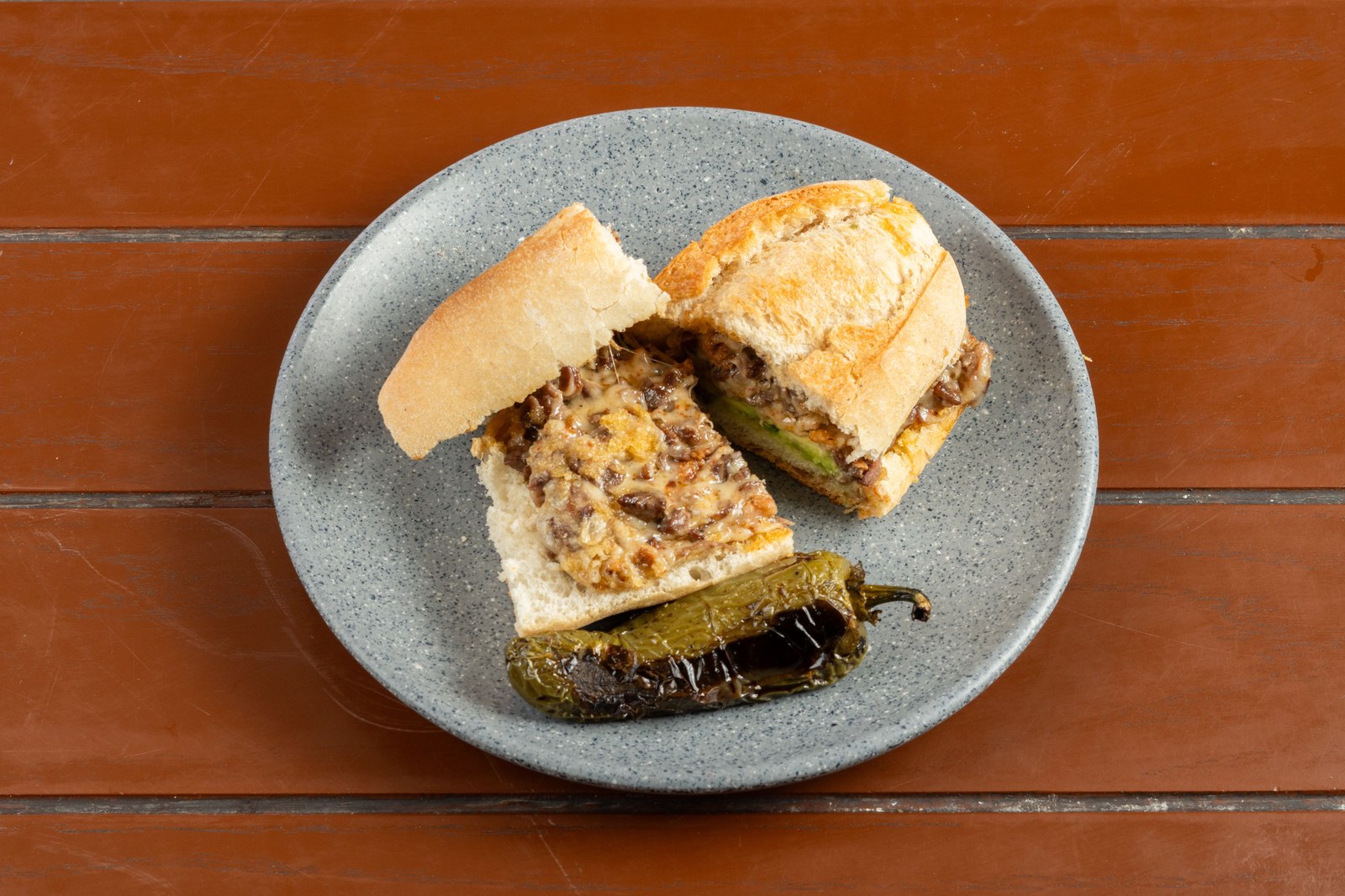
both
Two cities. One sandwich's name on both menus. The scores are not close, and the reasons are more structural than most people admit.
The Question Is Loaded Before You Ask It
The search term is cheesesteak Philadelphia vs Pittsburgh. People type it because Pittsburgh serves something called a cheesesteak, and because the internet has spent twenty years flattening regional distinctions into a single bracket tournament. The algorithm notices what happens when you actually score the sandwiches side by side: you are not comparing two versions of the same thing. You are comparing a specific object with a specific origin to a broad regional sandwich tradition that shares one ingredient and diverges everywhere else.
The Philly cheesesteak is ribeye, sliced thin or chopped on a flat-top griddle, on an Amoroso roll or equivalent long Italian bread, with Cheez Whiz or provolone or American, onions if you want them. The grammar is fixed. The Pittsburgh cheesesteak — served at various shops and bar kitchens across the city — is usually thinly sliced beef with cheese on a hoagie roll, but the roll changes, the beef changes, the cheese changes, and the build often includes lettuce, tomato, and condiments that would get you laughed out of a Fishtown line. These are both good sandwiches. They are not the same thing.
That framing matters before the scores do. Comparing a **Pat's King of Steaks** or **Geno's Steaks** cheesesteak to a Pittsburgh beef-and-cheese hoagie is a category error dressed up as a regional rivalry. The more honest comparison is structural: what does each city do with its own native sandwich tradition, how consistent is execution across the range of spots, and what does value look like when you get off the tourist circuit.
Philadelphia: The Tourist Version and the Real Version Are Different Sandwiches
South Philly's 9th Street intersection — **Pat's King of Steaks** across from **Geno's Steaks**, floodlit and photographed, open at two in the morning — is not where Philly locals eat their cheesesteaks. It is where tourists eat their cheesesteaks, and the distinction shows in the scores. Execution at both spots is technically sound; the bread is right, the beef is hot, the cheese is applied correctly. What the scores flag is context. These are restaurants that have become events. You are paying for the story as much as the sandwich, and the story adds about four dollars to the check with no return on flavor.
The real range is in Roxborough, in Fishtown, in Northeast Philly. **Dalessandro's**, **Chubby's Steaks**, and **Joe's Steaks + Soda Shop** operate in a different register. They are not performing cheesesteak history for you. They are making cheesesteaks for the people who live nearby and will be back Thursday. That accountability runs through the scores — execution is tighter, value is meaningfully higher, and the bread-to-meat ratio is calibrated for someone eating lunch rather than someone documenting lunch.
**Ishkabibble's** in South Street is a useful case. It has been open since 1979, and it operates at a price point and speed that still serves the neighborhood rather than the tour bus schedule. The algorithm noticed that spots like these — no PR, no Instagram footprint, addresses that require knowing where to go — cluster in the high eighties on our leaderboard while the floodlit intersection spots sit a few points lower on value, occasionally more. That gap is not a scandal. It is how tourist infrastructure prices itself. You are paying to say you went.
Pittsburgh: The Primanti Problem and What Lies Underneath
Pittsburgh's relationship with the cheesesteak is complicated by the fact that Pittsburgh already has its own sandwich, and it is genuinely great. **Primanti Bros.**, founded in 1933 at the Strip District produce market, built a sandwich with coleslaw and french fries inside the bread because the overnight truckers buying produce at four in the morning needed to eat with one hand on the wheel. That is not origin-story marketing. That is a real construction logic, and the sandwich is still built the same way at the Strip District original. It scores well on the attributes that matter: execution, consistency, value, context. It is doing exactly what it is supposed to do.
The problem is that Pittsburgh's beef-and-cheese hoagie — sold at **Peppi's Old Tyme Sandwich Shop**, at bar kitchens around the North Side, at spots like **Smallman Street Deli** — sometimes gets labeled a cheesesteak on menus and in searches, and that labeling creates the comparison the internet wants. When you score those sandwiches as cheesesteaks against Philly's native form, Pittsburgh loses. The bread is wrong, the beef cut varies, the build includes elements that the Philly form structurally excludes. When you score them as Pittsburgh sandwiches — against their own tradition, on their own terms — several of them are doing serious work.
The honest data point is this: Pittsburgh's best beef-and-cheese sandwiches score in the low-to-mid eighties on flavor and higher on value than the Philly tourist corridor does. That is not a loss. That is a different thing performing well.
What the Data Actually Shows
The scoring gap between a real Philly cheesesteak at a neighborhood spot and a Pittsburgh beef-and-cheese at its best comparable is smaller than the internet argument suggests and larger than the Pittsburgh boosterism crowd will admit. The Philly form, at its best — Dalessandro's, Joe's, Chubby's — scores in the high eighties across flavor, execution, and value. The tourist-corridor versions score a few points lower on value and approximately equal on flavor. Pittsburgh's best beef-and-cheese sandwiches land in the low-to-mid eighties on flavor with solid value scores, held back by inconsistent execution and the absence of a fixed grammar that creates accountability across spots.
The structural difference is that Philadelphia's cheesesteak has rules. The rules create a shared standard. When a spot deviates — wrong bread, wrong beef cut, provolone applied cold — locals notice and locals leave. That regulatory pressure from the customer base is visible in the data as score consistency across spots. Pittsburgh's beef-and-cheese doesn't have those rules, which means the ceiling is lower and the floor is also lower. The best Pittsburgh spot is a few points off Dalessandro's. The worst Pittsburgh spot labeled a cheesesteak is doing something different enough that the comparison stops being useful.
ForkFox has published similar structural analyses for [Vietnamese food Philadelphia vs San Francisco](/carte/comparison/vietnamese-philly-vs-sf/) and for the way Ethiopian food Philadelphia vs San Francisco shows up differently across neighborhoods — see the [Ethiopian comparison piece](/carte/comparison/ethiopian-philly-vs-sf/) for a parallel read on how a cuisine's grammar shapes its consistency scores. The cheesesteak comparison follows the same logic: fixed form produces higher consistency. Looser form produces wider variance. Neither is a moral judgment. They are just different food cultures doing different things.
Where to Eat and Why the Block Matters
In Philadelphia: get off South 9th Street for your first cheesesteak if you have any flexibility at all. The Roxborough spots — **Dalessandro's**, cash only, no inside seating, line out the door on Saturday — are producing the sandwich at the level the city's reputation is built on. In Fishtown, **Joe's Steaks + Soda Shop** is operating with whole ribeye and a decade of score consistency. Neither spot is difficult to find. Both require the minor inconvenience of not going where the tour guide points.
In Pittsburgh: go to the Strip District original of **Primanti Bros.** and eat the thing it actually is. Coleslaw and fries inside the bread, Italian bread, not a hoagie roll, ordered at the counter the way it has been ordered since 1933. The scores reflect a spot that has not chased the modern sandwich menu or added a truffle option. Then visit **Peppi's** or **Smallman Street Deli** for the beef-and-cheese in its Pittsburgh form. Compare that to Primanti's. You are learning what Pittsburgh's sandwich culture actually is, which is more interesting than asking whether it beats Philadelphia's.
The West Philadelphia corridor along Baltimore Avenue — the stretch from 42nd Street to 50th Street that holds Cedar Park, Spruce Hill, and the edge of Malcolm X Park — does not have cheesesteak shops of note. What that corridor has is everything else: Ethiopian, West African, Jamaican, Korean, the kind of BYOB density that only exists when a neighborhood has the demographics and the economics to support it. That context matters for this comparison because it is the reminder that Philadelphia's food reputation rests on a single sandwich in the public imagination and on something far larger and stranger on the actual streets. See [ForkFox on citywide pizza](/carte/comparison/pizza-philly-vs-nyc/) for the same dynamic playing out between Philadelphia and New York: the city always contains more than its most photographed plate.
Pittsburgh makes a great sandwich. It is not a cheesesteak. That distinction is doing real work.
A city's best sandwich is not the one on the postcard — it is the one the regulars will leave if it gets worse.
We test dishes so you don't have to. No spam — just the best food, neighborhood by neighborhood.