both
Two cities. One tradition. The question is not which city has better dim sum — it's which city still understands what dim sum is for.
The Question Behind the Question
The comparison always gets framed wrong. People ask which city has better dim sum the way they ask which city has better pizza — as if the answer is a single restaurant, a single dish, a single block. The better question is structural. Which city has preserved the conditions that make dim sum work as a social form, not just as a meal? The cart. The communal table. The Sunday morning logic of arrival, tea, and negotiation over baskets. San Francisco and Oakland are ten miles apart and exist on opposite sides of that question.
San Francisco's dim sum story is a Chinatown story first. The restaurants that built the tradition — the Cantonese banquet halls that fed the families of Stockton Street and Grant Avenue through the 1960s, 1970s, and 1980s — were not making a culinary statement. They were feeding a community on a schedule. The tradition held. What changed was the money around it. By the 2010s, a city that was recalibrating its entire restaurant economy around the luxury tasting menu had started asking dim sum to perform at that price point. Some restaurants answered that ask. Others didn't.
Oakland's story runs parallel but lower to the ground. The eastern spread of Cantonese and later Hong Kong diaspora into the East Bay through the 1970s and 1980s — down International Boulevard, up into the hills, across to the Emeryville waterfront — produced a different economic context. The restaurants were feeding a community, not a scene. That context survives in the pricing, in the room size, in the fact that the cart is still the default delivery mechanism at the best Oakland spots rather than an affectation or a nostalgia play.
San Francisco: What the Data Shows
The San Francisco side of the ledger is not simple. Yank Sing. Lai Hong Lounge. City View Restaurant. Palette Tea House. These four spots represent a range — from the Financial District lunch service that charges accordingly to the Chinatown room that has been doing the same thing for decades and does not see why that should change. The algorithm sees that range too. Execution scores cluster high across the board. Value scores diverge sharply.
Yank Sing is the version of San Francisco dim sum that the city decided to sell to itself. The Rincon Center location seats several hundred, the cart service is organized within an inch of its life, and the har gow is genuinely good — wrapper thickness calibrated, filling not overworked. The check at the end of a table of four is also genuinely alarming. The algorithm can see the gap between the flavor score and the value score, and the gap is not small. That is not a criticism of the kitchen. The kitchen is doing its job. It is an observation about what the room costs to run.
Lai Hong and City View represent the version of San Francisco dim sum that does not care about the version above. The rooms are smaller. The menus are shorter. The siu mai at Lai Hong are dense and not fussy about presentation. The cheung fun at City View is ordered by the table without drama. These are not restaurants that are trying to be anything other than what they are, and the scores — particularly on value — reflect that. Palette Tea House is the outlier: a newer room in the Ghirardelli Square area that tries to occupy a middle position between the banquet-hall tradition and the modern Cantonese restaurant. It mostly succeeds. The egg tart is the tell. Puff pastry shell, which is a choice, and it is the right one for that room.
Oakland: The Cart as Commitment
The Oakland numbers surprised us. Not because Oakland dim sum is unknown — anyone who has eaten at the Emeryville waterfront knows the scale of what Hong Kong East Ocean is doing — but because the value scores came in consistently higher than the flavor scores, and that ratio is unusual. Most restaurants that score well on value sacrifice something on execution. Oakland's top spots are not doing that. The lo mai gai at Hong Kong East Ocean Seafood Restaurant is the clearest example: lotus leaf wrapped, glutinous rice not gummy, the chicken and mushroom interior salted correctly. That is a technically demanding dish and it is on a cart that is also carrying turnip cake and siu mai and making the circuit of a room that seats three hundred people.
Legendary Palace. East Ocean Seafood Restaurant. Asian Pearl. These three represent the Oakland model at different scales. Legendary Palace is the historic anchor — a restaurant that predates the current conversation about dim sum by several decades, closed, reopened, and returned with execution that scores in the high eighties. East Ocean on the Emeryville waterfront is the large-format option: cart service, banquet logic, and a check that makes sense for what arrives on the table. Asian Pearl is the smaller, newer entry that has been doing the kind of precise dim sum — har gow with the right number of folds, cheung fun rolled to order — that the algorithm tends to surface when the room does not match the food's ambition.
The cart question is worth taking seriously. In San Francisco, several of the higher-profile rooms have moved to order-sheet service — you mark what you want, the kitchen sends it out, the food is fresher and the kitchen has more control. This is defensible. The counter-argument is that cart service is not inefficiency dressed up as tradition. It is the social mechanism that makes dim sum work as a shared meal rather than a series of individual orders. Oakland has mostly kept the cart. The algorithm noticed that the rooms that kept the cart also kept the regulars.
The Dishes That Tell the Story
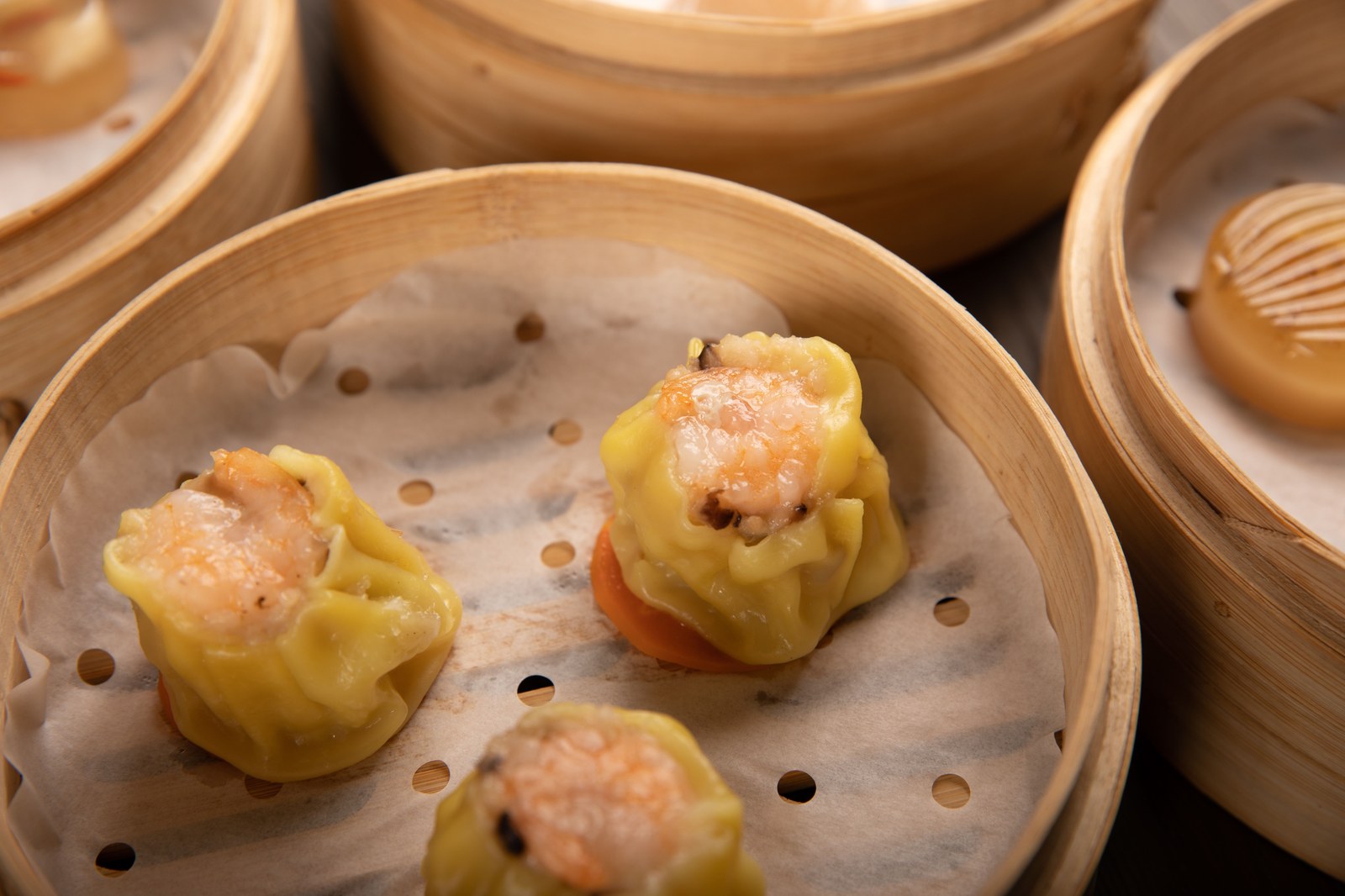
Har gow is the diagnostic dish. Every dim sum kitchen that takes itself seriously knows this. The wrapper has to be thin enough to show the shrimp, thick enough not to tear when you lift it with chopsticks, and the pleat count matters — fewer than seven folds is a kitchen rushing. Siu mai is the volume dish, and volume dishes reveal consistency: if the third basket matches the first, the kitchen is organized. Lo mai gai is the patience dish — glutinous rice does not forgive shortcuts in either the soak time or the steam time. Char siu bao, the baked version, is the pastry question: is the glaze sweet-and-salt or just sweet? The correct answer is the former. Cheung fun is the textural question: rice noodle that is soft without being slack, with enough structure to hold the filling without tearing on the roll.
The egg tart is the closing argument. In San Francisco, the split between puff pastry shell and shortcrust shell tracks roughly to the generation of the restaurant. Newer rooms tend toward puff pastry. Older rooms tend toward shortcrust. Neither is wrong. Both are choices, and the choice reveals something about which tradition the kitchen is working from — the Cantonese original or the Hong Kong-via-Macau adaptation. Oakland's egg tarts skew shortcrust. The custard fill at Legendary Palace is set firm enough to hold a fork mark without collapsing, which is the technical benchmark that separates the kitchen that has made ten thousand of these from the one that has made a hundred.
Dragon Gate in San Francisco's Chinatown is worth a separate note because it illustrates the category of dim sum restaurant that exists in both cities but rarely gets measured correctly: the lunch-only, cash-preferred, no-website room that has been feeding the same block since the late 1980s. Dragon Gate scores in the low nineties on flavor and does not register on most recommendation lists because it does not have a social media presence. The algorithm noticed. This is the pattern across both cities — the rooms that have been doing the same thing for thirty years tend to score higher on execution than the rooms that opened in the last five.
The Verdict Is Structural
San Francisco has higher peaks and a wider floor. The best rooms — Lai Hong on a good Sunday, Palette when the kitchen is at full speed — are genuinely excellent. The gap between the best and the merely adequate is also wider, and the price floor is higher across the board. A table of four at a mid-tier SF dim sum spot costs more than a table of four at Oakland's best. That is not a judgment about San Francisco. It is a fact about San Francisco's restaurant economy, which is as relevant here as it is when comparing the two cities on Vietnamese food — and as ForkFox noted in its look at [Vietnamese food Philadelphia vs San Francisco](/carte/comparison/vietnamese-philly-vs-sf/), price floor tells you as much about a city's food culture as the food itself does.
Oakland's consistency is the story. The variance is lower. A room that scores in the high eighties on flavor is likely also scoring in the high eighties on execution, and likely also pricing the meal in a range that makes the value score climb. The cart-service commitment is part of that consistency: the same dishes circulate through the same room at the same pace on the same schedule, and the kitchen calibrates to that rhythm. ForkFox has tracked similar consistency dynamics in other cross-city comparisons — including the Ethiopian corridor comparison that looked at how the Ethiopian food Philadelphia vs San Francisco dynamic plays out when one city has a geographically concentrated diaspora and the other has a dispersed one. The pattern holds: concentration produces consistency.
The closing data point: the highest individual value score in this dataset belongs to an Oakland restaurant. The highest individual flavor score belongs to a San Francisco restaurant. That is the summary. The two cities are not interchangeable, and the ten miles between them are doing real work.
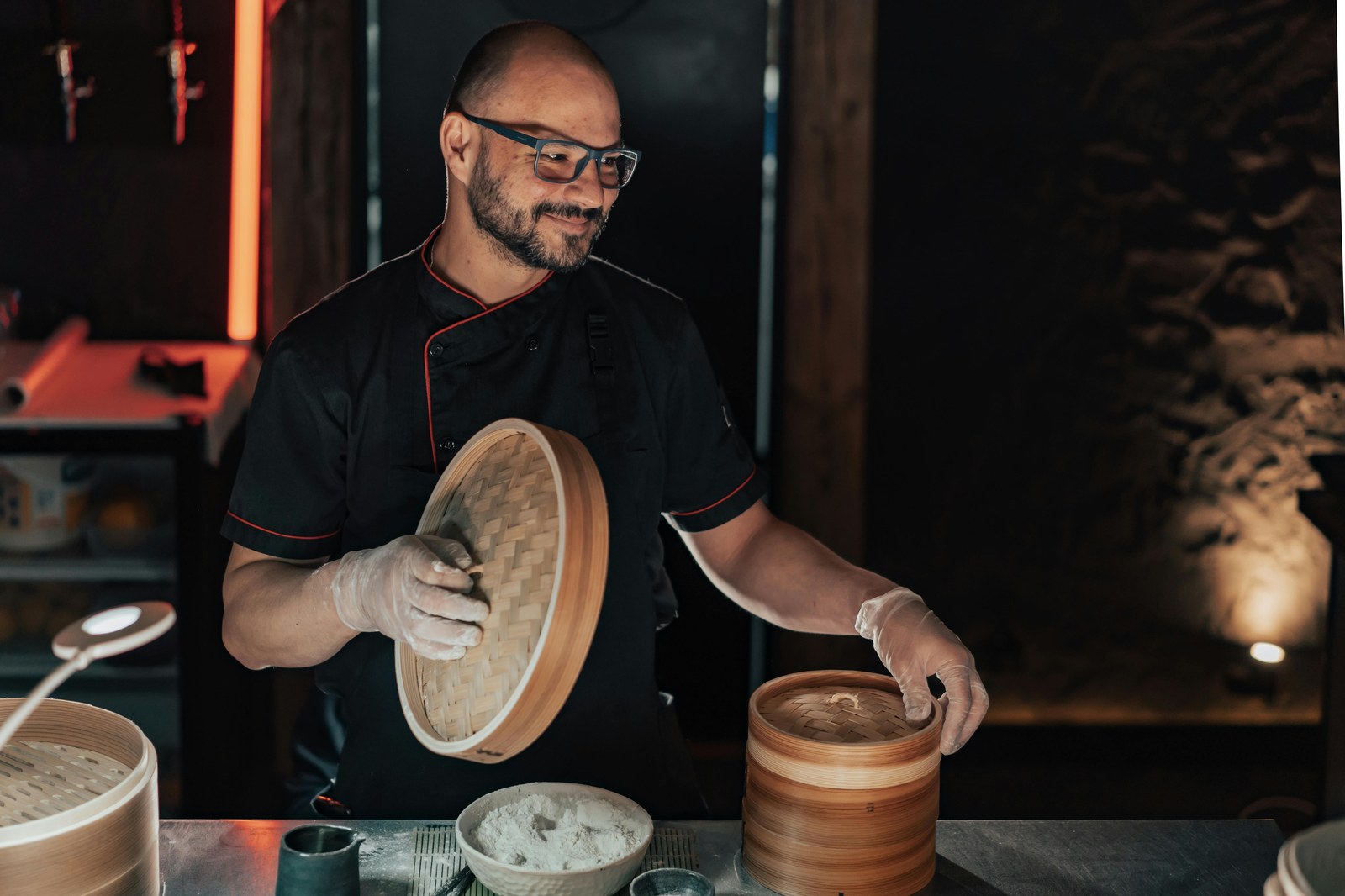
The cart is not a gimmick. It is the delivery mechanism for a specific kind of trust.
The city that preserved the cart preserved the culture, and the culture is what the score is actually measuring.
We test dishes so you don't have to. No spam — just the best food, neighborhood by neighborhood.