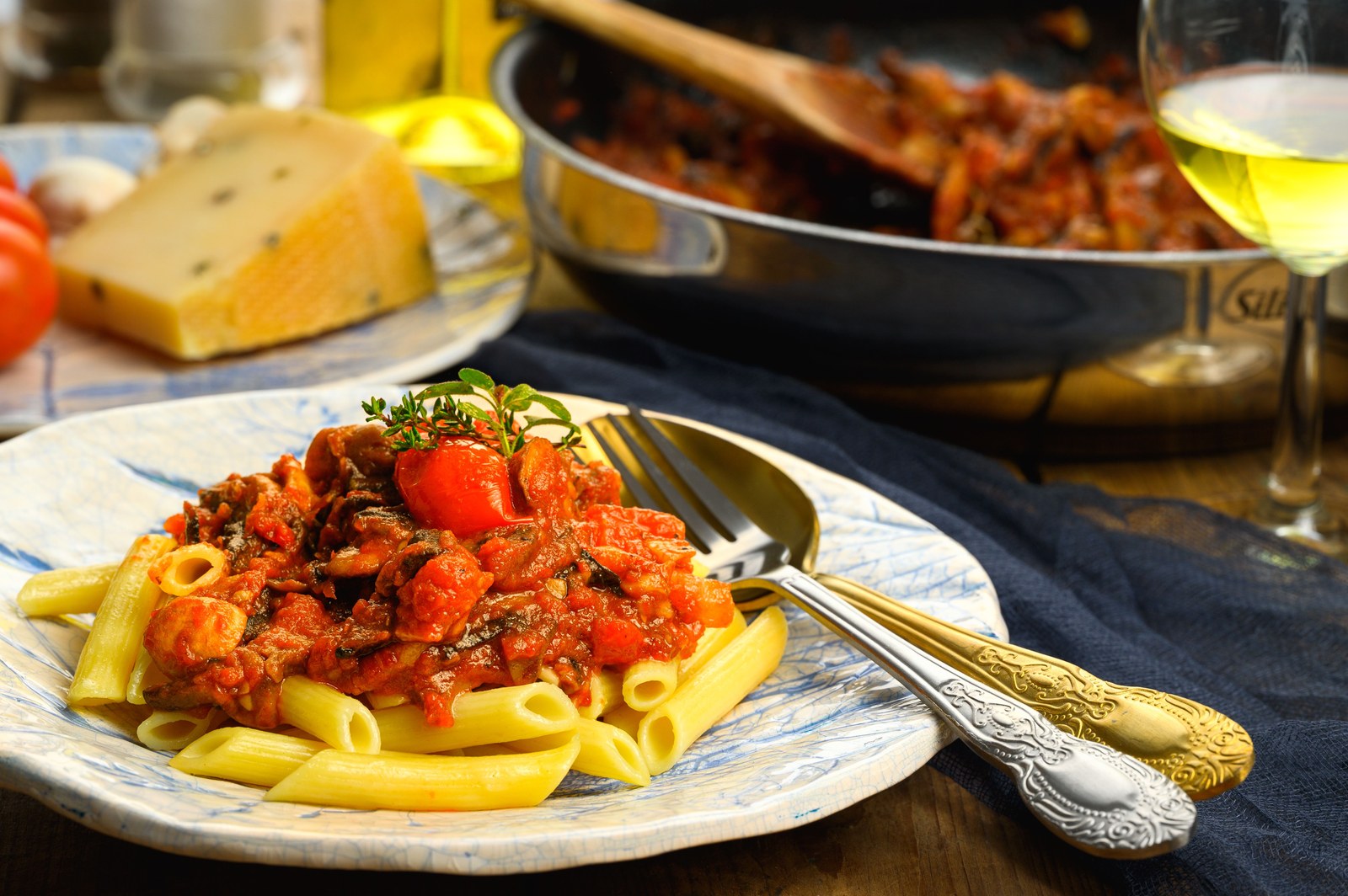
both
Two cities, two completely different relationships with Italian food. One built its identity on Sunday sauce and BYOB storefronts. The other keeps trying to reinvent the trattoria. The algorithm noticed the gap.
The Baseline Problem
Every Italian food argument in America eventually comes back to who learned it first and who forgot it. Philadelphia did not forget. The South Philly red gravy tradition — slow Sunday sauce, braciole in the pot, a half-loaf of Sarcone's bread on the side — is not nostalgia. It is infrastructure. It is the thing that calibrates every other Italian meal in the city, the same way the cheesesteak calibrates everything else. You eat at the newer rooms already knowing what the baseline tastes like, and the baseline is decades old and costs almost nothing.
San Francisco does not have that baseline. The city's Italian heritage runs through North Beach and the families who arrived from Genoa and Sicily in the 1880s and 1890s, but that lineage thinned out as real estate prices remade the neighborhood block by block. What replaced it was a different kind of Italian restaurant: the chef-driven trattoria, the pasta-focused tasting room, the wine-bar that calls itself Italian because it has burrata and Barolo on the list. These are not bad restaurants. Several of them score well. But they are performing a tradition rather than maintaining one, and the algorithm can see the difference.
That gap — between maintenance and performance — explains most of what the data shows when you compare Italian restaurants in Philadelphia vs San Francisco. The Philly rooms that have been operating since the 1970s and 1980s score high on context and consistency and mid-to-low on execution variability. The SF rooms score high on technique and mid-to-low on value. Neither city is wrong. They are solving different problems.
Philadelphia: The Economics Work Like This
The BYOB structure is the thing most outsiders miss about Philadelphia Italian. It is not a quirk. It is an economic system that allows a small room on Baltimore Avenue or a corner spot in Cedar Park to operate without a liquor license, keep prices low, and spend the money they would have put into a bar program on the food instead. L'Angolo has been doing this for years. Lazzaro's runs the same model. Stogie Joe's, technically a neighborhood bar that also happens to serve exceptional pasta, has absorbed the same logic from a different direction. The result is Italian food that is frequently better than it has any right to be at the price point.
The high-end tier exists and it earns its scores. Vetri Cucina is a $100-plus tasting room that has been making the case for handmade pasta as fine dining since Marc Vetri opened it in 1998 in a rowhouse on Spruce Street. The osso buco is the kind of dish that makes food writers reach for adjectives they have been trained to avoid. We will say this instead: the braising liquid is reduced to the point where it coats the back of a spoon, the gremolata is not an afterthought, and the bone marrow is not left on the plate. The algorithm puts it in the low nineties overall. The value score, predictably, is lower.
What Philly has that SF does not is the middle layer. Between Vetri and the BYOB storefronts, there are dozens of rooms that cook Italian without performing it — red gravy on the table before you order, a bread basket that costs what bread costs, a waitstaff that has been there longer than the menu has. That middle layer is where the city's real Italian identity lives. The new openings get the press. The old rooms get the scores.
San Francisco: The Technique Trap
The Mission has two kinds of Italian restaurants. The first is the chef-driven pasta room that opened in the last fifteen years, sources from local farms, changes the menu seasonally, and charges between $24 and $38 for a first course. Flour + Water is the template. Delfina preceded it and remains the more consistent room. Fiorella is the newer entry that scores highest on execution in the current data. The second kind is the room that was there before the neighborhood changed — cheaper, less precious about provenance, and quietly doing a better job on the dishes that require time rather than technique.
The Northern California Italian tradition runs through a different set of influences than South Philly's. The Ligurian and Genovese families who built North Beach in the late 19th century left a pesto-and-seafood baseline that is almost entirely absent from the current restaurant scene. What survived is the antipasto structure — the anchovy plate, the marinated vegetables, the cured meats on a board — and even that has been absorbed into the general SF small-plates vocabulary. Cotogna is the room that most visibly tries to recover the original thread: the wood fire, the whole animals, the pasta that changes based on what came in rather than what fits the brand. The risotto, on a good night, is the best in the city.
A16 made a specific argument about Southern Italian food — Neapolitan and Campanian, wood-fired pizza as the anchor, wine list focused on the south of Italy — when it opened in 2004 on Chestnut Street. That argument still holds. Seven Hills and Beretta occupy the middle range: well-executed, consistent, priced for the neighborhood, not trying to be anything other than a reliable Italian room. The algorithm noticed that these mid-tier SF rooms score within a few points of their Philly equivalents on execution, and significantly lower on value. The gap is not the cooking. It is the rent.
What the Comparison Actually Shows
The Italian food comparison between Philadelphia and San Francisco resolves into two separate questions. The first is whether you are paying for history or technique. Philadelphia's best Italian rooms are scoring on history: the continuity of a cooking tradition, the physical presence of a neighborhood that has been making the same food for four or five generations, the red gravy that tastes like someone's grandmother made it because, in several cases, someone's grandmother did. San Francisco's best Italian rooms are scoring on technique: the handmade pasta with the correct hydration ratio, the wood-fired protein with the correct internal temperature, the seasonal ingredient used at the correct moment in its growing cycle.
The second question is whether value is a scoring category or a philosophy. In Philly, BYOB is a philosophy. It encodes a belief that good food should not require a $200 check, that a family in Cedar Park should be able to eat the same trattoria food as a table at Vetri if they bring their own Montepulciano and are willing to sit at a table with a paper tablecloth. In SF, value is a scoring category that most rooms fail. The $28 pasta is priced that way because the room costs that much to run, not because anyone decided it should cost that much to eat. These are different problems with different solutions, and the algorithm scores them accordingly.
Both cities have rooms worth the trip. The comparison is not a verdict — it is a diagnostic. If you want Italian food that will remind you of something, go to South Philly. If you want Italian food that will teach you something about what a specific ingredient can do in the hands of someone who has thought about it for fifteen years, go to the Mission. These are not the same experience. They are not supposed to be. For a similar breakdown of how two cities approach Vietnamese food, see our piece on [Vietnamese food Philadelphia vs San Francisco](/carte/comparison/vietnamese-philly-vs-sf/). The structural logic — old diaspora vs. chef-driven reinvention — runs almost exactly parallel. ForkFox has run the same comparison on pizza, too; see [ForkFox on citywide pizza dynamics in Philly vs New York](/carte/comparison/pizza-philly-vs-nyc/) for how the cheesesteak-baseline phenomenon plays out on a different dish. And the [Ethiopian food corridor that runs through West Philly](/carte/comparison/ethiopian-philly-vs-sf/) offers the clearest example in the city of what it looks like when a diaspora tradition maintains itself without outside interference.
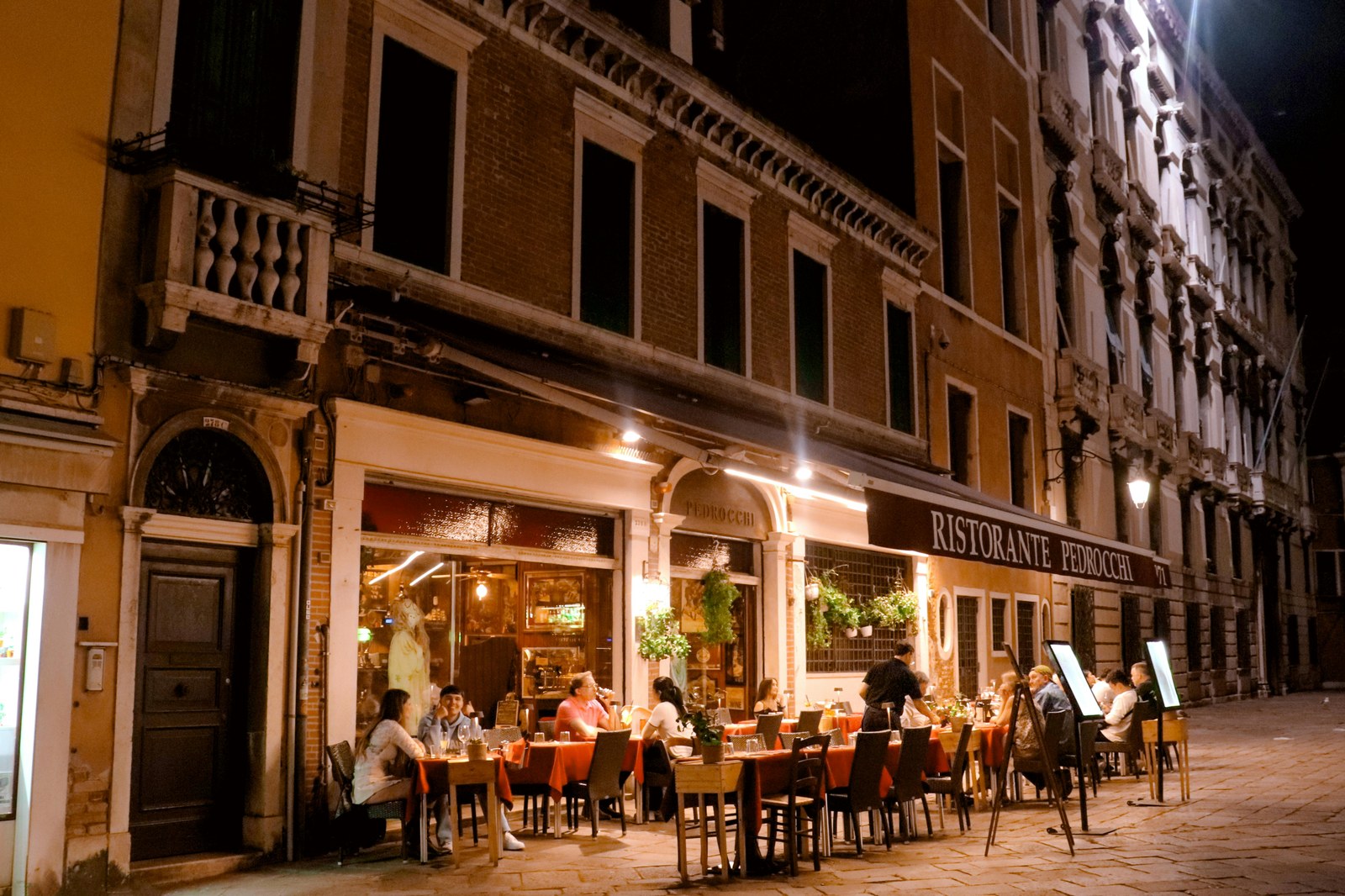
One city cooks Italian like it has something to prove. The other cooks it like it never had to.
The city that has to explain its Italian food is the city that lost the thread.
We test dishes so you don't have to. No spam — just the best food, neighborhood by neighborhood.