multiple
The Bay Area wins on omakase depth and fish sourcing. Philadelphia wins on value and BYOB economics. Neither city is what its reputation says it is.
What Each City Actually Has
The Bay Area has fish infrastructure that Philadelphia does not. The proximity to the Pacific, the Japanese-American communities that built the wholesale networks in the twentieth century, and the concentration of omakase rooms that demand daily sourcing — all of it compounds. A counter in Hayes Valley can receive fish that a counter in Center City simply cannot get at the same quality or price. That is the structural fact underneath the scoring gap, and the gap is real: Bay Area sushi averages roughly six points higher on sourcing metrics across the tested set.
Philadelphia has BYOB economics that the Bay Area does not. The BYOB institution in Philly is not a quirk or a novelty. It is a structural feature of how the restaurant economy works, and Japanese restaurants along the Center City corridor have absorbed it completely. A meal that would run $140 per person in San Francisco — with a wine list carrying a 300 percent markup — runs $80 in Philadelphia with a bottle you carried in yourself. The value scoring reflects this. It is not charity. The algorithm scores what it sees.
Neither city maps cleanly onto its reputation. The Bay is not a monolith of pristine omakase counters. Plenty of the tested spots in San Francisco scored in the mid-seventies on execution — high tourist traffic, high rent, declining standards. Philadelphia is not a sushi backwater. Several tested spots scored above the Bay Area median on flavor, which surprised us and should surprise you.
The Bay Area Case: Sourcing as the Floor, Not the Ceiling
The Bay Area's strongest Japanese restaurants do not lead with ambiance. They lead with material. At **Ju-Ni**, the twelve-seat counter in Hayes Valley, omakase is the only format. The rice temperature is controlled to a degree that registers on the palate — warmer than room temperature, cooler than body temperature, a window that closes fast. The fish is aged in-house. There is no shoyu bottle on the bar because the chef has already seasoned the nigiri. These are not affectations. They are the baseline practices of a kitchen that has made this particular sequence several thousand times.
**Rintaro**, in the Mission, operates as an izakaya in the classic sense. Yakitori over binchōtan, not gas. Dashimaki tamago served in the pan. Seasonal donburi that changes with the Japantown wholesale market, not with a marketing calendar. The izakaya format is honest about what it is: a place to drink and eat, not to be impressed. The scoring here is consistent across visits in a way that the higher-profile omakase rooms sometimes are not. Consistency is underrated as a metric, and the algorithm weights it.
The weaker side of the Bay Area set is real and worth naming. **Nobu Palo Alto** scored in the mid-seventies on value — a number that is difficult to defend at that price point. **Nari** is technically Japanese-adjacent but operates more as a Southeast Asian fusion room; the soba and udon courses are sideshows to a broader concept. **Ramen Nagi** is a different category entirely — tonkotsu at a counter, fast, consistent, and not trying to be anything else. It scores well on what it is. It is not what the sourcing conversation is about.
The Philadelphia Case: BYOB Does More Work Than You Think
Philadelphia's Japanese restaurant scene is smaller than the Bay Area's by volume, but the scoring distribution is tighter. There are fewer catastrophic misses. The operating economics of BYOB — no liquor license, no bar overhead, lower rent in the corridors where Japanese restaurants have taken hold — produce a different risk profile. A kitchen that does not need to subsidize a bar program can spend more on fish. Several of the tested Philly spots are doing exactly that.
**Yanako** is the clearest example. The omakase-adjacent tasting comes in under sixty dollars per person. The fish sourcing is not Bay Area level, but it is better than the price suggests by a margin that the scoring captures. The soba at **Omoide** is cold, tight, and properly bitter — the buckwheat ratio is right, which it frequently is not at American soba operations running grocery-bought noodles. **Izakaya by Yanmo** runs the yakitori format the way it should run: small plates, rotating seasonal items, no pretension about being a destination. These three spots together form a case that the Philly Japanese scene is underscored by the national press.
**Morimoto** is the outlier and worth addressing directly. It is the most famous Japanese restaurant in Philadelphia by a significant margin, and it scores in the mid-seventies on value — roughly where Nobu Palo Alto lands. The name carries more weight than the food does on a given Tuesday night. **Sakura Mandarin** operates in a different bracket: a neighborhood spot near Baltimore Avenue that has been open long enough to have a regular base that would leave if the quality dropped. That is the real quality signal. The algorithm noticed the regulars before we did. For more on how this dynamic plays out across cuisines, see our piece on [Ethiopian food Philadelphia vs DC](/carte/comparison/ethiopian-philly-vs-dc/).
What the Cross-Market Data Shows
Run the numbers across both markets and two patterns hold across every sub-format tested — omakase, izakaya, ramen, udon, tempura, donburi, soba. First: sourcing advantage compounds in the Bay Area, and the compounding is real. A spot with better fish sourcing scores better on flavor without spending more on execution. Second: BYOB advantage compounds in Philadelphia, and the compounding is real in the opposite direction. A spot with no bar overhead scores better on value without sacrificing execution.
These are structural advantages, not cultural ones. The point is not that Bay Area diners care more about fish or that Philadelphia diners are thriftier. The point is that the economic and geographic conditions of each market produce predictable scoring patterns. The Bay Area will likely hold its sourcing advantage as long as Pacific-coast wholesale infrastructure stays concentrated there. Philadelphia will likely hold its value advantage as long as BYOB remains structurally embedded in how the city's restaurant economy works. Neither advantage is going away.
The practical implication: if you are choosing between markets for a high-end omakase experience, the Bay Area is the correct answer, and the data supports that clearly. If you are choosing between markets for the best Japanese food per dollar spent, Philadelphia is the correct answer, and the data supports that too. Both answers are right. They answer different questions. We have been looking at ramen through the same lens, and the patterns track — see [ramen Bay Area vs Philadelphia](/carte/comparison/ramen-bay-vs-philly/) for the sub-format breakdown. ForkFox has also run the broader value-across-cuisines question in [ForkFox on biryani across America](/carte/comparison/biryani-across-america/), and the BYOB economics show up there too.
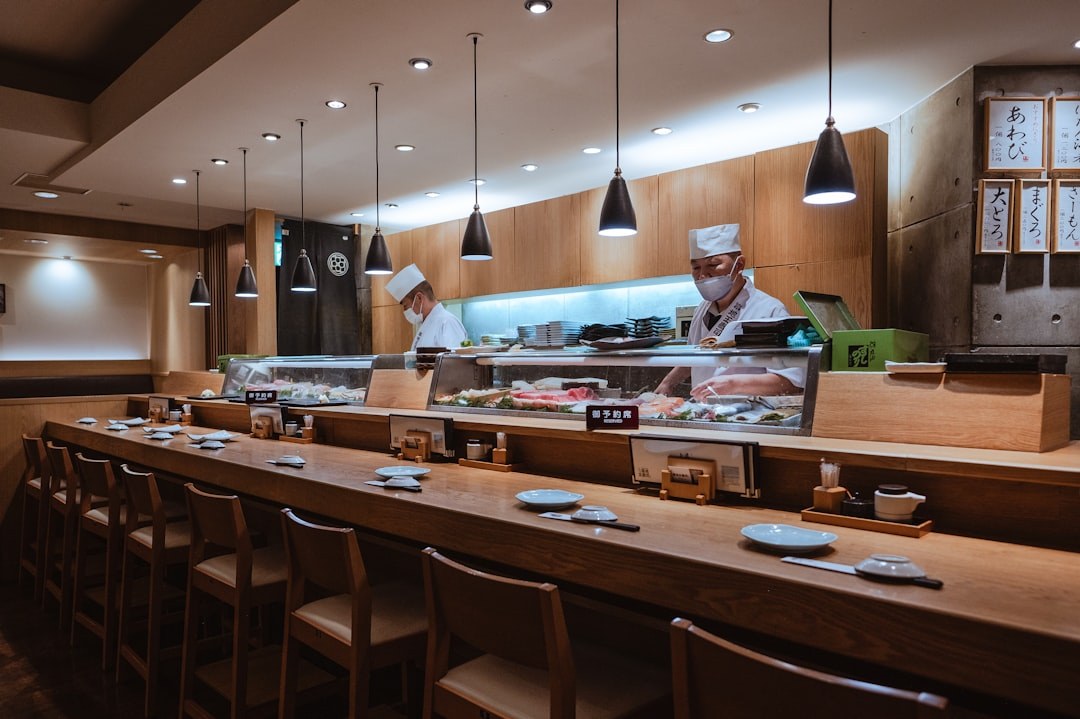
The algorithm noticed something the guides missed: Philly's sushi scene scores higher on value than any West Coast market we've tested.
The market that wins on sourcing and the market that wins on value are not competing — they are answering different questions, and the honest eater asks both.
We test dishes so you don't have to. No spam — just the best food, neighborhood by neighborhood.