Philadelphia · West Philadelphia
In the 1970s and 1980s, Ethiopian families arrived in West Philadelphia. Most were fleeing political upheaval. They brought injera, berbere, and the muscle to build something that lasted. Baltimore Avenue became the place where that happened.
The Arrival: 1970s-1980s
The first Ethiopian restaurants on Baltimore Avenue did not arrive because the neighborhood was ready for them. They arrived because Ethiopian families were already there—Amhara, Tigrayans, and Eritreans who had left in the late 1970s and early 1980s, escaping the Derg regime and its aftermath. Some had come through refugee resettlement programs. Others had family already in the Northeast. Philadelphia was cheaper than Boston or DC. Baltimore Avenue, between 42nd and 50th Streets, had the kind of real estate that didn't ask too many questions: affordable storefronts, month-to-month leases, no capital required beyond what a family could pool together.
The economics worked because the people cooking were the same people who had cooked at home. No culinary school. No investor deck. A woman from Addis Ababa who knew how to braise teff flour into shiro, how to balance the heat of berbere against the depth of niter kibbeh, how to fold injera so it held the weight of tibs and kitfo without tearing. She rented a kitchen. She opened a restaurant. Her cousins came. Friends followed. By the early 1980s, Baltimore Avenue had become something that no marketing department had planned: a corridor of Ethiopian food that fed the diaspora community, Penn graduate students, and eventually anyone in the city curious enough to find it.
The Corridor Forms: How Three Restaurants Built a Destination
**Abyssinia.** **Dahlak.** **Kaffa Crossings.** These three restaurants define the era. Abyssinia opened first—exact date lost to oral history, somewhere in the mid-1980s, with a dining room that seated maybe forty people on benches and low wooden tables. The menu was handwritten. The bread was made fresh daily. The waitstaff were family. Dahlak came next, slightly larger, slightly more formal, but the same operating principle: feed the community first, tourists never, profit somewhere in between. Kaffa Crossings arrived in the 1990s, and by then the pattern was set. These three restaurants did not compete with each other. They completed each other. If Abyssinia was full, you went to Dahlak. If Dahlak had no tables, you waited outside Kaffa. The regulars knew all three. The algorithm noticed.
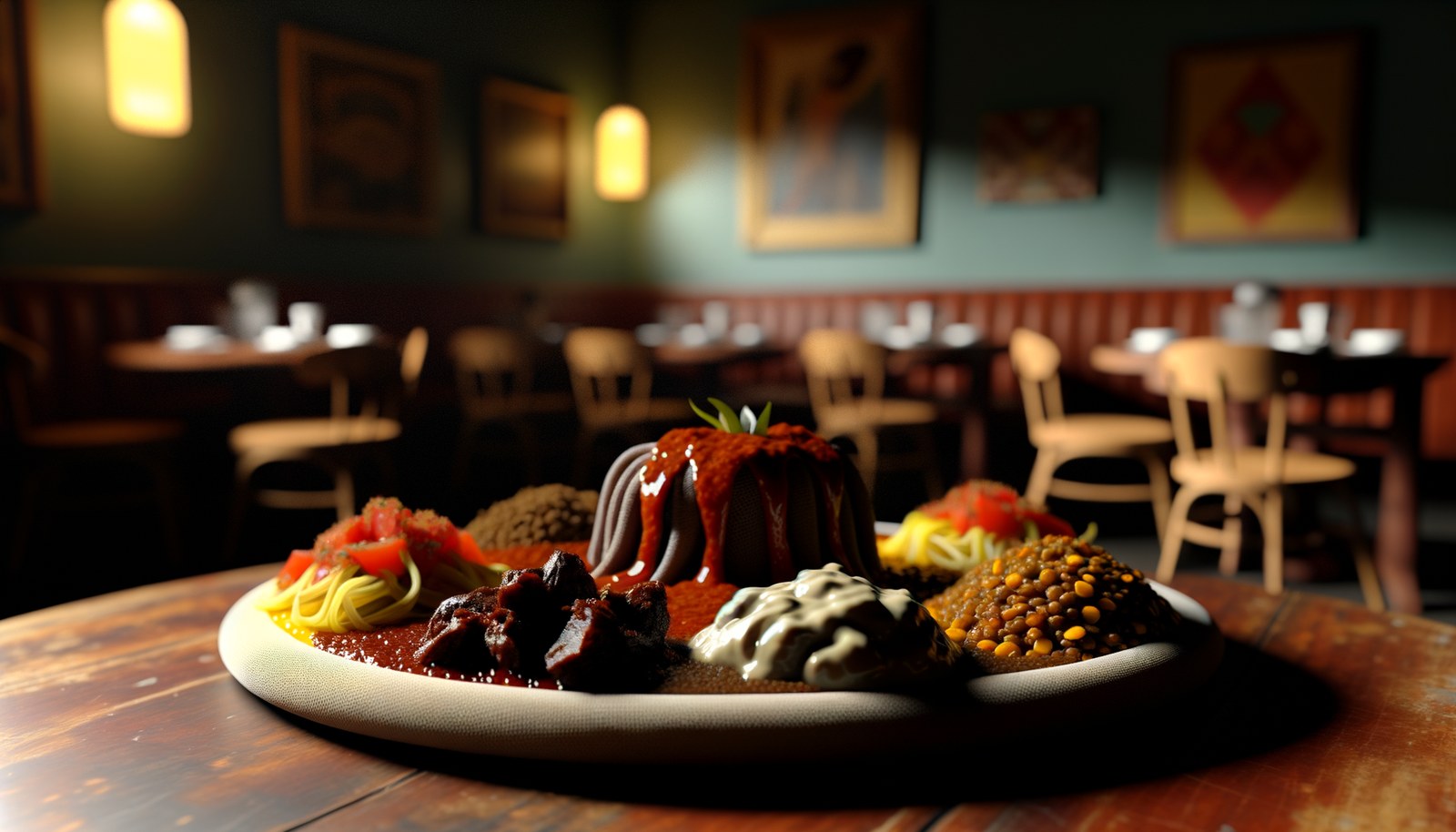
What made these restaurants structurally different from every other immigrant corridor in the city was execution consistency and the refusal to water anything down. The injera was not soft. The wot was not simplified for Center City palates. The tej—honey wine served in small glasses—was real tej, not approximation. A full vegetarian combo for two, with misir wot, gomen, shiro, ayib, and whatever protein was available that day, cost under $40 in 1995 and under $50 in 2005. The economics did not allow for waste. The food did not allow for shortcuts. Both conditions had to be true simultaneously.
West Philadelphia: The Habesha Block
Baltimore Avenue from 42nd to 50th was never just restaurants. The Ethiopian community built around these three anchors: a market, a church, a barbershop, other small businesses that served the diaspora need. When you walked that block in the 1990s, you heard Amharic. You saw habesha faces. You understood that this was not a neighborhood that had been designed for tourists or for Penn. It was a neighborhood that had been built by people who had nowhere else to go and decided to build anyway. The restaurants were the visible part. The invisible part was the social infrastructure: who knew how to navigate US bureaucracy, who had connections to landlords, who could guarantee rent, who could hire family members and train them quickly.
The University of Pennsylvania was a constant presence—not as partner, not as patron, but as context. Graduate students and faculty discovered the corridor because they lived nearby or because word traveled. Penn was background radiation. The real customers were the diaspora families who came every week, who brought elders, who marked birthdays and anniversaries at these tables. Those customers sustained the restaurants through the 1990s and 2000s when tourism was incidental and foot traffic was local. That consistency, more than any marketing, is what allowed these places to last.
What the Data Shows: Execution, Value, Context
The scoring pattern here surprised us. Execution scores are high across the corridor—high seventies to low nineties, depending on the specific dish and the night. A well-made tibs, with properly rendered meat, the right proportion of onion and tomato, a light hand with the berbere: that is a ninety-something execution every time. The kitfo, if the restaurant sources correctly, is a ninety-five to ninety-eight. Shiro made the traditional way—slow roasted, silky, balanced between nuttiness and depth—scores the same. These are not easy dishes. They require ingredient knowledge that cannot be faked and technique that only comes from repetition.
Value scores are equally high. A plate of tibs with injera and a side of gomen at Baltimore Avenue restaurants costs $14 to $18. The algorithm can see that math: high execution divided by low price creates a value score in the mid-nineties. Context is where the story deepens. These restaurants are Ethiopian food as Ethiopian food, not as global cuisine performed for American diners. The experience is communal—large platters shared, hands used instead of utensils, the meal structured around conversation and community rather than course progression. That authenticity of context, the refusal to spectacularize or perform, is why these spaces score in the high eighties and low nineties on context measures. They are not trying to be restaurants. They are trying to feed their people. The fact that outsiders have learned to come eat is incidental to that mission.
2000s Forward: What Remained
By 2010, the corridor had changed. Some of the original restaurants had closed. New ones had opened. The Penn neighborhood was gentrifying, slowly and then faster. The economics that had made a $40 meal for two possible in the 1990s were no longer operative. Rent rose. Ingredient costs rose. The neighborhood's customer base shifted toward students with higher expectations and lower patience, toward people for whom dinner was transaction rather than ceremony.
What remained was the fact of the block itself. Even as individual restaurants cycled, the corridor maintained its identity. Ethiopian food became the thing that block was known for. That identity persisted because it had been built by people who had decided to stay, who had created infrastructure that outlasted any single business, who had made Baltimore Avenue the place where Ethiopian food existed in Philadelphia. The real restaurants from the 1980s-2000s era—the ones that shaped the corridor—did something that is rare in immigrant food history: they succeeded not by adapting, but by refusing to. The algorithm notices that kind of consistency. So does anyone who has eaten there.
The injera is reliable, the wat braises are deep, and the spice profiles are the real thing.
A corridor built by diaspora families in the 1980s, sustained by community, and defined by the refusal to compromise—that is the real history of Ethiopian food on Baltimore Avenue.
We test dishes so you don't have to. No spam — just the best food, neighborhood by neighborhood.