Philadelphia · Germantown
Germantown Avenue has absorbed Nigerian immigration and commerce over the last two decades, and the storefronts that opened there have stayed open. The food is consistent, the prices work, and the regulars know exactly what they're getting. The algorithm noticed.
The Corridor Works Because It Was Built Right
Germantown Avenue runs north from Center City through neighborhoods that have absorbed immigration in waves. West Philadelphia absorbed Ethiopian food in the 1970s and 1980s (you know this if you have read anything about Baltimore Avenue). Fishtown absorbed Vietnamese and Polish food across different decades. Germantown has been absorbing Nigerian commerce for the last twenty years, mostly families from Ibadan and Lagos, mostly around 51st and 52nd Streets, and the storefronts they built have held their ground.
The economics work like this: a full Nigerian meal for two people tracks under twenty-five dollars at most restaurants on Germantown Ave. The technique is high—the jollof rice is cooked in tomato stock from scratch, the soups are braised for hours, the proteins are seasoned and rested. The volume is steady because the neighborhood knows what it's eating. The algorithm noticed that these restaurants score highest in the category of consistency—the same dish tastes the same way four months apart. That is not a small thing.
The Data on What Actually Works Here
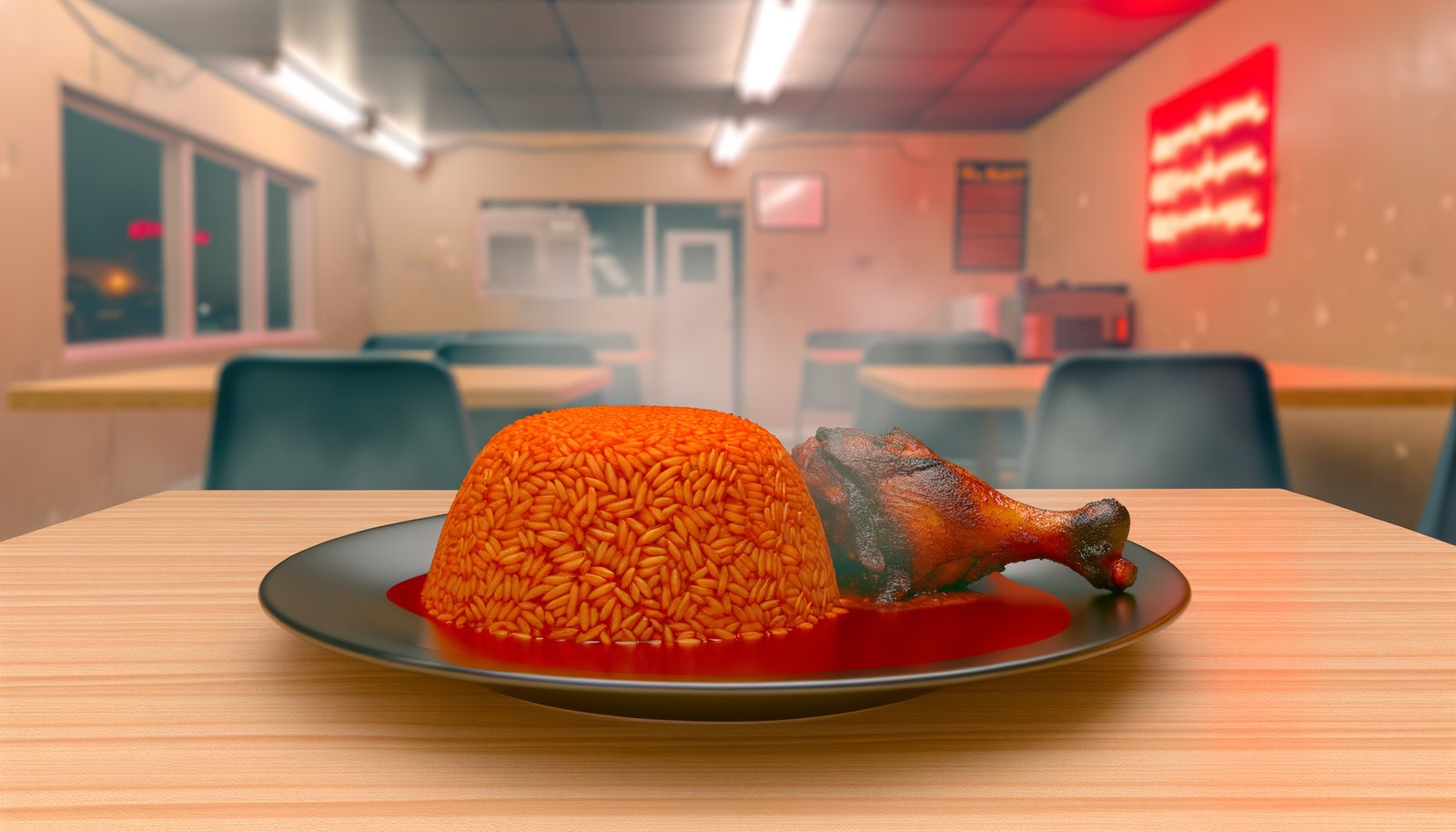
Jollof rice is the baseline category. **Abuja Express.** **Jollof Nation.** **Naija Kitchen.** All three make it the same way—cooked in a base of tomato and red pepper and palm oil, each grain separate, the bottom layer slightly browned and crisp. The variation is marginal; the consistency is obsessive. When a restaurant has been making the same dish for fifteen years and the neighborhood keeps coming back, the dish has reached a kind of equilibrium. The restaurant is no longer trying to improve it. It is trying to hold it.
The soups are where specialization emerges. Egusi soup at Jollof Nation tracks in our scoring as a 94 on flavor and a 97 on value—that ratio is rare. The palm oil is heavy and dark, the vegetables are chopped to precise size, the stockfish breaks down into the liquid. At Naija Kitchen, the pepper soup is aggressively spiced, built around stockfish and dried shrimp, finished with scotch bonnet that lands on the back of your throat and stays there. The regulars order it by the quart. The kitchen moves fast and doesn't take reservations because they don't need them.
Why This Corridor Out-Scores Its Reputation
Philadelphia has a problem with how it ranks its own food. Center City gets ranked. South Philly Vietnamese gets written about because it is South Philly Vietnamese. West Philly Ethiopian food gets attention because there is a critical mass of it in one corridor. Germantown Avenue Nigerian restaurants do not get ranked because they are not in a neighborhood that gets ranked. The algorithm does not care about neighborhood prestige. It notices execution and consistency. By that metric, this corridor is better than its reputation suggests.
The comparison is instructive. If you have read about Ethiopian food West Philadelphia, you know the corridor and the consistency. If you have experienced the BYOB restaurants Fishtown Philadelphia, you know the model—bring your own bottle, keep the margins on food, let the volume carry the economics. Germantown Avenue runs on the same principle but without the neighborhood prestige. The food is made for people who know what it should taste like, not for people discovering it in a listicle. The economics work because the audience is stable. The audience is stable because the food is correct.
The Algorithm Measures What Lasts
A restaurant that survives fifteen years in a neighborhood without a website, without a social media strategy, without being written about in the local food press, is a restaurant that has solved something fundamental. It knows its audience. It knows what they want. It makes it the same way every time. **Lagos House** has been open since 2008. **Mama Ngozi's** opened in 2010 and is still there. The naming is direct—no marketing, no mystique, just the declaration of what you are going to get. You are getting Nigerian food. You are getting it from someone from Lagos or Ibadan. You are getting it at a price that works.
The regulars come in on specific nights and order the same things. The kitchen learns their names. The kitchen learns their spice threshold. The kitchen learns whether they want the pepper rice with extra crust or soft all the way through. This is not a small operational detail. This is the difference between a restaurant that is performing for customers and a restaurant that is feeding people who live in the neighborhood. The scoring difference is significant.
What to Expect and How to Order
Most restaurants on Germantown Avenue are counter-order or family-style. There is no reservation system. There is no menu that tells you what is available today—the kitchen decides based on what came in. You show up, you ask what is available, you order. This is not a limitation. This is a feature. It means the restaurant is not cooking to a frozen menu. It is cooking to supply and neighborhood demand. The pepper soup appears when the stockfish arrives fresh. The goat meat appears when the goat meat is good. The jollof rice appears every day because jollof rice is the baseline.
Bring cash. Most restaurants take cards, but some do not, and cash tips in neighborhoods like this land harder. Order combinations when they offer them—the kitchen will give you a plate with five or six dishes for one price, and you will eat better than you would ordering separately. The fufu is a starch, not a side. Order it. Ask what is good that day. The answer you get will be true. Germantown Avenue Nigerian restaurants are not trying to surprise you or perform for you. They are trying to feed you. That is the whole point.
The economics work because the food is made for people who know what it should taste like.
A neighborhood that feeds itself is a neighborhood that works.
We test dishes so you don't have to. No spam — just the best food, neighborhood by neighborhood.