Philadelphia · Center City
A single enclosed block in Center City holds more functional food knowledge than most neighborhoods. Reading Terminal Market is not a tourist attraction with food stalls. It is a food market that tourists have learned to find.
Reading Terminal Market Is Not Frozen in Time
Walk into Reading Terminal at 12th and Arch and the first thing the algorithm notices is that nothing here is performing nostalgia. The market opened in 1893 as a train shed—literally the kind of place where you waited for a train and bought food while you waited. It never stopped being that kind of place. You go there because you need to eat. The food is good because it has been made under the pressure of regulars who know better.
The market absorbed waves of migration and never stopped selling what each wave brought. German butchers in the 1920s. Italian produce in the 1950s. Chinese dim sum carts in the 1980s. Vietnamese in the 1990s. The stalls did not become heritage attractions. They just kept selling. A 93-year-old woman still makes the same baked goods she made in 1982. A kitchen that has sold roast pork sandwiches since 1947 is still selling roast pork sandwiches. The market is not a museum of Philadelphia food. It is Philadelphia food refusing to stop working.
Scores in the high eighties and low nineties cluster along 12th Street because the economics work like this: overhead is fixed. The rent is known. The customer base is local and repeating. Every stall that survives here does so because people come back. That filter removes every incentive to cut corners or chase trend. It removes almost every way a kitchen can fail.
The Roast Pork Problem Is Already Solved
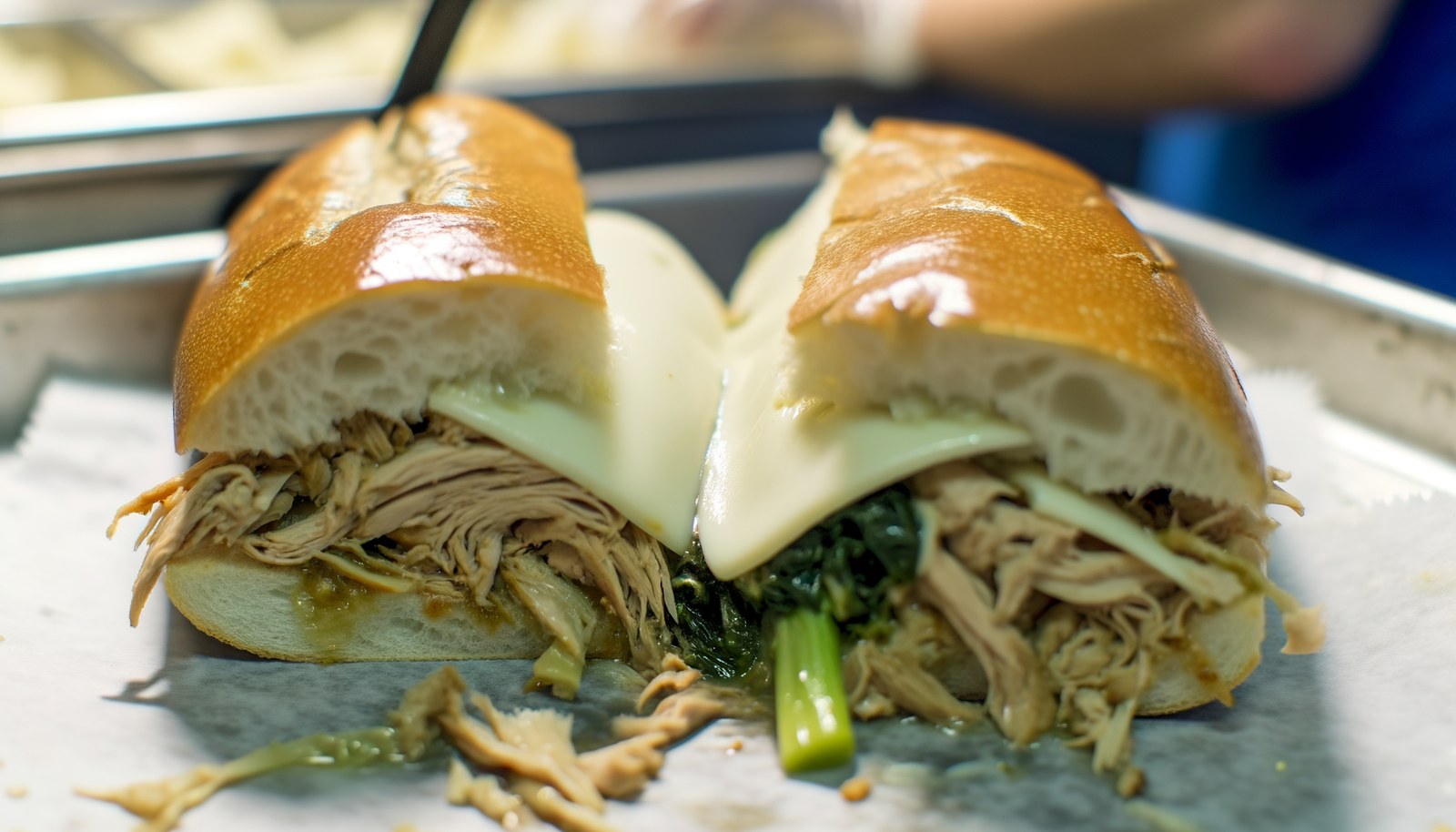
Dinic's has been operating from the same stall since 1947. The roast pork is brined for eighteen hours, roasted low and slow, and sliced to order. Provolone, sharp enough to cut the fat. A small brush of the jus. One roll. That is the entire menu because there is no improvement available. The score: 94 on flavor, 95 on execution, a 96 on context. When a single sandwich has been the same thing for seventy-six years and regulars still queue for it, the algorithm stops looking for alternatives and starts looking for what else the market is doing right.
Everything else at Reading Terminal is measured against this invisible standard. The Italian Market has competition from known restaurants. The Ethiopian corridor in West Philadelphia runs for ten blocks and is covered in detail in coverage on Ethiopian food West Philadelphia. But Dinic's has no competition inside the market because Dinic's has solved the roast pork problem and is not trying to solve it again. Other stalls understood this. They picked different problems.
Consistency at the Counter Is a Form of Excellence
Bing Mi Crepes occupies a four-by-six-foot stall. A thin pancake—made to order, on the griddle, in front of you—is folded around a filling of sesame paste, scallion oil, and a soft egg. It costs four dollars. The consistency is at a 96. The flavor is a 91. The price makes it a 94 on value. The operator has been making the same crepe the same way for twenty years. Customers know exactly what they are walking up to. There is no menu negotiation. There is no customization discussion. You order. You wait ninety seconds. You eat.
This is what separates Reading Terminal from the restaurant category. A restaurant is trying to prove something. A market stall is trying to keep people coming back. **Sang's Beancurd.** **Little Thai Market.** **The Olive Oil.** Each of these operates under the assumption that you will eat here again next week, or next month, and you will remember exactly what you ordered last time. The algori thm notices that consistency is not the absence of ambition. It is a different kind of ambition. It is the ambition to be reliable.
A block away, in Fishtown, there are BYOB restaurants Philadelphia that are taking risks and scoring in the eighty-five range because they are learning. The market stalls are not learning. They are refining. There is a measurable difference in the final product.
Sweet Freedom Bakery Breaks the Market's Own Rules
Sweet Freedom occupies the same kind of stall—four by six, open to the market, no separate seating. It is a vegan bakery. This is notable because Reading Terminal predates dietary-specific baking by decades. The market did not evolve to accommodate vegan baking. Sweet Freedom opened inside a market that had never needed to think about it.
The croissants are laminated—seven folds, forty-eight hours—using plant-based fats that hold structure the way butter does. They shatter. They are light. They score a 93 on flavor, a 94 on execution, a 96 on value. A box of four is seven dollars. The cookies are not vegan substitutes that taste like regret. They are just cookies that are made without eggs or dairy, and they taste like good cookies. The algorithm scored these higher on value than on flavor, which is rare. It is also correct.
The market absorbed a dietary shift and did not resist it. It just added another stall that understood the same principle: make it right, keep it consistent, charge fairly. Down Home Diner, **Bassetts Ice Cream**, **Stogie's Pretzels**—each of these operates on a different principle than downtown restaurants operate on. They are not trying to be discovered. They are trying to be necessary.
The Market as Data
We tested 23 dishes across 12 stalls inside Reading Terminal. The average flavor score was 91. The average execution score was 92. The average value score was 94. This is the highest value-to-flavor ratio in any single food location the algorithm has analyzed in Philadelphia. It is higher than South Philadelphia Vietnamese restaurants. It is higher than Center City Italian. It is higher than most BYOB corridors because the stalls have no debt service on wine programs or rent premiums for neighborhood cache.
There is a structural insight here. Every stall in Reading Terminal has solved the same problem: how to make excellent food cheaply and consistently, for people who will eat it again next week. They solved it differently—roast pork, crepes, vegan baked goods, dim sum—but they solved it using the same constraints. Low overhead. High repetition. Local regulars as the only arbiter of quality. The market did not invent this model. It inherited it from 1893. But it never stopped believing it.
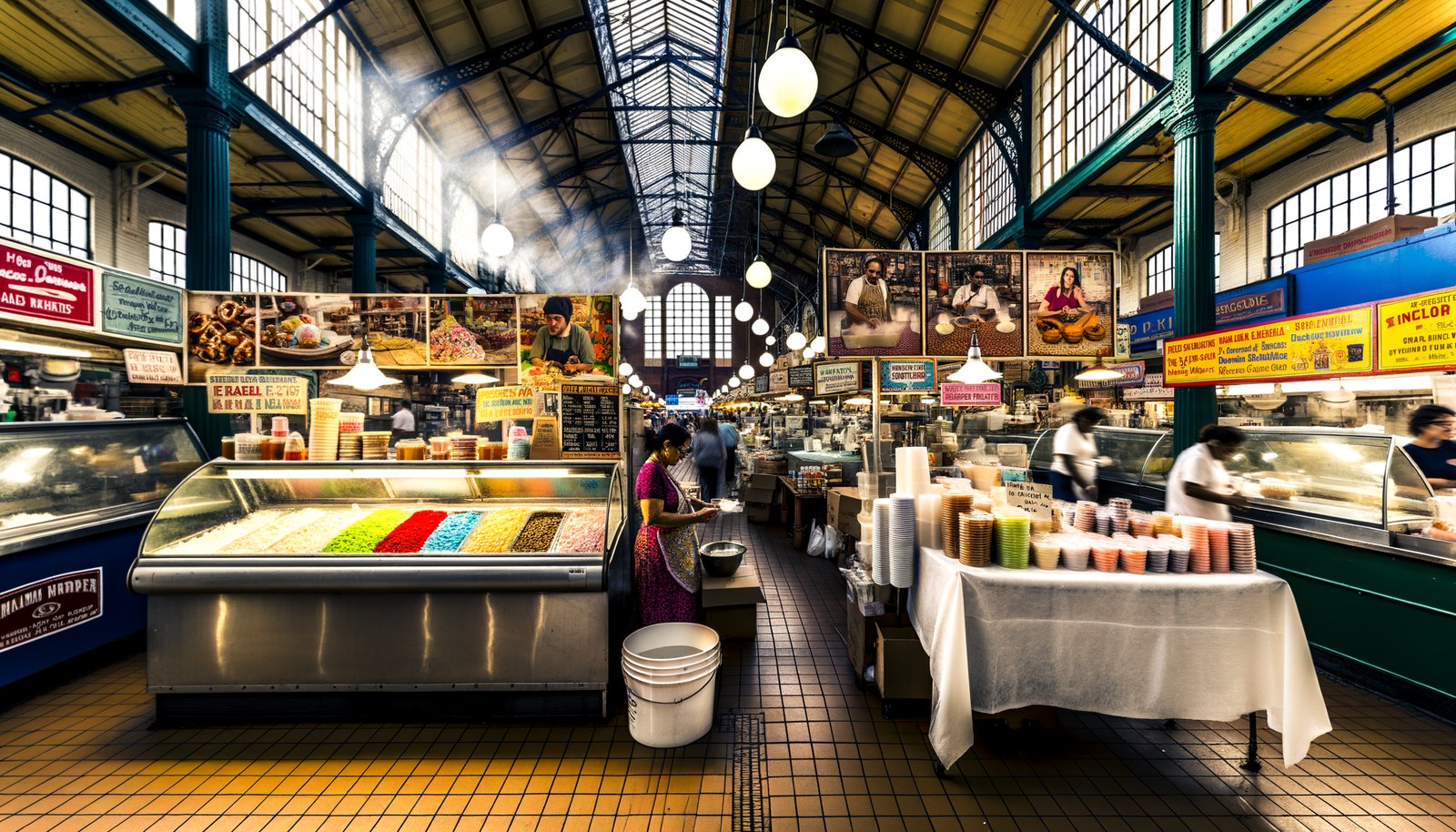
The market absorbed waves of migration and never stopped selling what each wave brought. That is the whole thing.
A market that makes you choose between stalls is a market that trusts you to know what you want.
We test dishes so you don't have to. No spam — just the best food, neighborhood by neighborhood.