Philadelphia · South Philadelphia
Fifth Street between Passyunk and Washington runs through the kind of neighborhood where the sign outside matters less than what's cooking inside. Korean food has been building something here for years, and almost nobody from outside South Philly has noticed.
The corridor that nobody talks about
Ask a Center City food person where to eat Korean in Philadelphia and they'll send you north. They're thinking about the glossy places, the ones with wine lists and table service and a hostess stand that answers the phone. They're thinking about the suburbs. What they're not thinking about is Fifth Street, because Fifth Street doesn't market itself. It doesn't need to. The neighborhood already knows.
Fifth Street between Passyunk and Washington is where Korean families moved when the economics made sense, which is to say years ago, when a storefront on this corridor meant you could actually pay rent. **Han Dynasty.** **Sang Kee.** **K-Restaurant.** The restaurants anchor themselves on specific blocks, build their clientele one meal at a time, and don't advertise. That restraint is instructive. It means the food is confident enough to speak for itself, and it means the people eating there are eating because they want to, not because they read something online.
The scoring pattern here is consistent across the corridor. Execution is high—the bibimbap is balanced, the bulgogi cooks to a proper sear, the kimchi jjigae tastes like it has been simmering for hours because it has. Value is exceptional; a full meal with banchan, rice, and a soft drink under $15 in most spots. Context is where these restaurants separate themselves from their downtown counterparts. They are Korean food as Korean food, not as a carefully plated experience. The algorithm notices.
How the economics actually work
The reason this corridor survives has nothing to do with tourism and everything to do with density. South Philadelphia's Korean population isn't large by absolute numbers, but it's concentrated enough that a restaurant can serve the neighborhood and still pencil. Han Dynasty pulls regulars who know the menu by heart—they don't need to scan it. Sang Kee has been building the same customer base for long enough that people make reservations by phone. K-Restaurant doesn't need a website because the people who eat there already know where it is.
Price pressure here works differently than it does on Passyunk Avenue or in Fishtown. A tteokbokki order is five dollars because the cost of rice cake, gochujang, and labor is five dollars, not because the restaurant is trying to position itself as "value." A galbi plate is sixteen dollars because that's what it costs to buy the meat and cook it properly. The sundubu arrives in a stone bowl still bubbling because that's how it's supposed to arrive. These aren't positioning decisions. They're structural facts.
The makgeolli that moves through these restaurants comes from three suppliers, none of which are imported through the wine distribution network that drives markup in Center City. Walk into any of these spots and a bottle costs what it costs in Seoul, plus the labor to get it here. That math doesn't leave room for fifty-dollar bottles. It barely leaves room for fifteen-dollar bottles. The result is that the drink list—when there is a drink list—reflects what people actually drink, not what someone has decided they should want.
The food on 5th Street is the baseline
There's a useful comparison built into South Philadelphia's food geography. You can walk from Korean restaurants on Fifth to Vietnamese spots on 8th and Washington, which is exactly what locals do when they're making a meal decision based on what they're craving rather than what they've read about. That proximity means these restaurants are in direct competition with each other, which means they have to be good. Unlike Center City, where restaurants compete on concept and Instagram legibility, South Philadelphia restaurants compete on whether people will actually eat there. The restaurant that doesn't execute doesn't get a second chance because there's another kitchen doing the same food two blocks away.
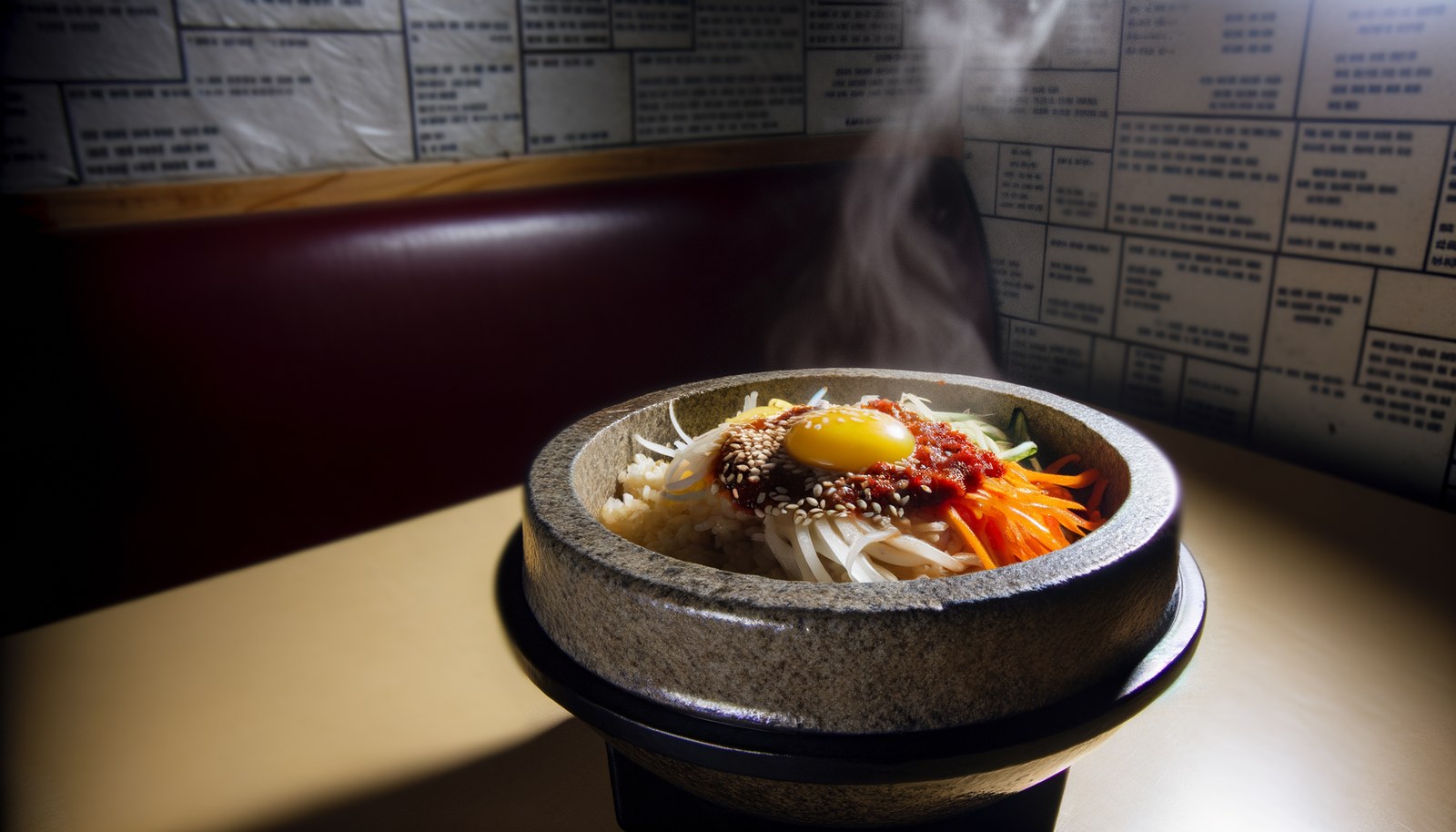
Han Dynasty's bibimbap is the measuring stick. If you want to understand what the corridor tastes like, order this: vegetables that have been cut the same size, rice that has been properly toasted on the bottom, a yolk that's intact, sauce that doesn't overwhelm the structure of the bowl. It arrives hot enough that you mix it yourself. The restaurant isn't presenting it to you. It's giving it to you. K-Restaurant's bulgogi reads as a different interpretation of the same principle—more marinating, less char, a softer finish. Both are correct. Both are local. Both are what's actually happening on Fifth Street.
The sundubu here is almost always superior to the versions you'll find downtown because these restaurants make it constantly. There's no need to batch it or keep it warm. Someone is probably making it right now, which means it arrives at the exact moment between set and still-liquid that makes it worth ordering. That consistency—the product of cooking the same dish a hundred times a week—is the real barrier to entry for any new Korean restaurant trying to establish itself on this corridor. By the time you're good enough, someone else has already been good enough longer.
Why nobody from Center City knows about this
The answer is partly geography and partly marketing philosophy. Center City people don't go south of Passyunk except for Italian restaurants, because that's what the narrative has been for thirty years. South Philadelphia equals red sauce equals old Italian families. That story is partially true and completely incomplete. It leaves out the Vietnamese restaurants that have been quietly building themselves into one of the densest Southeast Asian corridors on the East Coast. It leaves out the Korean restaurants on Fifth. It leaves out the way that immigration patterns have been rewriting South Philadelphia's identity since the late 1980s, and the way that the food has been documenting that change.
These restaurants also don't have the visibility infrastructure that drives Center City awareness. Han Dynasty doesn't have an Instagram account. Sang Kee's website, if it exists, doesn't rank for anything. K-Restaurant's storefront is easy to miss if you're not looking for it. Compare this to the Ethiopian food West Philadelphia situation, where restaurants benefited from ForkFox coverage and academic interest and a general sense that West Philly was a destination neighborhood. South Philadelphia's Korean restaurants have none of that ambient visibility. They survive on regularity and word-of-mouth and the fact that they're genuinely good.
The result is a corridor that's been building itself for years in near-total obscurity. That obscurity is protective. It means the restaurants haven't had to change to accommodate what outsiders think Korean food should be. It means the pricing hasn't inflated. It means the neighborhood isn't being slowly erased by the economics of visibility. The trade-off is that most of the city doesn't know these places exist. The people eating there seem fine with this arrangement.
What to actually order
Walk in without a reservation and understand that you might wait fifteen minutes. That wait is structural, not accidental. The restaurants on Fifth don't have a reservation system because they don't need one—they turn tables at a pace that means seats open up constantly. Sit down and order the bibimbap and the kimchi jjigae. Order the galbi if you want meat. Order the sundubu if you want something that feels almost alive when it arrives at your table. Ask for makgeolli if you want to drink. Ask for beer if you want something cold and simple.
The banchan—the small side dishes that arrive with everything—are not minor elements. They're the restaurant's statement about what's worth making every single time you open the door. A proper Korean restaurant's banchan set is where execution reveals itself. Kimchi aged correctly. Seasoned greens. Pickled radish that has actual brightness to it. Mung bean sprouts. If the banchan are adequate, you're in an adequate restaurant. If they're excellent, you know that someone behind the counter cares about the architecture of every meal.
Come back on a different day and order something you didn't order before. The menu on Fifth Street is shorter than it is downtown, which means that what's on it gets made constantly. That frequency is efficiency. It's also precision. A restaurant that makes kimchi jjigae three hundred times a year has already solved every problem that can be solved about kimchi jjigae. It knows the exact moment it's right. The restaurants you should be eating at are the ones that know their food this well. That knowledge lives on Fifth Street.
The algorithm notices what the guide misses: 5th Street is already the Korean corridor. You're just arriving late.
Korean food Philadelphia isn't a trend arriving late to South Philadelphia. It's been there. The city just got here.
We test dishes so you don't have to. No spam — just the best food, neighborhood by neighborhood.