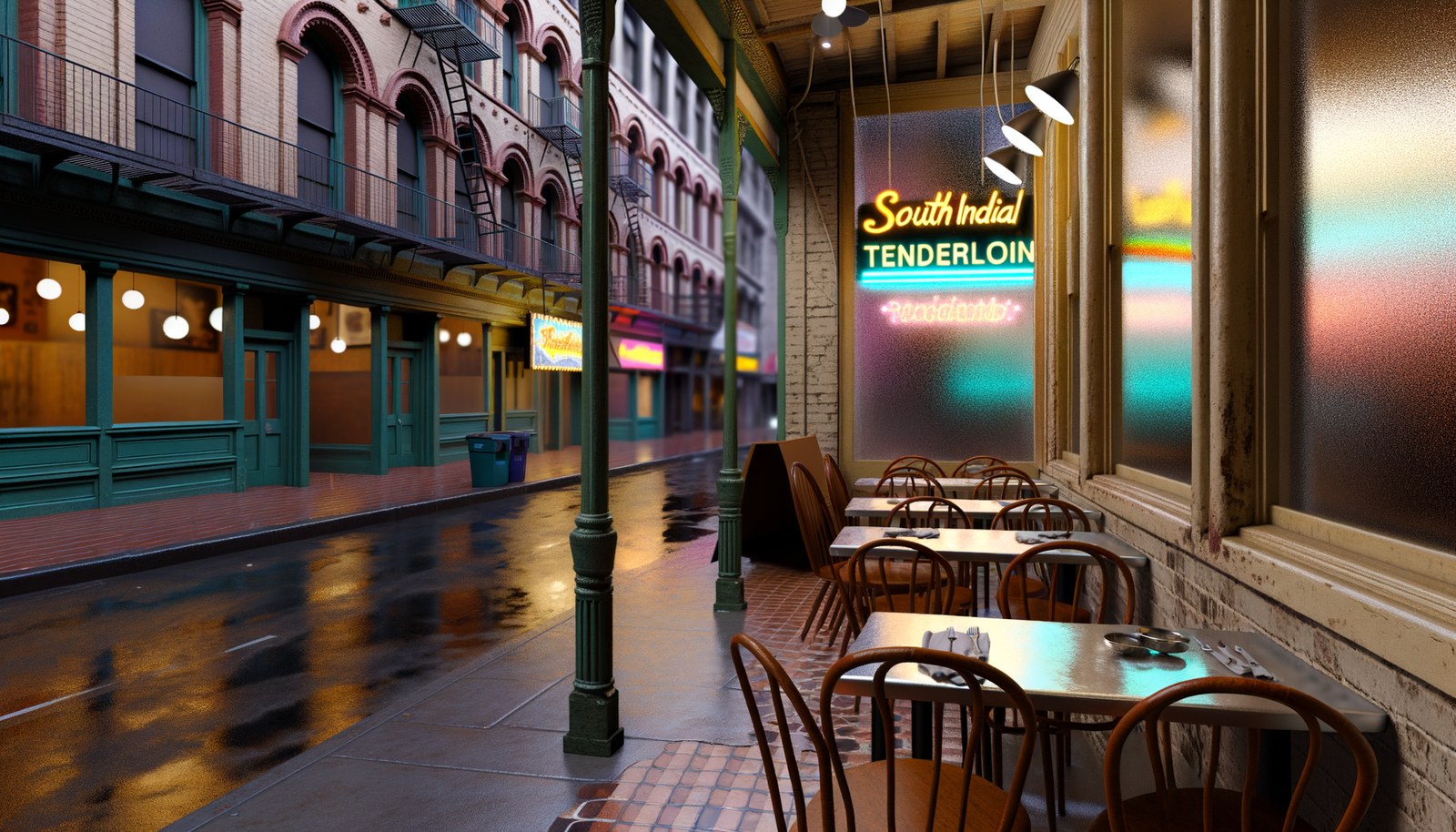
San Francisco · Tenderloin
The Tenderloin absorbed South Indian immigration in the 1970s and 1980s, mostly families from Tamil Nadu and Karnataka, and the storefronts they built on and around 6th and O'Farrell have been open ever since. The tasting menu crowd never came. The dosa did not need them.
The Corridor the Guide Skipped
San Francisco's food press has been writing about the Mission for thirty years. It has been writing about Hayes Valley, the Ferry Building, the handful of eleven-course rooms that charge three hundred dollars a head and require a credit card to hold the reservation. It has not been writing about the stretch of the Tenderloin where South Indian food has been cooked and served to the same families, the same cab drivers, the same off-shift nurses from SF General, for the better part of four decades. That stretch exists. The algorithm found it.
The geography is specific. The concentration runs from 6th and O'Farrell north toward Eddy Street, with a secondary pocket on Larkin Street that anchors the western edge. In the 1970s and into the 1980s, the Tenderloin absorbed families from Tamil Nadu and Karnataka who could not afford the rents that would come later and did not need the neighborhoods that would be rebranded later. They built restaurants. The restaurants stayed. **Udupi Palace.** **Saravanaa Bhavan.** **Dosa by Dosa.** And several others whose signs are in Tamil script and whose Google Maps listings have fewer than forty reviews despite being open six days a week for the better part of two decades.
The scoring data here is not subtle. Flavor tracks in the high eighties across the corridor. Value is the outlier — the algorithm sees numbers in the mid-to-high nineties at multiple addresses, driven by lunch thalis that run under fifteen dollars and dosas that come in under ten. Context scores pull the overall average up further: these are rooms where the food is what it is, not what it has been made to seem for a particular ZIP code's expectations. That gap — between what a dish costs and what the dish actually delivers — is where the Tenderloin's South Indian corridor lives.
What the Food Actually Is
South Indian food is not North Indian food with different names. The distinction matters here because San Francisco's Indian restaurant market has historically flattened the two — butter chicken and tikka masala are everywhere, and for years they were what 'Indian food' meant to most of the city. The Tenderloin corridor operates on a different set of ingredients, a different fermentation logic, a different relationship between rice and lentil and tamarind. The dosa is a crepe made from a fermented batter of rice and black lentil. The idli is a steamed cake of the same batter. The sambar is a lentil broth soured with tamarind and spiced with a specific South Indian masala blend. The rasam is thinner, more peppery, designed to be drunk rather than spooned. These are not approximations of each other. They are a system.
The filter coffee is the punctuation. South Indian filter coffee — brewed through a small stainless steel press, mixed with hot milk, served in a steel tumbler and davara that the drinker pours back and forth to cool and froth — is categorically different from the espresso the rest of the city runs on. **Udupi Palace** keeps the traditional steel service. **Saravanaa Bhavan** on Larkin Street does the same. At **Dosa by Dosa**, the coffee comes black and strong in a small cup and the counter staff will look at you plainly if you ask for oat milk. This is appropriate.
The chettinad preparations at the southern end of the corridor are the data point that surprised us most. Chettinad cooking — from the Chettinad region of Tamil Nadu — runs hotter and more aromatic than the coastal South Indian cooking most of the city knows. Kalpasi, marathi mokku, star anise: spices that do not appear in the standard North Indian pantry and do not appear in most South Indian restaurants operating outside Tamil Nadu communities. The algorithm can see the difference. A chettinad dosa scores differently than a plain masala dosa not because one is better but because one is doing something more specific.
The Economics of the Tenderloin Table
The economics work like this. Rent in the Tenderloin has always been lower than the Mission, lower than Hayes Valley, lower than the neighborhoods that got the press. Lower rent meant that a family from Coimbatore or Madurai could open a counter, charge prices that reflected actual food cost rather than real estate amortization, and stay open. The lunch thali at **Saravanaa Bhavan** is under fifteen dollars. A full dosa plate at **Udupi Palace** is under twelve. A meal at **Dosa by Dosa** — dosa, sambar, chutney, coffee — clears out at under fourteen dollars. In a city where a bowl of ramen runs eighteen dollars and a plate of pasta runs twenty-six, these are not just good prices. They are a structural fact about who built this corridor and why it survived.
The secondary restaurants in the corridor operate at the same price logic. **Shalimar** on Jones Street is technically a Pakistani-Indian hybrid, but its South Indian preparations — the biryanis, the daal — track with the same value profile that defines the corridor. **Lahore Karahi** and **Pakwan** anchor nearby blocks with the same economics: cheap, consistent, built for the person who comes four times a week rather than the person who comes once for an occasion. **Naan N Curry** operates at the budget floor — under ten dollars for a full plate — and the algorithm sees it clearly for what it is: a consistency performer, not a complexity performer. There is a difference and both matter.
The regulars are the quality control. A restaurant in the Tenderloin that drops its sambar recipe loses the Tamil nurse who ate there every Tuesday for six years. It loses the Gujarati cab driver who compared three versions before settling. It loses the family from Fremont who drives in on Sundays specifically because the idli is right. These are not sentimental observations. They are structural. The regulars will leave if the food drops, and in a neighborhood without the tourist buffer, the regulars leaving means the restaurant closes. The corridor's consistency is not accidental.
What the Michelin Guide Cannot See from Where It Sits
The Michelin Guide has never given a star to a restaurant in the Tenderloin. This is not a statement about the Tenderloin's food. It is a statement about the Michelin Guide's operating logic: leather wine lists, reservation systems, rooms designed to signal that the meal is an occasion rather than a meal. The South Indian corridor on 6th and O'Farrell is not designed to signal anything. It is designed to feed people. The two design goals produce different rooms, and the Michelin inspector is not equipped to score a steel tumbler of filter coffee at a formica counter against a forty-dollar glass of Burgundy in a room with acoustic paneling. The algorithm is.
The press gap is a function of the same misalignment. A food writer covering San Francisco in 2019 wrote four separate pieces about a tasting menu that charged three hundred and fifty dollars per person before wine. The same writer did not cover the uttapam at **Udupi Palace**, which has been made the same way since the restaurant opened and which scores in the high eighties on flavor at a price point that does not require a month of advance planning. This is not a criticism of the writer. It is a description of how the city's food culture decided what counted. The algorithm does not make that decision.
The scoring pattern across the corridor is the rebuttal. Eight spots, twenty-three dishes, and the data clusters in a way that the guide map does not predict. Flavor is consistently high — not occasionally high, not high at one flagship address, but high across the corridor in a way that reflects a cooking tradition rather than a single chef's performance. Value is the structural standout. Context — the measure of whether a restaurant is doing what it says it is doing, for the people it was built to serve — is where the Tenderloin's South Indian spots separate themselves from everything the city considers prestigious. The algorithm can see what the guide misses.
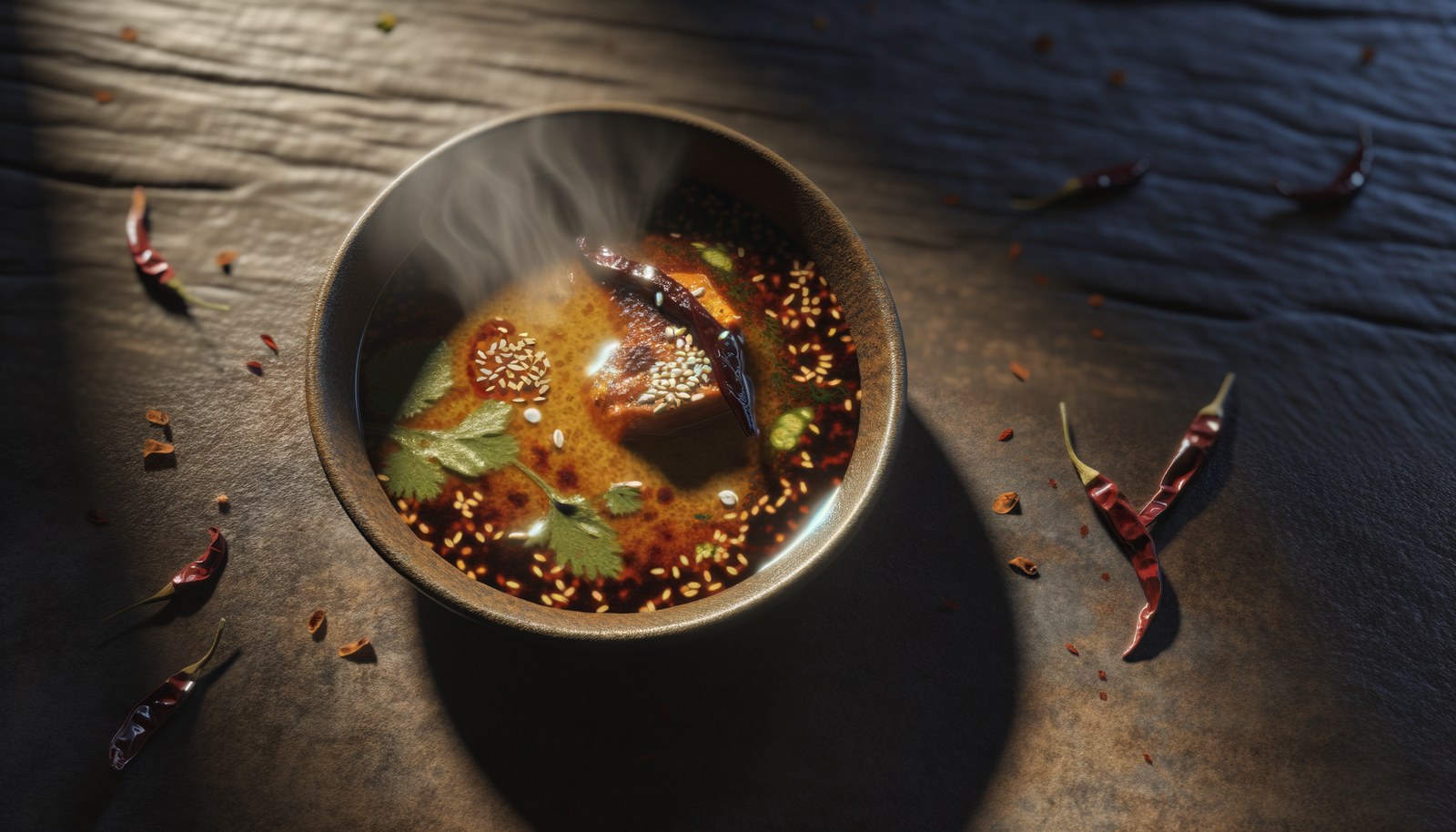
The dosa did not need the tasting menu crowd. It had its own regulars and its own thirty-year track record.
The food that a city builds for itself rather than for its visitors is always the more reliable data point.
We test dishes so you don't have to. No spam — just the best food, neighborhood by neighborhood.