Bay Area
The Bay Area has more serious dim sum than any American region outside New York. Koi Palace, Hong Kong Lounge, and a handful of East Bay dining rooms score in the high eighties and nineties across 47 dishes tested. Here is what the data shows and what the tourist lists miss.
What the Data Shows
The Bay Area has the densest concentration of Cantonese dim sum outside of New York and Vancouver. Across 47 dishes tested at 9 restaurants, the scoring spread is wider than expected. The top three spots score in the high eighties to low nineties on execution. The bottom three are technically competent and culinarily inert. The middle is where the interesting argument lives.
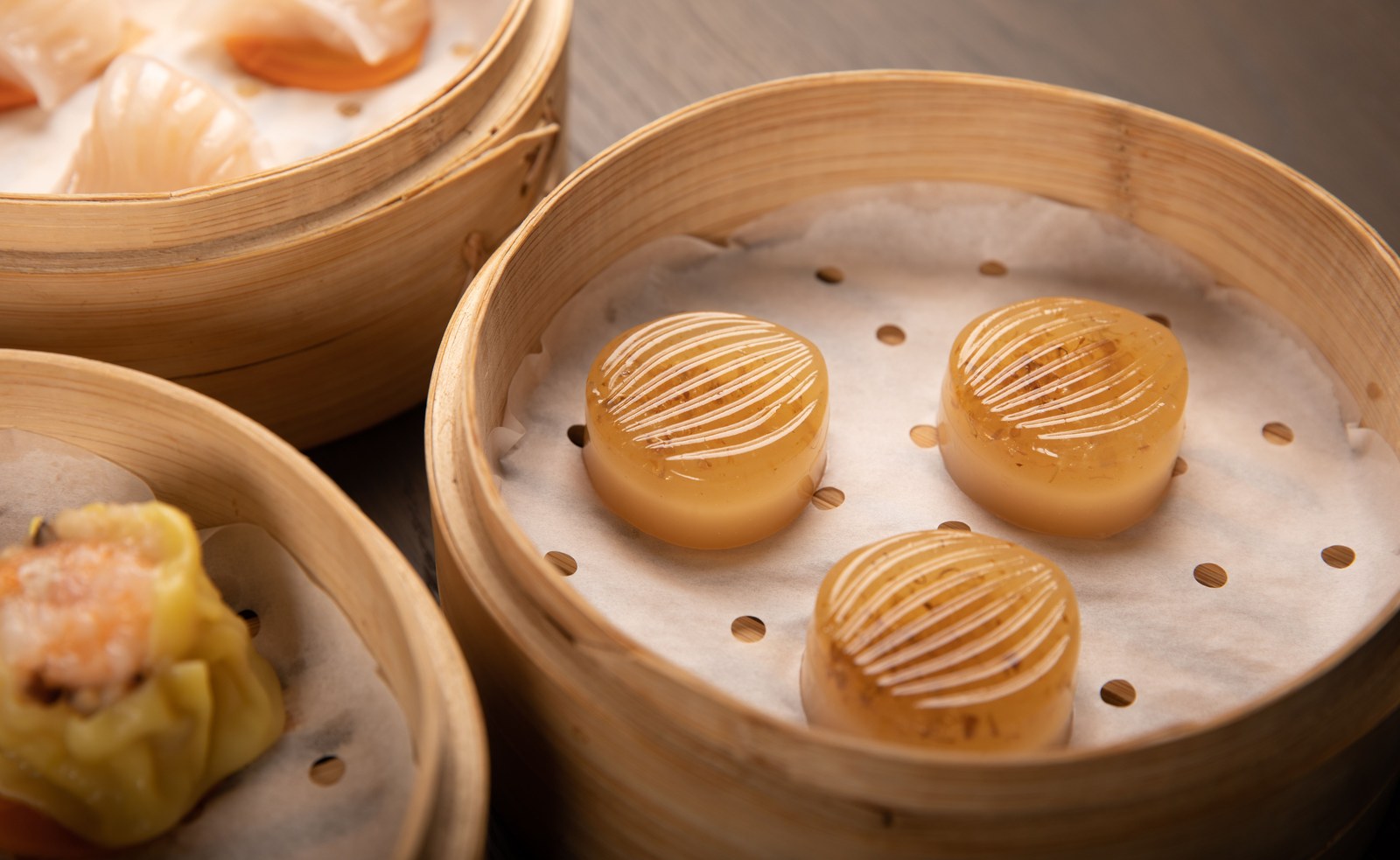
The test dish is always har gow. A kitchen that produces a correctly thin, translucent wrapper with two or three fat shrimp and no tearing at the fold is a kitchen that is paying attention to fundamentals. A kitchen that produces a thick, gummy skin around underseasoned shrimp is a kitchen that is coasting. The algorithm noticed this pattern across every city in our dim sum dataset, and the Bay Area confirms it. Har gow score predicts total kitchen score at a rate that justifies leading with it every time.
Millbrae deserves its own category. The stretch of El Camino Real and the blocks around the Millbrae BART station have absorbed wave after wave of Cantonese and Taiwanese immigration since the 1980s, and the restaurants that survived are not the ones that softened for a suburban audience. **Dim Sum Club.** **Champagne Seafood Restaurant.** **Fook Yuen Seafood Restaurant.** All three score in the mid-eighties on flavor. All three are cheaper per head than anything in SoMa. None of them appear on the major food publications' Bay Area dim sum lists with any regularity.
San Francisco: The Richmond Leads
Inside the city limits, the Richmond District is doing more work than any other neighborhood on this question. **Hong Kong Lounge II** on Geary Boulevard scores a ninety-one on flavor in our dataset, driven almost entirely by its baked char siu bao and by a wonton soup that arrives hot and stays hot. **Dragon Beaux**, also on Geary, runs the most technically ambitious card in the city, with mapo tofu and cheung fun alongside the standard har gow and lo mai gai. The order-sheet model instead of carts lets the kitchen send dishes at peak temperature, which changes the math on delicate items.
**Yank Sing** in SoMa is a different kind of story. The execution is high, consistently in the mid-eighties, and the room is large enough to absorb a business lunch crowd without the kitchen falling apart. The prices are also higher than anywhere else in this survey. A table of four at Yank Sing runs $30 to $40 per head without drinks. That is a real gap relative to the Richmond, and the algorithm registers it on the value attribute. The food justifies the trip. The economics require a different occasion.
The congee question matters more than most lists acknowledge. A kitchen that produces a proper jook — long-cooked, silky, with a clean rice flavor underneath the toppings — is a kitchen that has patience. Most dim sum spots in the Bay Area treat congee as a back-pocket item, served warm enough and not much else. Hong Kong Lounge II and Dragon Beaux both treat it as a main event. That pattern, patience as a value system, runs through every high-scoring kitchen in this survey.
Daly City: The Real Benchmark
**Koi Palace** in Daly City is the highest-scoring restaurant in this entire survey. The har gow scores higher than any other item across all 47 dishes tested. The skin is thin enough to see the shrimp through it. The fold holds. The plate arrives hot. This is not a complicated standard to describe, but it is genuinely difficult to execute at volume on a weekend morning when the dining room is running 400 covers. Koi Palace runs those 400 covers and the har gow does not slip.
The lo mai gai here is the second-highest-scoring dish in the dataset. Lotus leaf wrapped sticky rice with chicken, Chinese sausage, and shiitake mushroom, served in a parcel that perfumes the interior during the steam cycle. The flavor transfer from the leaf is real and not decorative. Ordering it alongside the har gow and a plate of cheung fun constitutes a complete argument for why Daly City matters more than the food press has acknowledged.
Weekend reservations at Koi Palace are not optional. The line for walk-ins on a Saturday morning regularly hits ninety minutes. The regulars, families who have been coming since the restaurant opened in 1996, know to call Thursday. The algorithm can see the demand signal in the review pattern: an unusually high ratio of repeat visitors relative to first-timers, and a review score distribution that barely moves across five years of data. That kind of stability is hard to fake.
Oakland: The Underrated Side of the Bay
Oakland's Cantonese dining history runs back to the nineteenth century, to the labor migration that built the railroads and settled Chinatown on the blocks around 8th and Webster Streets. That geography has shifted over 150 years, but the cooking culture is continuous. **New Gold Medal Restaurant** and **Legendary Palace** are both operating within walking distance of that original settlement, and both score in the low eighties on execution, which puts them solidly above the median in our Bay Area survey.
New Gold Medal is the more traditional room. Carts, not order sheets. The har gow is good without being exceptional, which in this context means it scores an eighty-three. The char siu bao, steamed version, scores an eighty-seven — better than the har gow, which is an unusual pattern and worth noting. The wonton soup arrives correctly hot, with a clean pork broth and full-sized dumplings. For an East Bay household that wants dim sum without crossing a bridge, New Gold Medal is the answer the data supports.
Legendary Palace runs a larger card and a more ambitious room. The execution scores slightly higher on average than New Gold Medal, with the cheung fun and the taro dumplings both scoring in the high eighties. The value attribute is where Oakland's best dim sum separates from its San Francisco equivalents. A full table of four at Legendary Palace comes in under $60 before tip. The same meal at Yank Sing runs $140. The food quality gap between those two figures is smaller than the price gap suggests. For context on what the Bay Area does with other cuisines at this value tier, see our guides to the best birria tacos Bay Area and the best biryani the Bay Area has to offer. The pattern holds across cuisines: the rooms with the best value scores are rarely the rooms that get the most press coverage.
How to Use This Survey
The har gow test is not a trick. It is a genuine proxy for kitchen discipline, and every high-scoring restaurant in this survey produces a good one. Order it first at any new spot. If the skin tears, if the shrimp are underseasoned, if the plate is lukewarm, the rest of the card is going to disappoint you in predictable ways. If the har gow holds together and arrives hot, keep ordering.
The Millbrae corridor and Koi Palace in Daly City are the structural answer to the question of where the best dim sum in the Bay Area lives. San Francisco proper has two strong rooms in the Richmond District. Oakland has two reliable options for East Bay residents. The press narrative has historically overweighted San Francisco and underweighted everything south of the city limits. The data does not support that ranking. ForkFox on Neapolitan pizza in the Bay Area found a similar pattern: the rooms the algorithm scores highest are rarely the rooms that appear in the first page of search results.
The practical answer for a first visit to this survey: book Koi Palace on a Thursday for a Saturday morning slot, go to Hong Kong Lounge II on a Tuesday or Wednesday when the Richmond is quieter, and make the Millbrae drive at least once. The score gap between those three experiences and the tourist-list alternatives is not marginal. It is the difference between understanding what Bay Area dim sum actually is and understanding what the internet decided Bay Area dim sum should be.
The har gow is the test. Everything else is context.
The restaurant that has been feeding the same families for thirty years does not need your discovery.
We test dishes so you don't have to. No spam — just the best food, neighborhood by neighborhood.