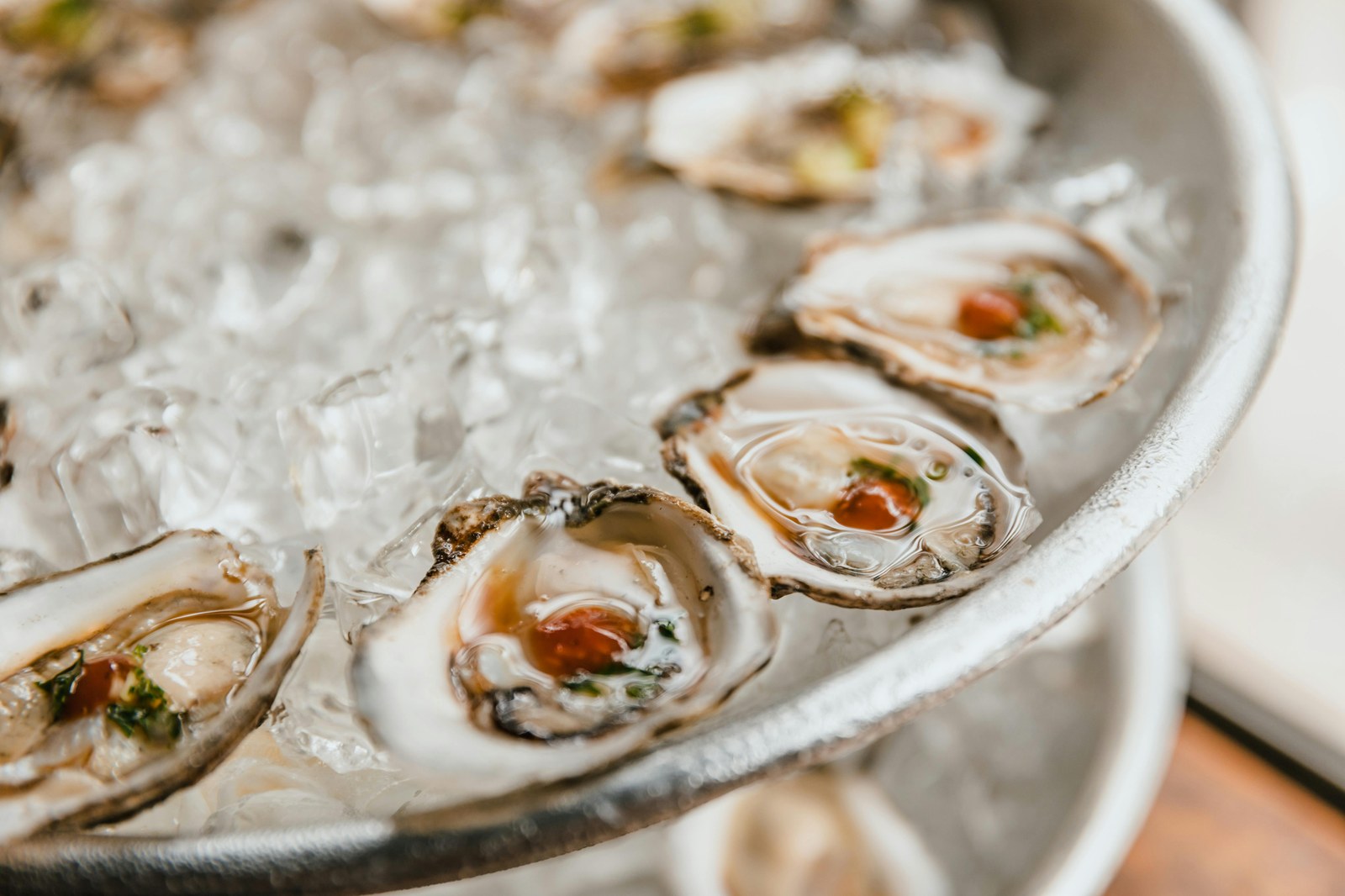
Oakland · Jack London Square
The waterfront has the address. The question is whether the food justifies the view.
What the Address Promises
Jack London Square sits at the bottom of Broadway where the street meets the Embarcadero and the Embarcadero meets the estuary. The water is close enough that you can smell it through an open window on the right night. The question that any seafood program operating along this stretch has to answer is whether proximity to the source translates into anything on the plate — whether the bay is a kitchen asset or a marketing backdrop.
The answer, across nine spots and twenty-seven dishes, is split. Some kitchens have built genuine raw bar programs that rotate sourcing, price by the piece rather than the platter, and treat oysters as a product with a provenance worth explaining. Others have waterfront addresses and seafood menus that could have been printed in a hotel conference center in 1994. The Embarcadero gives everyone the same view. It does not give everyone the same palate.
The neighborhood's food history is not a seafood story by default. Jack London Square spent most of the 1990s and 2000s as a development project looking for a reason to exist — chains and event spaces, a Barnes & Noble that closed, a farmers market that survived. The seafood that works here now is not legacy. It was built in the last fifteen years by operators who understood that a waterfront address carries an obligation.
The Scoring Picture
The raw bar at Lungomare is the clearest data point. Oysters rotate by source — the list on a given Tuesday will differ from the list on Saturday, and the staff can explain why. That is not a given in this corridor. Flavor scores for the raw preparations land in the high eighties to low nineties across multiple visits. The ceviche uses lime-forward acid and does not try to be Peruvian; it is a kitchen that has decided what it is and executes that decision cleanly.
Bocanova runs the most ambitious program on the strip. The pan-Latin framework means the seafood arrives in forms — ceviches, tiraditos, whole roasted preparations — that require actual technique rather than a working broiler and a lemon wedge. The ceviche scores high. The chowder does not; it is on the menu because tourists expect it, and the kitchen's heart is not in it. That gap between the dish the kitchen believes in and the dish the menu requires shows up in the data every time.
Scott's Seafood has been on this block since 1976, which means it predates the redevelopment, the real estate cycle, and most of the restaurants that have opened and closed in the square since. The po boy is properly fried — the breading stays crisp, the fish inside does not steam itself into mush, the bread has structural integrity. The chowder is thick and not starchy. The room is not trying to be anything other than what it is. The algorithm noticed that too.
When the View Becomes the Product
Plank and Lost & Found are the clearest examples of what happens when a waterfront location gets treated as sufficient. Both have outdoor space, both have views of the estuary, and both have food programs that score in the mid-sixties at best. The seafood at Plank exists in the same way that nachos exist at a sports bar — it is a delivery mechanism for the experience of being somewhere, not a reason to go. That is a legitimate business model. It is not a seafood program.
The room at Box and Bells is a different kind of problem. The kitchen has genuine skill — the gastropub framing produces some solid execution on fried preparations, and the whole fish special, when it appears, is worth ordering. The issue is that the menu does not commit. It rotates in ways that feel accidental rather than seasonal. The scores are variable because the kitchen's focus is variable. On the right night, it is one of the better kitchens in the square. On the wrong night, the data looks like a different restaurant.
The honest read on Jack London Square's seafood scene is that it has the infrastructure for something serious — the water, the address, two or three kitchens with actual technical skill — and it has not finished becoming what it could be. The comparison that keeps appearing in the data is not to other Oakland neighborhoods. It is to what this corridor looked like ten years ago, which was considerably worse.
Jack London Square in the Oakland Context
Oakland's food identity is not built on waterfront dining. The city's strongest culinary concentrations are inland — Mexican food Fruitvale Oakland along International Boulevard runs deeper and more consistent than anything on the Embarcadero, and the Ethiopian food Temescal has built along Telegraph Avenue in the last two decades has produced a cluster that scores among the highest in the city across flavor and value. ForkFox on Chinatown dim sum in Oakland's downtown core tells a similar story: the neighborhoods that weren't built around a view built something more durable than a view.
That context matters for Jack London Square because it explains the trajectory. The square has spent the better part of thirty years trying to be a destination rather than a neighborhood. The seafood programs that work here — Lungomare, Bocanova, Scott's Seafood — are not destination restaurants in the tourist sense. They are kitchens that have committed to a product and then made the waterfront address incidental. The ones that fail treat the address as the product.
The data pattern across Oakland's food geography is consistent: the kitchens that score high are the ones where the geography of the room is an afterthought. The room at Lungomare faces the water. The oysters face the prep station. That hierarchy — product over backdrop — is what the algorithm keeps finding, and it is not specific to seafood.
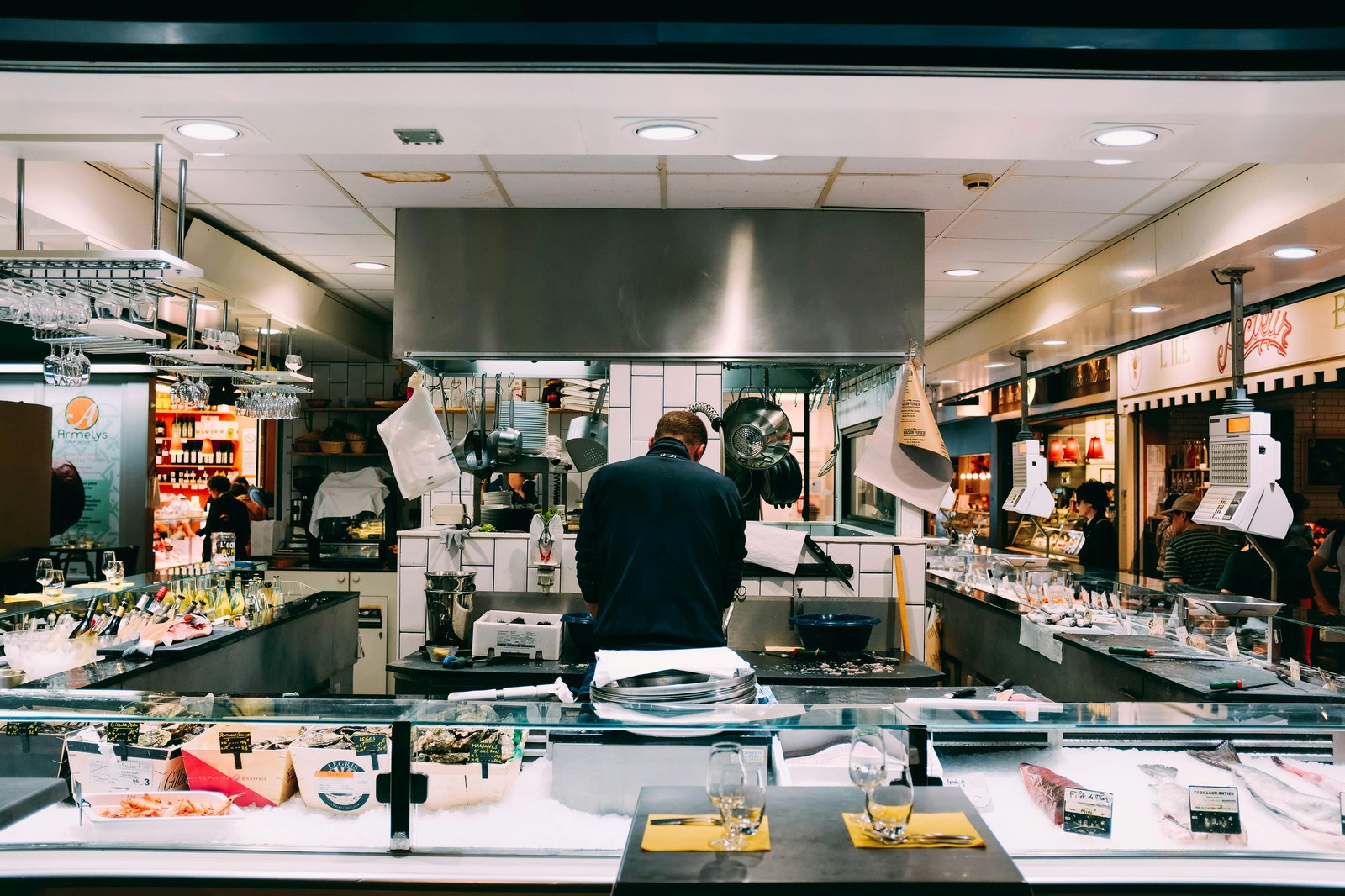
The bay is right there. That is either a promise or an excuse, depending on who's cooking.
The bay is not a kitchen — the bay is a fact, and what you do with the fact is the only thing that matters.
We test dishes so you don't have to. No spam — just the best food, neighborhood by neighborhood.