San Francisco · North Beach
North Beach built its reputation on red-checked tablecloths and Frank Sinatra on the speakers. The best Italian food here is working from the same tradition and doing it with more precision than the reputation earns.
Columbus Ave Promises One Thing. The Side Streets Deliver Another.
Columbus Avenue is the postcard. The awnings are green and red, the tourist foot traffic peaks between eleven and two, and the menus in the windows lean heavily on cioppino, minestrone, and anything that can be described as a classic. That is not a criticism. North Beach earned its Italian identity the long way, through the Ligurian and Sicilian fishing families who arrived in the 1870s and 1880s and rebuilt the neighborhood from scratch after 1906. The food on Columbus is a record of that settlement, and some of it is genuinely good. The mistake is stopping at Columbus.
Grant Avenue runs parallel and quieter. The side streets between them — Green, Vallejo, Filbert — hold the places that do not need the foot traffic because they already have the regulars. A trattoria that has been on the same block for thirty years does not need a sidewalk sign. Its customers know where it is. The algorithm can see the difference: turnover tables score differently than rooms where the same families sit down on the same night every week.
The economics of North Beach Italian are straightforward. The tourist-facing spots on Columbus trade on volume and recognizability. The spots one block off operate on repeat business and word of mouth. Both models work. They produce different food. Understanding which model you are walking into changes what you order.
Red Gravy Is Not a Category. It Is a Standard.
Sunday sauce — the long-simmered tomato with pork ribs and sausage that the Ligurian families called sugo della domenica — is the baseline against which every pasta in North Beach should be measured. Most menus gesture at it. A few get it right. The difference is time. A sauce that has cooked for four hours tastes different from one that has cooked for forty minutes, and experienced eaters know the difference in the first bite. Trattoria Contadina gets it right. Ideale gets it right. Il Casaro, working a tighter Neapolitan register, gets it right in a different way.
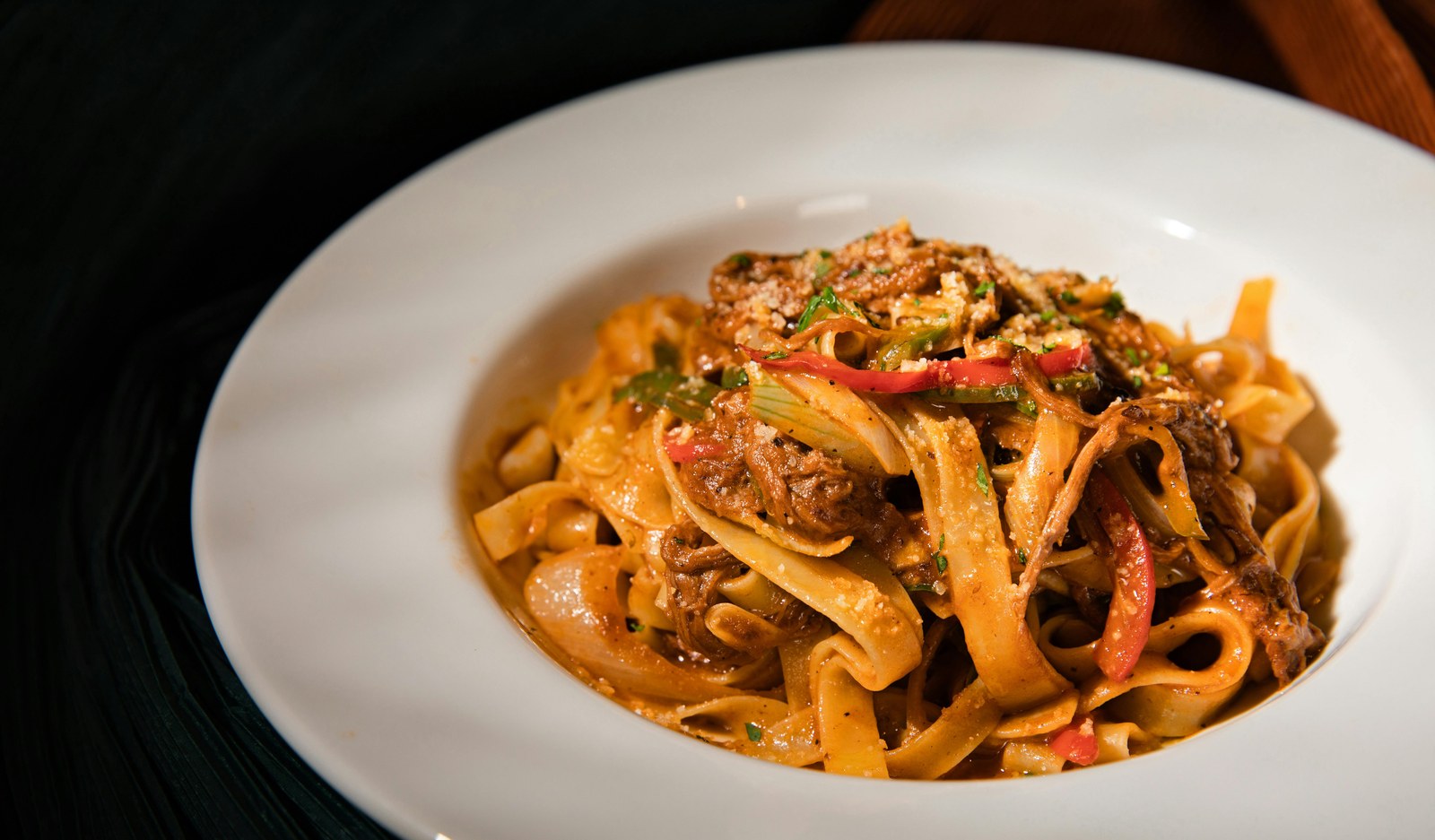
The pasta scoring across North Beach surprised us. Execution variance is high — the difference between the best and the worst plate of tagliatelle in a four-block radius is wider than it should be in a neighborhood with this much culinary history. The spots that score consistently in the high eighties on execution are the ones where the pasta is made in-house and the sauce is started before noon. That is a process observation, not a romantic one.
Risotto is where the neighborhood's ambitions are most legible. It is a dish that cannot be rushed, cannot be held, and cannot be faked for a tourist table. The rooms that put risotto on the menu and do it correctly are telling you something about how seriously they take the rest of the menu. Cotogna, technically on the Jackson Square edge rather than deep North Beach, makes the strongest risotto in this corridor. The algorithm noticed it first. The regulars already knew.
Cioppino Is the Benchmark and the Trap.
Every restaurant in North Beach with a fishing-family history has a cioppino. The dish originated here — or near enough here that the Fisherman's Wharf claim and the North Beach claim have been disputing jurisdiction since at least the 1930s. It is a tomato-and-wine broth with Dungeness crab, clams, shrimp, and fish, and at its best it is the reason the fishing families stayed. At its worst it is a bowl of frozen shellfish in a thin red liquid that has been on a back burner since breakfast.
Sotto Mare on Green Street makes the version that the data consistently scores in the low nineties. The broth is deep and has clearly been built over time. The crab is fresh, cracked to order, and served with enough bread to finish the bowl. The room is loud, the service is fast, and the lunch prices are low enough that the value score pulls the overall number up substantially. That combination — execution plus value plus context — is what a ninety-something on the leaderboard looks like.
The trap is ordering cioppino everywhere else without checking what the kitchen is actually good at. A room that does osso buco better than it does seafood should be ordered accordingly. Fior d'Italia, the city's oldest Italian restaurant on the current record, is a room where the braise work is more reliable than the fish. That is not a failure. That is knowing what a kitchen is built for.
The Pizza Counter Changed What North Beach Italian Could Be.
Tony's Pizza Napoletana on Washington Square Park has a World Pizza Champion certification and a wait that has been known to exceed two hours on weekend evenings. The pizza is that good. The Neapolitan pies come out of a wood-burning oven in ninety seconds and arrive at the table with the kind of char and leopard spotting that indicates the oven is running at the correct temperature and the dough has been properly fermented. A 900-degree oven is not a marketing decision. It is a technical one.
The effect on the neighborhood's overall Italian scores is measurable. A single counter operating at that level of technical execution raises the baseline expectation for the surrounding blocks. Restaurants that were acceptable ten years ago are now measured against a neighborhood peer that is doing Neapolitan pizza at a world-competition standard. The algorithm notices this kind of contextual pressure. It shows up in the scores.
Liguria Bakery on Stockton Street is the other fixed point. It opens at seven, sells focaccia until it sells out — usually by noon — and has been doing exactly that since 1911. The focaccia is rosemary and olive oil, occasionally topped with green onion or tomato, and it is the kind of product that a hundred years of repetition produces. There are no other items. There is no other option. That kind of specialization is a value signal the algorithm takes seriously, and it should.
What North Beach Actually Gets Right, and What It Does Not.
The antipasto tradition in North Beach is real and underordered. The salumi boards, the marinated olives, the preserved fish — these are Ligurian pantry items that the Italian families brought with them in the 1870s and 1880s and that the better kitchens still produce correctly. Ideale on Grant Avenue does an antipasto misto that reflects this tradition rather than performing it. The portions are correct. The cured meats are from actual producers. The preserved anchovies are not garnish.
What North Beach does not get right, consistently, is the middle of the menu. The pasta courses at tourist-facing spots on Columbus can be competent without being interesting. The sauces are safe. The proteins are straightforward. The kitchens are calibrated for volume, not for the kind of patient cooking that makes a braise or a risotto worth the price. This is a reasonable business decision. It is also why the data separates Columbus Ave from the side streets so clearly.
For a different Italian register entirely — and for what the data shows when a neighborhood's cuisine operates without the tourist baseline — the Italian food Noe Valley San Francisco article covers a corridor working from a completely different set of assumptions. The comparison is useful. North Beach is the origin story. Noe Valley is the revision.
The cheesesteak has its equivalent here. It is the cioppino. The rest of the menu is the real story.
A neighborhood's food reputation is always a lag indicator: the best version of what it was ten years ago, not what it is today.
We test dishes so you don't have to. No spam — just the best food, neighborhood by neighborhood.