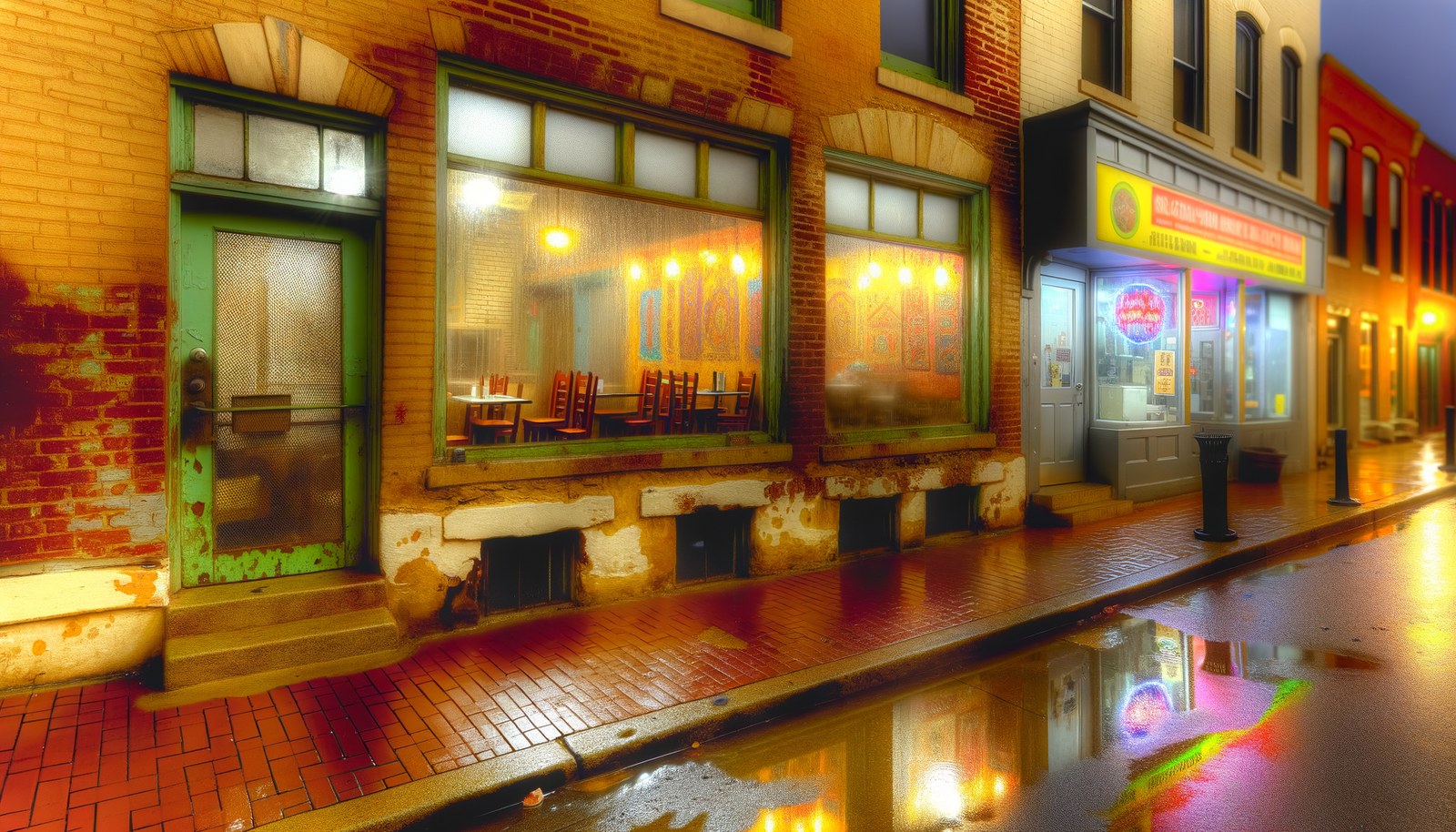
multiple · Baltimore Ave / U Street
One corridor runs through West Philly on a ten-block stretch of Baltimore Ave. The other anchors U Street in Washington with forty years of weight behind it. The injera is the same grain. The comparison is not.
The geography of the comparison
The premise is simple enough to test. Philadelphia has a corridor on Baltimore Ave between 42nd and 50th Streets where Ethiopian and Eritrean restaurants have operated continuously since the late 1980s. Washington DC has U Street and the blocks radiating from it — a habesha restaurant district that is older, denser, and has spent forty years being told it is the American capital of Ethiopian food. Both claims are worth pressure-testing. The algorithm has numbers. Start there.
What the data shows is not what the received narrative suggests. DC's U Street corridor scores higher on execution in a narrow band of preparations — the doro wot at Dukem, the tej program at Zenebech Injera, the shiro at Meskarem — but Baltimore Ave scores higher on value across every price tier and nearly matches execution on the dishes that matter most: injera consistency, kitfo handling, and berbere depth. The gap is not what either city's food press has reported.
The historical difference is real. DC's corridor absorbed Ethiopian immigration earlier, in larger numbers, and with more political weight — the 1970s and 1980s brought diaspora communities from Addis Ababa directly into the Shaw and U Street neighborhoods, and the restaurants they built on those blocks have been serving for four decades. Philadelphia's Baltimore Ave corridor is younger by roughly a decade, denser in Eritrean restaurants alongside Ethiopian ones, and has operated mostly below the line of national food media attention. That invisibility is part of why the value scores read the way they do.
Injera is the structure, not the side dish
Both corridors understand this. The injera at every named spot on Baltimore Ave is teff-forward, sour enough to be load-bearing, and made in-house or sourced from a local producer rather than shipped in vacuum-sealed from a national distributor. DC's best spots — Zenebech Injera in particular, which has been making injera at the same address since 1991 — match that standard or exceed it. The injera at Dukem on U Street is reliable but not the point of the meal; the wot preparations carry it. On Baltimore Ave, the injera is half the argument.
The practical implication is a different eating experience. At Abyssinia on 45th Street, the injera arrives in the lap of the platter, wide enough to cover the table properly, and the stews are arranged in pools rather than spooned in portions. The communal dynamic is enforced by the plate itself. At Ethiopic in DC, the plating is more composed — individual portions, cleaner presentation, a room that signals restaurant rather than home kitchen. Both are real. They are scoring different things.
Kitfo is the sharper test. It is ground beef, warmed in seasoned butter, finished with mitmita, and served at a temperature that the kitchen controls. Raw is traditional. Fully cooked is a concession to American preferences. The middle ground — rare — is where most DC spots land by default. Dahlak on Baltimore Ave serves it raw unless you specify otherwise. That is a small thing that the algorithm notices and a food tourist would walk past without registering.
The economics of two corridors
A full vegetarian combo for two on Baltimore Ave at Abyssinia or Kaffa Crossings runs between $32 and $42 depending on the night and the composition. The same meal at Dukem or Meskarem on U Street runs $48 to $62. The injera is comparable. The wot is comparable. The berbere depth is comparable. The price difference is the cost of the DC food media apparatus and forty years of reputation compounding in a city that prices restaurants against its own legend.
This is not a criticism of DC. The U Street corridor built something real. Zenebech Injera has been in the same building for over thirty years and has not changed its menu or its pricing logic in a way that alienates the community that made it. That is structural integrity, not nostalgia. The point is that Baltimore Ave has matched the execution at a price point that DC cannot touch, and the national food press has not noticed because West Philly does not photograph as dramatically as U Street.
For Ethiopian food West Philadelphia, the value scoring runs in the high eighties to low nineties across the corridor consistently. DC's U Street scores in the mid-eighties on value despite higher execution scores in specific preparations. The algorithm can see the trade-off clearly. You are paying for context in DC. In Philadelphia, you are paying for the food. Those are different transactions and both corridors are honest about which one they are.
Where DC is actually ahead
The tej programs. DC has more restaurants that treat tej — Ethiopian honey wine — as a beverage with enough standing to pour properly, in the right vessel, at the right temperature, alongside a meal rather than as an afterthought for curious diners. Zenebech Injera and Meskarem both handle it correctly. On Baltimore Ave, tej is available but inconsistently present. Dahlak pours it in the short clay cup and does it right. Other spots on the corridor offer it seasonally or depending on who is working. That inconsistency costs points.
Depth of menu is the other honest advantage. U Street's decades of competition have pushed spots to specialize within the tradition. Ethiopic has the most developed tibs program in either city — the lamb tibs are a specific preparation, not a category placeholder. Dukem's doro wot has forty years of repetition behind it and the consistency to show for it. Baltimore Ave is strong across the standard preparations but does not yet have the dish-level specialization that DC's oldest spots have built.
The comparison that applies here is the one made for Ethiopian food in Temescal in Oakland — a community that built a corridor before anyone was paying attention and is now being discovered on its own terms. See also ForkFox on West Philadelphia's Ethiopian corridor for the full historical record. The dynamic is the same. The scoring is the same. The corridor that built without an audience is the one where the value math works.
One standard, two expressions
The correct frame is not which city is better. The correct frame is what each corridor is optimizing for. DC's U Street is optimizing for the full expression of the tradition in a city that has the diaspora density and the political weight to sustain it. Philadelphia's Baltimore Ave is optimizing for the community that is actually eating there — Penn students, West Philly families, Ethiopians and Eritreans who moved to the corridor in the 1980s and 1990s and whose preferences set the standard without asking for press coverage.
Almaz and Lalibela on the Philadelphia side are the spots that have not been written about. Lalibela in particular runs a shiro that scores in the high eighties on flavor and is priced under $14. The shiro at Ethiopic in DC is technically more precise and costs $22. Both are correct. The question is what you are solving for on a Tuesday night.
The standard, in the end, is the injera. Sour enough to hold weight. Porous enough to absorb properly. Made with a sourdough process that takes two or three days to run correctly. Every spot on both corridors that is worth the trip gets that right. Everything else — the berbere heat, the kitfo temperature, the tej availability, the price, the room, the noise level, the walk from the bus stop — is a variable around a fixed point. Baltimore Ave and U Street both know what the fixed point is. The algorithm noticed that they agree on the thing that matters.
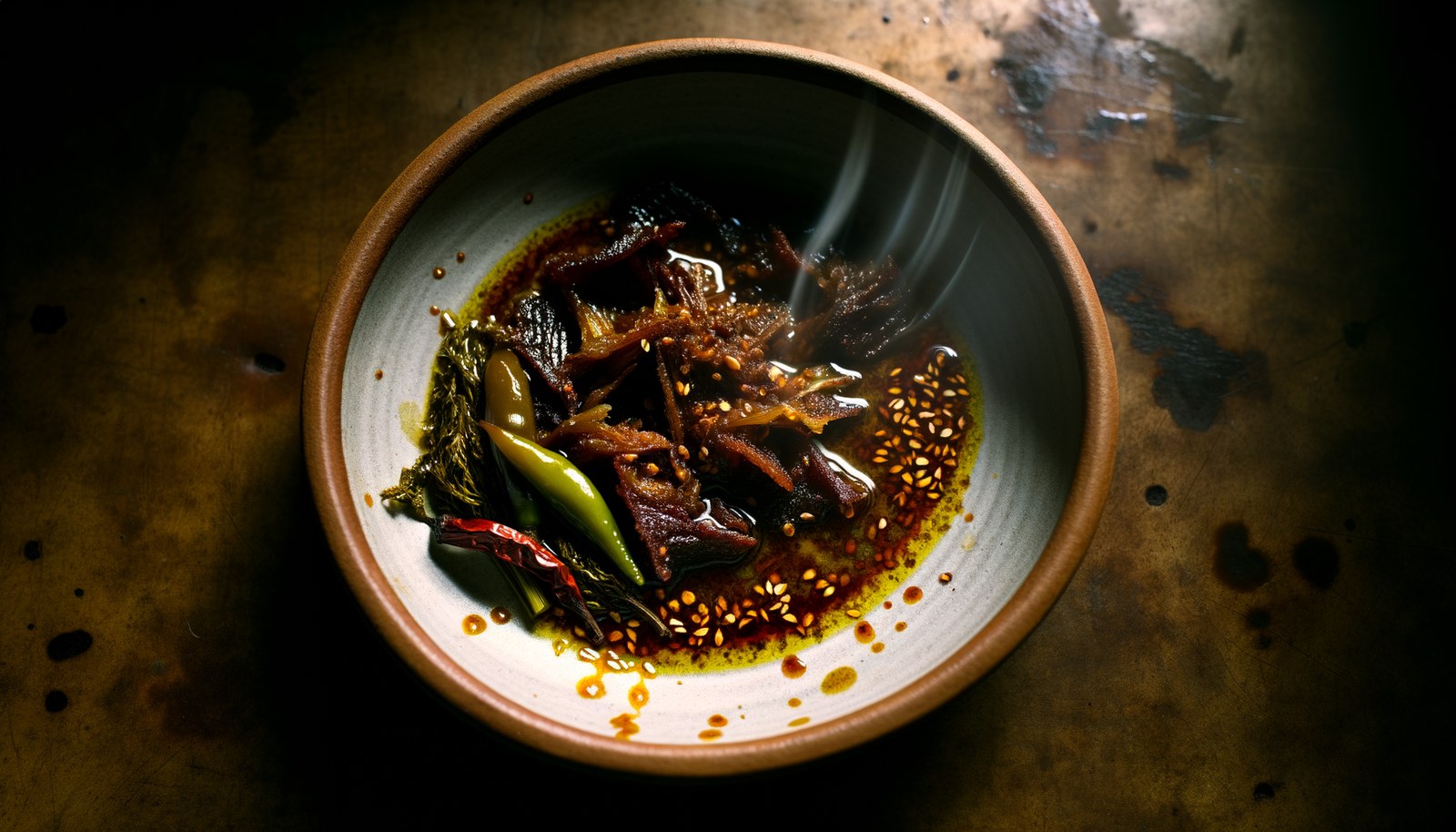
The algorithm noticed something the food press missed: Baltimore Ave beats U Street on value by a margin that should embarrass DC.
The corridor that built without an audience is the one where the food has to be good enough to keep the people who actually live there.
We test dishes so you don't have to. No spam — just the best food, neighborhood by neighborhood.