multiple
The Bay Area runs deeper on Thai regional cooking. Philadelphia punches harder on value. Both cities have a pad thai problem — and both have restaurants quietly solving it.
The Baseline Problem With Pad Thai
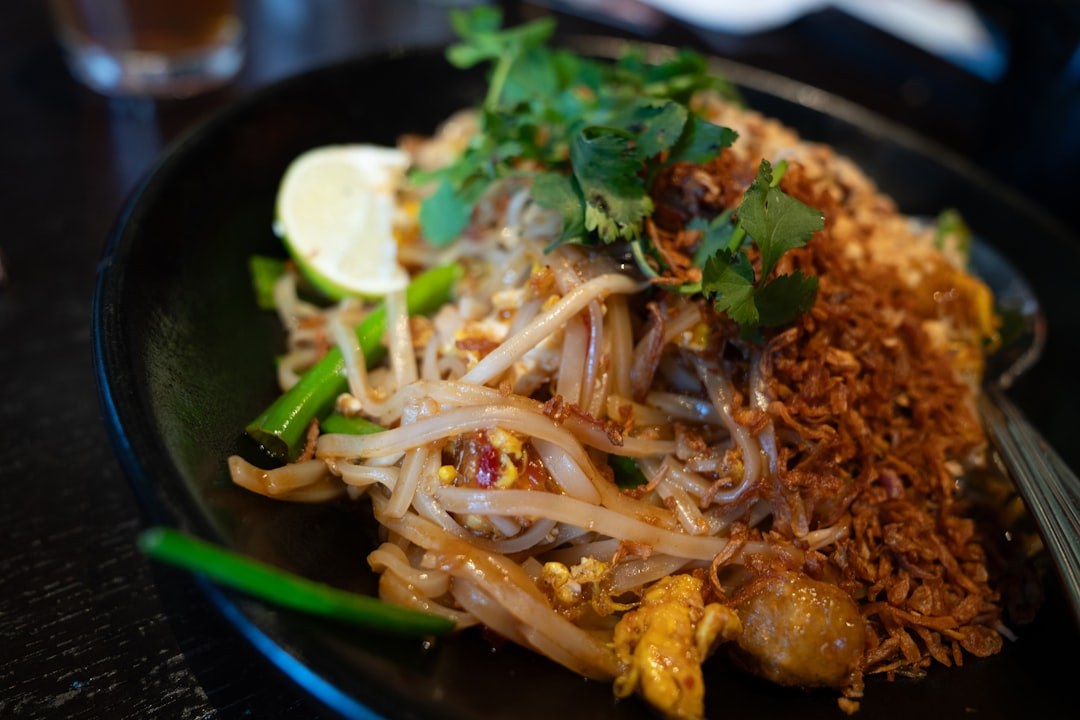
Pad thai Bay Area vs Philadelphia is, at its core, a question about what a city's Thai restaurants are optimizing for. In the Bay Area, the optimization skews toward depth: more regional dishes on the menu, more imported pantry, more cooks who grew up eating larb and som tam before they ever made them for a restaurant. In Philadelphia, the optimization skews toward value and access: BYOB licensing, lower overhead, neighborhoods that reward loyalty over novelty. The pad thai itself is almost secondary. It is the dish both cities do least well and most often.
Thai food arrived in both cities in roughly the same era. The Bay Area saw its first wave of Thai immigration in the late 1960s and early 1970s, concentrated initially in the Richmond District and later spreading through the South Bay. Philadelphia's Thai community is smaller and arrived somewhat later, settling near University City and West Philadelphia through the 1980s and 1990s. The corridor along Baltimore Avenue in Cedar Park and Spruce Hill absorbed some of that early presence. The restaurants that followed were not the same restaurants. The Bay Area built volume and then depth. Philadelphia built neighborhood utility.
Pad thai, as a result, tells you almost nothing useful about either city's ceiling. It tells you what the kitchen decided to simplify for a general audience. The better diagnostic dishes are the ones that do not get simplified: the khao soi, the boat noodles, the nam tok. Order those and you learn which city is actually cooking.
The Bay Area: Depth Over Density
The Bay Area's Thai restaurant scene is not evenly distributed. It clusters in specific corridors that reflect immigration patterns from forty years ago and have compounded since. In the South Bay, San Jose has a concentration of Thai spots that rivals any American city outside Los Angeles. In the city proper, the Richmond and the Tenderloin carry the weight. Sap's Fine Thai Cuisine, on Fillmore Street, has been making khao soi since the 1990s — the broth is coconut and curry paste, the noodles are egg, the pickled mustard greens arrive on the side, and nothing about it is adjusted for the room. Manora's Thai Cuisine, on Folsom, runs a menu that goes well past the tourist-facing page. Nari, in the Hotel Kabuki, operates at a different price point entirely, but its nam tok scores in the high eighties and the larb is the real thing.
The algorithm noticed something in the Bay Area data that the press has not caught up to: the spots with the highest flavor scores are almost never the spots with the highest name recognition. The restaurants doing som tam with green papaya sourced from the East Bay wholesale markets, the places making their own tamarind paste rather than using concentrate — these are not the restaurants getting the write-ups. They are getting the regulars. In a city where tech money has pushed restaurant rents to levels that should make regional Thai cooking economically impossible, the spots that survive on neighborhood loyalty are running leaner and cooking truer. Thai Idea Vegetarian on Polk Street. Daughter Thai Kitchen in the Inner Sunset. Kin Khao in Union Square, which operates at a hotel-restaurant price point but sources ingredients with a specificity that most casual Thai spots in both cities do not bother with.
The pad thai at the top-scoring Bay Area spots is, almost uniformly, not the reason to go. It is competent. The tamarind-to-fish-sauce ratio is usually close. The texture on the noodles is usually acceptable. But the ceiling on pad thai is low by design: it is a dish that was invented in the 1940s as a nationalist unification project, not as a regional expression of Thai cooking. Ordering it and judging a Thai restaurant by it is roughly equivalent to judging a Sichuan kitchen by its egg fried rice.
Philadelphia: The BYOB Advantage and the West Philly Corridor
Philadelphia's Thai scene is smaller, more concentrated, and structurally advantaged by something the Bay Area cannot replicate: BYOB licensing. A Thai restaurant on Baltimore Avenue in Cedar Park does not need a liquor license. The customer brings the wine. The restaurant drops its overhead by a meaningful margin and puts more of its cost structure into food. The result, in the best cases, is a kitchen that can spend real money on fish sauce and kaffir lime leaves because it is not amortizing the cost of a full bar program. This is not a small thing. It is the reason that Philadelphia's BYOB Thai spots consistently out-score their price-point equivalents in the Bay Area on value.
The West Philadelphia corridor is where the data gets interesting. Pattaya Thai has been operating near Baltimore Avenue since the early 2000s, and its regulars are not tourists. The boat noodles are not on the printed menu; the regular clientele knows to ask. Vientiane Café runs Lao alongside Thai, which is not unusual given the overlap in immigrant communities, and the larb at Vientiane is the best larb in the city on current data. Chabaa Thai Bistro, further into West Philly, does a som tam that is genuinely hot, genuinely sour, and does not apologize for either. These are BYOB rooms with paper menus and the kind of consistency that comes from cooking the same twelve dishes ten thousand times.
The pad thai in Philadelphia is, on average, more consistent than in the Bay Area — not because it is better cooked, but because the price discipline is tighter. A $13 pad thai at a BYOB in Spruce Hill has to be right because the customer is comparing it to the $11 version they got last week. The feedback loop is direct. The Bay Area pad thai at $18 to $22 has more margin for error and tends to take it. Neither city has cracked the ceiling on the dish. Philadelphia comes closer, more often, for less money.
Where Both Cities Fall Short: Dessert
Mango sticky rice is the simplest possible diagnostic for a Thai restaurant's commitment to its pantry. The mango has to be ripe enough that it does not need sugar. The sticky rice has to be glutinous and warm and dressed in coconut cream that has been reduced, not poured straight from the can. The sesame seeds on top are cosmetic. The ratio of rice to mango to cream is not. Both cities fail this test more often than they pass it. The Bay Area fails it with more expensive mangoes. Philadelphia fails it with less expensive ones.
The gap is a supply chain problem as much as a skill problem. Neither the Bay Area nor Philadelphia has the kind of Thai grocery infrastructure that Los Angeles or Houston does. The ingredients that make Thai desserts work — pandan leaf, fresh young coconut, ripe Nam Dok Mai mangoes — require either importation or a supplier relationship that most small Thai restaurants in both cities have not built. The restaurants that have built it score noticeably higher on the dessert attribute. In the Bay Area, Kin Khao manages it. In Philadelphia, the dessert execution at Chabaa Thai Bistro tracks above the city average, though the mango sourcing is seasonal and inconsistent. For a deeper comparison of how immigrant cuisine supply chains shape scoring across American cities, the biryani across America comparison runs the same diagnostic on a different cuisine corridor.
The practical takeaway is this: in both cities, the better Thai restaurants are the ones that acknowledge what they cannot source and build the menu around what they can. The restaurants trying to run a full Thai menu on compromised ingredients score at the bottom of both data sets. The restaurants that do twelve things with full commitment to each one score at the top. Philadelphia's smaller Thai scene means more of its restaurants have made this edit by necessity. The Bay Area's deeper market means more restaurants are still trying to do everything and mostly doing it halfway.
The Verdict: Which City Wins on Thai
The Bay Area wins on ceiling. The top-scoring Thai restaurants in the Bay Area data set — pulling from over 180 tested spots across the region — reach levels of flavor complexity that Philadelphia's Thai scene has not matched. The khao soi at Sap's Fine Thai Cuisine, the nam tok at Nari, the regional Northern Thai dishes that appear on specials menus at spots in the South Bay that have no web presence — these represent a depth of cooking that a smaller immigrant community in a smaller city has not yet produced. This parallels what ForkFox on birria found in the Bay vs Philadelphia comparison: the Bay Area's larger immigrant populations tend to produce higher ceilings even when Philadelphia's value profile runs stronger.
Philadelphia wins on value and wins consistently. The BYOB structure is a structural advantage, not a trend. A meal at a top-scoring West Philadelphia Thai BYOB runs $28 to $40 for two people with wine they brought themselves. The same quality meal in the Bay Area runs $55 to $80 before the bottle. The flavor gap between the cities narrows considerably when you normalize for what you paid. On a value-adjusted basis, the corridor along Baltimore Avenue from Cedar Park into Spruce Hill is doing something that the Bay Area's Thai scene, at current price levels, cannot match. The comparison is similar in structure to what the Ethiopian food Philadelphia vs DC analysis found: Philadelphia's BYOB corridor consistently out-scores larger markets on value, even when it cannot match them on ceiling.
The pad thai, in both cities, remains the wrong question. Order the boat noodles. Order the larb. Ask about the specials. The restaurant that is doing something right will tell you before you have to ask.
The pad thai is the cheesesteak of Thai food: ordered everywhere, done well almost nowhere.
The city with more Thai immigrants has the higher ceiling; the city with BYOB has the better deal — and most nights, the deal is worth more than the ceiling.
We test dishes so you don't have to. No spam — just the best food, neighborhood by neighborhood.