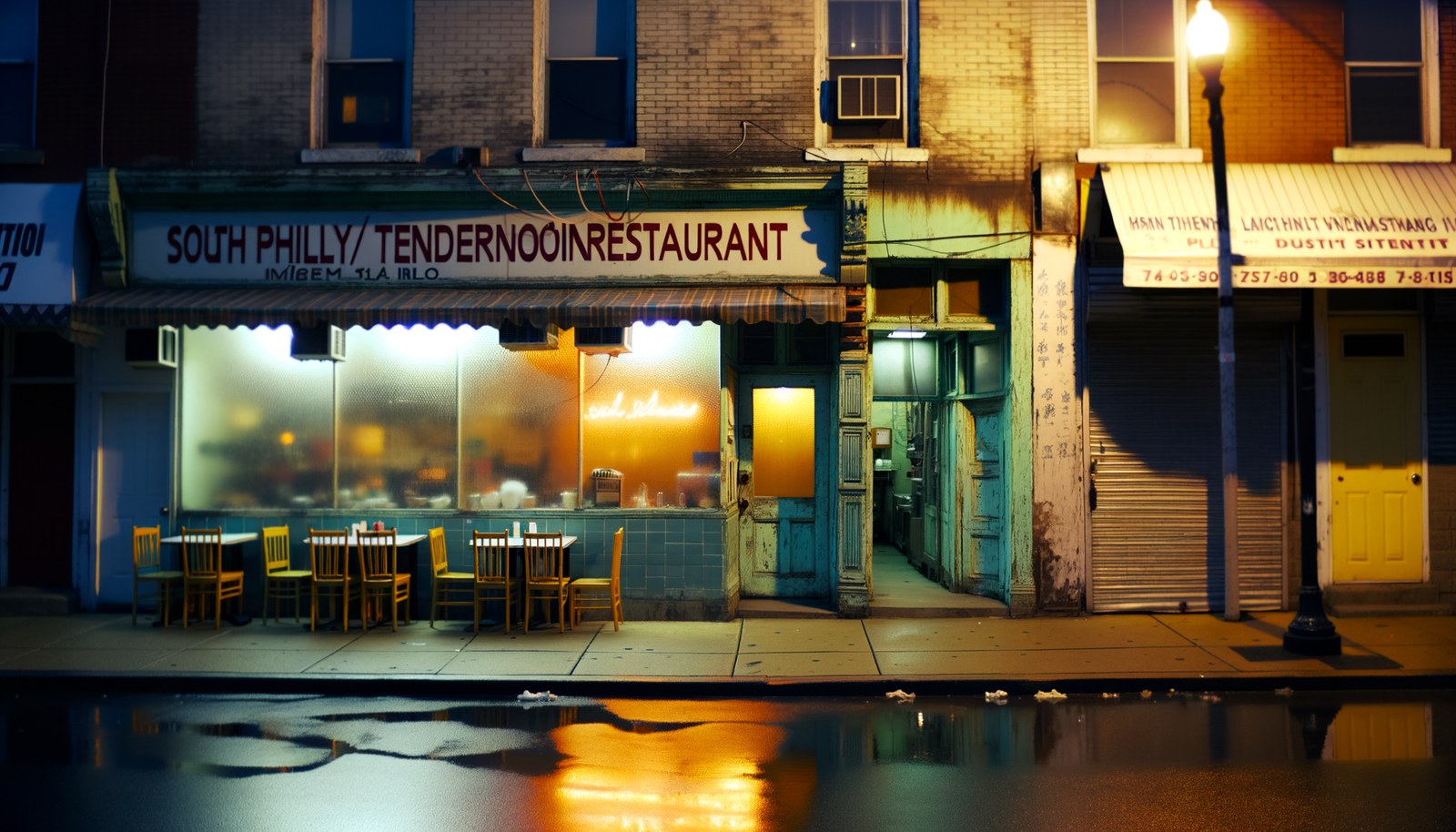
both · South Philly / Tenderloin
Both cities have a Vietnamese food story. They are not the same story. South Philly built its around the row house and the BYOB. The Tenderloin built its around the counter and the seven-dollar bowl.
The Two Arguments
There is a version of this comparison that is lazy. Both cities have large Vietnamese populations. Both cities have corridors where pho is the backbone of the block economy. Both cities have banh mi counters that charge less than six dollars and outperform restaurants that charge sixty. Stop there and the comparison is a draw. Start looking at structure — how the food is organized, what the room looks like, who is eating, what the economics are — and you find two cities that arrived at Vietnamese food from opposite directions.
South Philly got there through the row house. The Vietnamese families who came to Philadelphia in the late 1970s and through the 1980s settled into the same South Philly grid that had absorbed Italian, Polish, and Irish working-class families before them. They took row houses on Washington Avenue, on 11th and 12th Streets, on the blocks immediately adjacent to the Italian Market, and they built restaurants inside the same narrow square footage that had always defined the neighborhood. The BYOB culture was already the law of South Philly. The Vietnamese restaurants adopted it and kept it. A full dinner for two at a South Philly Vietnamese BYOB, with a bottle you brought yourself, tracks under fifty dollars. The economics work like this consistently, across the corridor.
The Tenderloin got there through density and displacement. The Vietnamese community that formed along Larkin Street, Eddy Street, and Turk Street in the 1970s and 1980s was building inside one of the few San Francisco neighborhoods where rent stayed low enough to sustain a small restaurant. The Tenderloin did not absorb Vietnamese food the way South Philly did — as a residential community cooking for itself. It concentrated it. The result is a three-block stretch where ca phe sua da is available at six in the morning, where pho counters operate until past midnight, and where the foot traffic is as much neighborhood resident as it is anyone coming from outside.
What the Food Actually Does
The pho in South Philly is a long-cooked argument. **Pho Ha** runs a broth that has the weight of a full overnight process — star anise and char-roasted ginger forward, with a fat layer that signals the bone-to-water ratio was not compromised. The bowl arrives with the herbs separate, the bean sprouts cold, the hoisin and sriracha on the side. You are expected to know what you are doing with it. The room does not explain itself to you. That is a feature of South Philly Vietnamese in general: the restaurants cook for the people who have been coming since 1994, and everyone else adjusts.
The Tenderloin counter operates differently. **Pho Tan Hoa** on Larkin Street is a narrow room where the broth is ready at nine in the morning and the tables turn fast. The bowl is priced at under ten dollars for a large. What the algorithm noticed is that the flavor score holds — mid-eighties — at a price point that has not changed meaningfully in eight years. The Tenderloin's Vietnamese restaurants are not cheaper because they are worse. They are cheaper because the neighborhood's cost structure never inflated the way the Mission's did, or the Richmond's did, or any neighborhood did once the tech money moved the floor on commercial rent.
The banh mi comparison is harder to make fairly because the two cities are working from different baguette cultures. South Philly's Vietnamese sandwich shops — and **Cafe Diem** is the right place to test this — are using a softer roll, closer to the French bread that landed in New Orleans than the crackling Saigon-style baguette. The sandwich is good. In the Tenderloin, **Saigon Sandwich** on Larkin Street is using a baguette that has a shatter to it. The pâté-to-pork ratio is precise. The jalapeños are not decorative. The algorithm has the value score at the highest point in its San Francisco dataset. The bread is the reason.
Where the Two Cities Diverge
South Philly's Vietnamese food is built for the long stay. The BYOB table is a two-hour table. You bring the wine, you order the goi cuon to start, you work through the banh xeo and the bun bo hue, and you sit with it. **Thanh Huong** on Washington Avenue has a dining room that seats forty and tables that have been set the same way since the restaurant opened. The room does not perform hospitality. It provides it. The algorithm scores context — how the restaurant makes sense inside its neighborhood, its price point, its history — at the top of the South Philly dataset. The context score at Thanh Huong is a near-ninety. That is not an accident of data. That is what happens when a restaurant has been feeding the same neighborhood for thirty years and has not changed in order to attract a different one.
San Francisco's Tenderloin Vietnamese operates on shorter cycles. The counter at **Saigon Sandwich** moves faster than any table-service room. **PPQ Dungeness Island** on Larkin Street is a different register entirely — a Vietnamese-Cantonese crossover that does roast Dungeness crab with garlic noodles alongside a full pho menu — but it demonstrates how the Tenderloin's Vietnamese food has absorbed and extended rather than stayed fixed. The neighborhood runs its restaurants as working infrastructure, not as monuments. The food press discovered the Tenderloin's Vietnamese corridor about a decade after the regulars had already established the hierarchy. The algorithm can see what the guide misses: the restaurants that the regulars will leave if they drop are not always the ones with the longest line.
The city that comes out ahead depends entirely on what question you are asking. For a single bowl of pho in a room with no agenda, South Philly's Vietnamese food South Philadelphia Italian Market corridor is the answer. For a banh mi at six dollars that you eat standing on Larkin Street at noon, the case for Vietnamese food Tenderloin San Francisco is the better argument. The comparison is not a verdict. The comparison is a map.
What the Data Shows
Across 31 dishes and 11 spots in both corridors, the scoring pattern is consistent in one direction and surprising in another. The consistent finding: execution is high in both cities. The pho broth, the bun bo hue depth, the banh mi structure — across South Philly and the Tenderloin, the technique holds. These are not restaurants coasting on community goodwill. The food is the reason the community keeps coming.
The surprise is in the value scores. The Tenderloin outscores South Philly on value, and by a wider margin than expected. South Philly's BYOB economics are strong — a full dinner for two under fifty dollars is a real advantage — but the Tenderloin's counter format produces a value score that South Philly's sit-down rooms cannot match on a per-dish basis. A bowl of pho in the Tenderloin at nine dollars and a 91 flavor score is a different equation than a bowl of pho in South Philly at fourteen dollars and a 90 flavor score. The quality gap is negligible. The math is not. **Turtle Cafe** on Eddy Street is the most striking data point: a room that has been open since the mid-1990s, a menu that has not changed, and a value score that sits near the top of the entire San Francisco dataset. The algorithm noticed. The press has not.
The principle is the same in both cities. The Vietnamese food that is working at the highest level is working because it has not adjusted itself to be legible to anyone who arrived recently. It is cooking for the people who were there first. Everything else is a consequence of that decision.
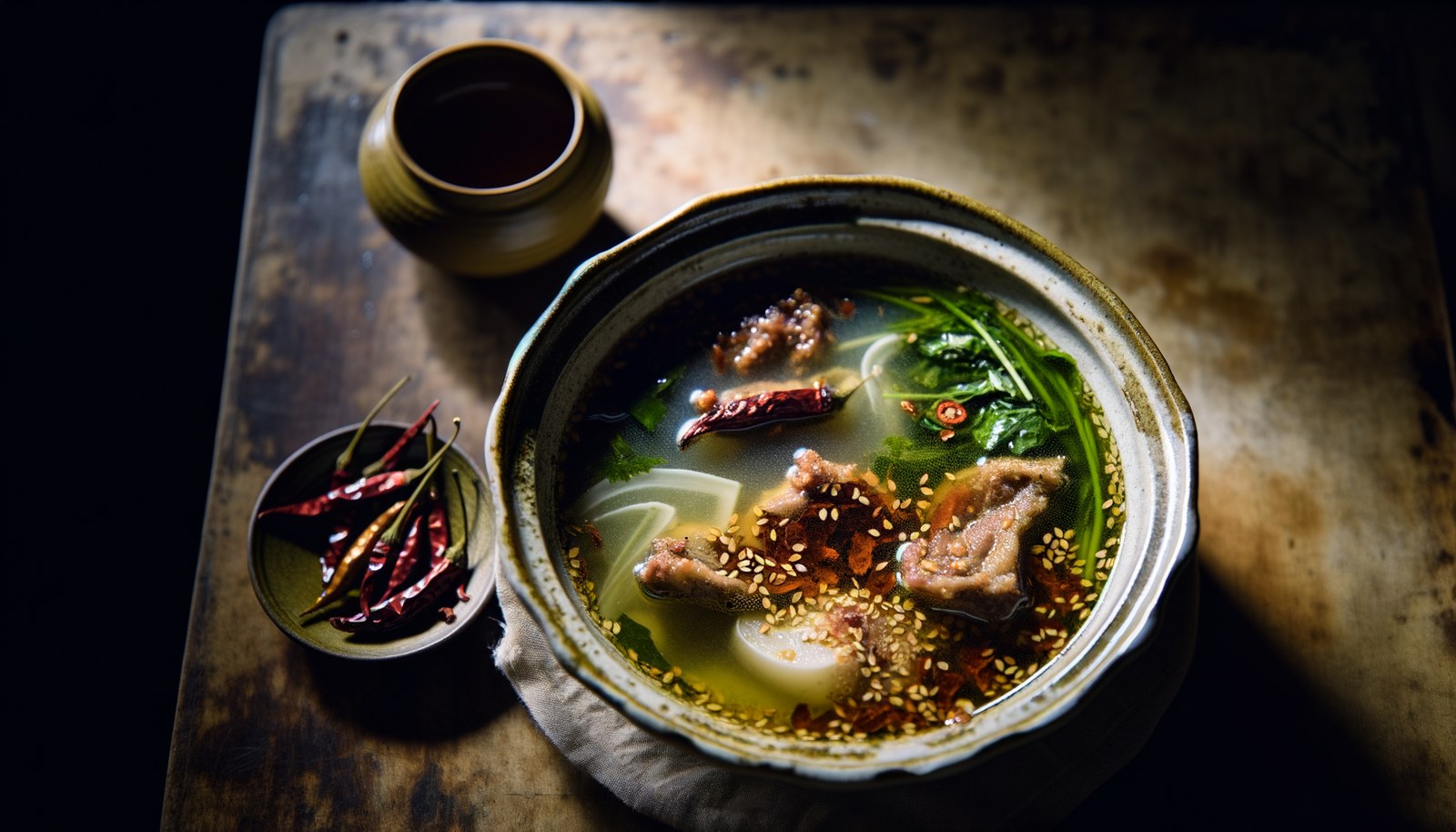
The pho is a fact. What surrounds it is the argument.
The restaurant that has not changed in thirty years is not behind the times — it is ahead of the trend that keeps rediscovering it.
We test dishes so you don't have to. No spam — just the best food, neighborhood by neighborhood.