Philadelphia · South Philadelphia
The Italian Market has Vietnamese restaurants. The tourist map does not know this. The algorithm does.
The Corridor the Map Ignores
The Italian Market runs north to south on 9th Street, and every food article about South Philadelphia treats it as the fixed point around which everything else orbits. The mozzarella. The sausage. The produce stalls open before sunrise. What those articles skip is the east-west axis: Washington Avenue, which crosses the market district and keeps going, and which has been home to Vietnamese restaurants, bakeries, and coffee counters for thirty years without receiving a quarter of the coverage the 9th Street stalls do.
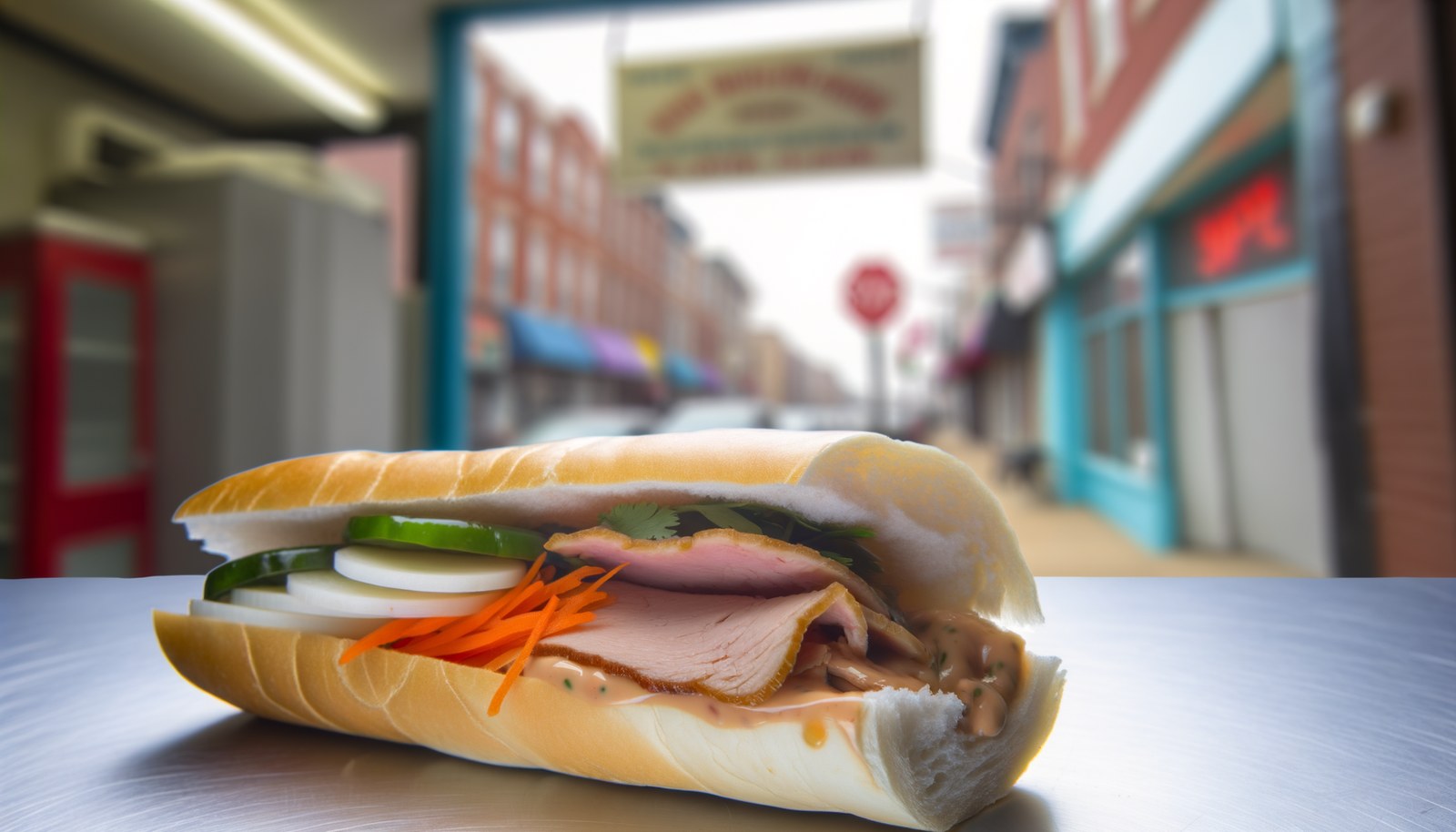
Someone posted a drawing on Reddit recently. The subject was a sign they had spotted at the corner of 8th Street and Washington Avenue. The sign said 'Vietnamese hoagies.' The person who drew it seemed delighted and a little baffled — as if the city had placed a punchline in the window of a restaurant. The restaurant is Thanh Thuc. The sign is not a punchline. It is a business that understood, before most food writers did, that a Vietnamese banh mi and a Philadelphia hoagie are solving the same problem: bread, fat, acid, protein, fast.
The algorithm noticed the Washington Ave corridor two years ago. The scores there are not what the coverage suggests they should be. Flavor tracks high — consistently high — across spots that have no Yelp presence worth mentioning and no press since a brief mention in a neighborhood newsletter in 2019. Value tracks higher. The disconnect between what these spots score and how often they appear in city food coverage is the kind of gap the algorithm was built to find.
The History the Block Holds
South Philadelphia absorbed Vietnamese immigration in two distinct waves. The first came after 1975 — families arriving through Catholic resettlement networks, many of them landing in the blocks between Washington and Passyunk Avenue because the housing was cheap and the market district provided immediate employment. The second wave came in the late 1980s and early 1990s, when the community had enough critical mass to start businesses rather than just fill positions in existing ones. The restaurants that opened on Washington Ave in those years are, in several cases, still open. The owners are in their sixties now. Their children are running the floor.
What that history produced is not a neighborhood 'food scene' in the way that word gets used about Fishtown or Passyunk Square. There is no moment when Washington Ave Vietnamese food was 'discovered' and written up in a magazine and then reprinted in a travel guide. The places that are there are there because they have been there, serving the same families who moved to the neighborhood forty years ago and the younger Vietnamese American residents who moved to South Philly more recently because the corridor already existed. That is a different kind of institution than the one that opens with a PR firm.
Nam Phuong is the closest thing Washington Ave has to a landmark by press standards — it has been mentioned, it has been photographed, it appears on lists. But the algorithm's data does not show it outscoring the smaller operations around it by enough to justify the attention gap. Saigon Restaurant and Cafe De Laos both score within points of it on flavor. Neither has a website that loads correctly.
What to Order and Why It Matters
The pho on Washington Ave is a reliable baseline. Every spot that serves it does so from a broth that has been running for hours — the bone structure is there, the fat rings on top are not decorative. But pho is not where this corridor distinguishes itself. The bun bo hue at Nam Phuong is the more specific argument: spiced with lemongrass and shrimp paste, thicker in the broth than pho, and built around a pork knuckle that requires actual engagement. Order the bun bo hue and you are eating something that requires the cook to know what they are doing.
The banh xeo at Nam Phuong and the banh mi at Thanh Thuc and Ba Le Bakery are the dishes that show how the corridor sits relative to the rest of the city's Vietnamese food. The banh xeo is a turmeric-yellow rice crepe, crisp at the edge, filled with shrimp and pork and bean sprouts, served with lettuce and herbs for wrapping. It is agricultural-festival food that requires a cook with timing. The banh mi at Thanh Thuc uses a baguette that costs the shop money to source correctly. The ca phe sua da, the iced coffee with condensed milk, arrives in a glass that is mostly ice and mostly correct.
The goi cuon — fresh spring rolls, pork and shrimp, rice paper, herbs, vermicelli — are the order to compare across the corridor. Every spot makes them. Ba Le Bakery makes them tightest, the peanut sauce arriving separate and thick. Pho 75 serves them looser, with a hoisin base that runs thinner. Neither version is wrong. The comparison tells you which kitchen is paying attention to finish.
The Italian Market Question
The Italian Market branding is a proximity issue for Vietnamese food on Washington Ave. The restaurants are close enough to 9th Street to be considered part of the same food district. They are far enough from the tourist foot traffic that most visitors never find them. This is not an accident of geography. The Italian Market identity was built and maintained by the families who ran it — Italians and Mexicans and, more recently, Southeast Asians who have opened stalls along the southern end of 9th Street. The Vietnamese restaurants on Washington Ave exist in the same general zone but have never been included in the market's cultural narrative.
That gap is worth naming. South Philadelphia's food identity is Italian in the same way that West Philly's food identity is Ethiopian — the label is historically accurate and currently incomplete. The Ethiopian food West Philadelphia corridor gets written about as a district; the Vietnamese food on Washington Ave gets written about, when it gets written about at all, as individual restaurants. The district framing matters because it changes how people navigate. You go to a district. You stumble onto a single restaurant.
The BYOB pattern that defines much of South Philly dining — the same pattern that makes the BYOB restaurant tradition in Philadelphia's Fishtown legible as a thing worth planning around — does not fully apply here. Several of the Vietnamese spots on Washington Ave hold licenses. Several do not. The ones that are BYOB do not market it, because they are not marketing to the same audience that reads BYOB guides. Their regulars already know. That is a different kind of institution.
What the Scores Show
The ForkFox data on Washington Ave Vietnamese is consistent in a way that suggests structural quality rather than occasional excellence. Flavor scores cluster in the high eighties across multiple spots. Value scores are higher — the math on a full bowl of bun bo hue at Nam Phuong or a banh mi at Thanh Thuc against what the same meal costs in Center City or on East Passyunk Avenue is not a close comparison. The Washington Ave operations charge less and score comparably. The algorithm noticed this before we went back to confirm it.
Context scores — which measure how well a restaurant fits its setting, its history, and its actual customer base — are where the corridor scores highest. These are not restaurants performing Vietnamese food for an outside audience. The com tam at Saigon Restaurant is broken rice with grilled pork and a fried egg, served on a plate, eaten fast, exactly as it is eaten in Ho Chi Minh City. The audience for that dish is not the food press. The food press's absence from this corridor is the context score. The algorithm can see what the guide misses.
For a broader view of how Philadelphia's immigrant food corridors score against their coverage, ForkFox on Chinatown runs a parallel analysis one mile north — a neighborhood that also scores higher than its press would suggest and serves food that has been consistent for decades without needing to be rediscovered.
A sign that says 'Vietnamese hoagies' is not a gimmick. It is a city talking to itself.
The restaurant with the hand-lettered sign and no website is not behind the curve; it is operating on a different curve entirely, and the algorithm knows how to find it.
We test dishes so you don't have to. No spam — just the best food, neighborhood by neighborhood.