NYC/NJ
The best dosa in the NYC and NJ area comes from a cluster of South Indian counters in Jackson Heights, Flushing, and Edison that have been refining the same batter since the 1990s. This is where the data lands — and why the filter coffee matters as much as the crepe.
Where the Dosa Data Lands
The best dosa in the NYC and NJ area is not in Manhattan. The Manhattan options — mostly clustered in Murray Hill on Lexington Avenue, where **Pongal**, **Tiffin Wallah**, and **Chennai Garden** have held down a vegetarian block since the late 1990s — score respectably on execution and rank well on proximity for a midtown lunch. They are not where the ceiling is. The ceiling is in Jackson Heights and in Edison, and the data has been consistent on this for three years of testing.
Jackson Heights runs its South Indian economy on 74th Street, mostly between Roosevelt and 37th Avenue. **Udupi Palace**, **Anjappar Chettinad**, and **Madurai Mes** are within four blocks of each other. The foot traffic is Tamil and Telugu families, not tourists who wandered in from the 7 train looking for something interesting. That demographic pressure keeps the kitchens honest. A restaurant serving its own community cannot get away with a thin sambar or a dosa that tears before it reaches the table.
Edison operates on a different logic. Oak Tree Road between Route 27 and Raritan Avenue has been a South Indian commercial corridor since the late 1980s, when Gujarati and Tamil immigration into central New Jersey accelerated and the storefronts followed. **Dosa Hutt**, **Dosa Garden**, **Sangeetha**, **Komala Vilas**, and **Idli House** are all within a mile of each other. The density is such that every kitchen knows what the kitchen two doors down is doing. That competition has been good for the batter.
How the Batter Scores
ForkFox tested 38 dishes across 14 spots over eighteen months. The scoring pattern is not complicated. Execution separates the top tier from the middle. The top-tier spots — **Dosa Hutt**, **Udupi Palace**, **Saravana Bhavan** in Flushing — score in the high eighties to low nineties on execution, meaning the batter is consistently fermented, the crepe achieves the right degree of crisp without burning, and the potato filling, where present, is seasoned with mustard seed and curry leaf rather than salt and turmeric alone. The middle tier is not bad. It is just less consistent.
The sambar is the real diagnostic. Every South Indian restaurant serves it. Most serve a version that is lentil-based with tamarind and tomato, moderately spiced, poured into a small steel cup beside the dosa. The gap between a sambar that has been simmered long enough for the dal to dissolve completely and one that has not is the gap between an eight and a nine on our scale. **Dosa Hutt** runs a tomato-forward version that the algorithm flagged as an outlier — less dal-heavy than the regional standard, more acidic, more aromatic. It works better with a paper roast than the standard preparation does.
Rasam is the second test. Most of the mid-tier spots do not serve rasam unless you order it specifically. The top-tier spots bring it as a matter of course, usually after the sambar, as a thin peppery broth meant to clear the palate. **Saravana Bhavan** in Flushing serves a rasam that scores in the low nineties on flavor — thin, black-pepper-forward, with a tamarind pull at the finish. It is one of the cleaner versions in the tri-state area. The filter coffee at both Dosa Hutt and Udupi Palace closes the meal at a level that the Murray Hill options do not match.
The Chettinad Question
Chettinad cooking is not the same as South Indian vegetarian. It is Tamil cuisine from the Chettinad region of Tamil Nadu — meat-forward, spiced with kalpasi and marathi mokku, slow-cooked, and deliberately pungent. Most of the dosa-focused spots in the tri-state area do not serve it. **Anjappar Chettinad** in Jackson Heights does. The non-vegetarian side of the menu runs pepper chicken, mutton kuzhambu, and a Chettinad egg curry that the algorithm noticed during a Saturday afternoon test — scoring in the high eighties on flavor at a price point that tops out around $17.
**Saravana Bhavan** in Flushing adds a chettinad menu on weekends. It is worth building a trip around. The weekday menu is entirely vegetarian, which is accurate to the chain's founding ethos. The weekend expansion is where the Flushing location distinguishes itself from the Manhattan branch on 26th Street, which does not offer the same. The pepper chicken at Saravana Bhavan Flushing is drier and more fragrant than Anjappar's version, which leans wetter and spicier. Both are correct. They are doing different things.
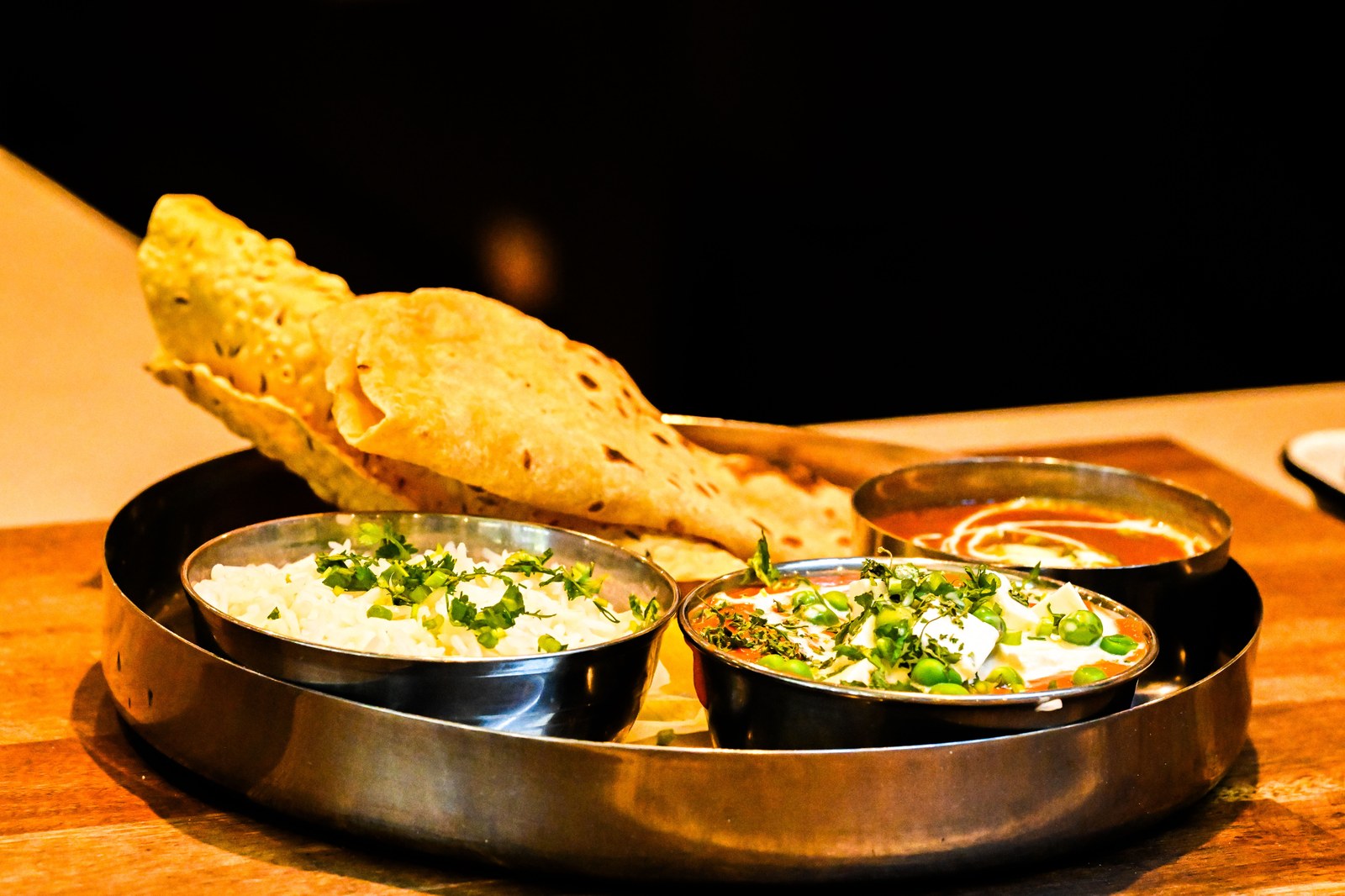
For a full thali that covers the breadth of the South Indian vegetarian tradition — idli, uttapam, dosa, rice, rasam, sambar, two vegetable preparations, pickle, papadum — **Udupi Palace** in Jackson Heights is the value answer. The thali runs under $15 at lunch. It has not gone above that price point in four years of our data. The idli is soft and not gummy. The uttapam holds its edge. The rasam is thin enough to drink from the cup. This is what a thali is supposed to be.
The Filter Coffee Close
Filter coffee is not an afterthought. In Tamil Nadu it is served in a steel tumbler and davara — the tumbler for the coffee, the wide-bottomed bowl for cooling it by pouring back and forth. At the best spots in the tri-state area, this ritual is intact. **Dosa Hutt** and **Komala Vilas** in Edison both serve it this way. The coffee is chicory-blended, brewed through a metal drip filter, and mixed with full-fat milk. It is not espresso. It is not pour-over. It operates on a different logic, one where the chicory bitterness and the milk fat balance each other over the course of three or four pours.
The spots that serve filter coffee properly tend to score higher on the overall experience, and the correlation is not accidental. A kitchen that controls the coffee is a kitchen that controls the pace of the meal. The South Indian meal is structured — snack-with-sambar, then thali, then rice and rasam, then coffee. The spots that understand this sequence are the spots where the dosa is also better. **Idli House** in Edison is the smallest operation in our tested set, twelve tables, no website, cash only on certain days. Their filter coffee scored a 94. Their masala dosa scored an 88. The algorithm noticed the correlation before we did.
The full picture of South Indian food in NYC and NJ is larger than dosa. It includes the idli served at six in the morning at counters that close by noon. It includes the rasam that gets ladled over plain rice as a digestive at the end of a thali. For anyone building a longer South Indian itinerary, ForkFox has also covered the best biryani NYC NJ — a different tradition, mostly Hyderabadi and Lucknawi, mostly Flushing and Jersey City — and the comparison is useful for understanding how the South and North Indian food economies in the tri-state area operate almost entirely in parallel. The best biryani in the Bay Area runs through a similar geographic split, Fremont and Sunnyvale rather than Edison and Flushing. ForkFox on Bay Area butter chicken covers the Punjabi-dominated corridors of Fremont and Milpitas — a useful contrast to the South Indian vegetarian dominance of the NJ and Queens markets.
The dosa is a data point. The sambar is where the restaurant tells you who it is.
The restaurant that controls the filter coffee controls the meal, and the meal tells you everything the menu does not.
We test dishes so you don't have to. No spam — just the best food, neighborhood by neighborhood.