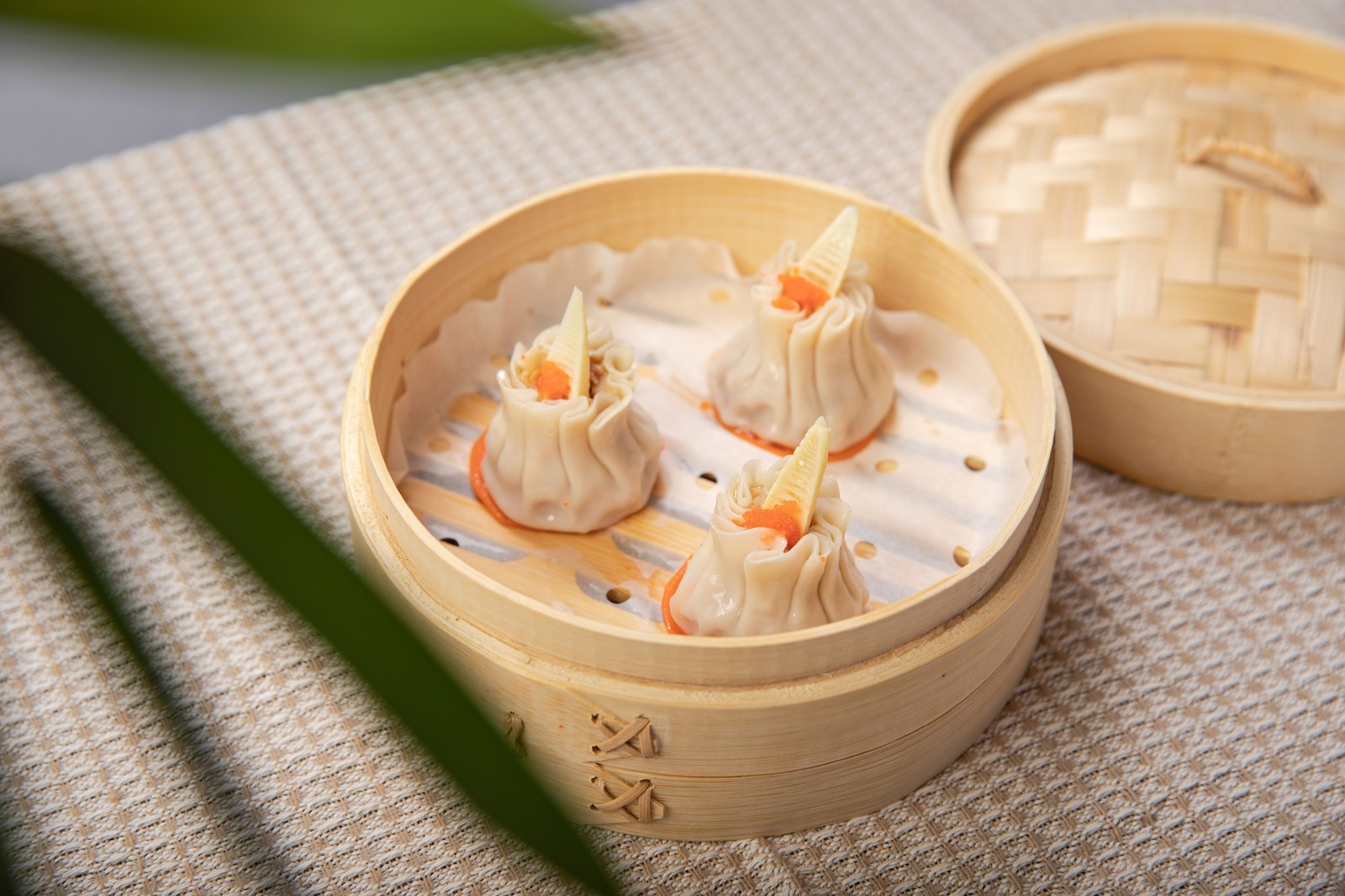
Philadelphia
The best dim sum in Philadelphia is not in one room. It is split across Chinatown, a handful of Northeast corridors, and at least one counter that does not take reservations and does not need to. Across 29 dishes and 9 spots, the algorithm found a clear pattern: the carts matter less than the kitchen behind them.
What Dim Sum Looks Like in Philadelphia
The best dim sum in Philadelphia is concentrated on and around Race Street in Chinatown, with a secondary cluster running northeast along Washington Avenue and into the strip-mall corridors of the Northeast. If you are looking for the full cart experience — the rolling trays, the shouted offers, the stamp-card ritual — Ocean Harbor is the answer. It runs carts seven days a week and operates at a scale that no other room in the city matches. The har gow arrives hot. The turnip cake has a crust. The lo mai gai is dense and properly steamed. These are the basics and they are not taken for granted here. For more on the broader Chinatown Philadelphia restaurants scene, the full guide covers the corridor block by block.
The second-largest operation, Joy Tsin Lau, runs carts on weekend mornings and has held that position for decades. The room is large, the service is fast, and the turnover is real. What the algorithm noticed here was a gap between peak-hour quality and off-peak quality that is larger than Ocean Harbor's. Go before 11 a.m. or after 1 p.m. and the carts have been sitting. Go between those hours and the kitchen cannot keep up with demand in the same way. The pattern is consistent across visits.
There is a third room worth understanding: Golden Phoenix, on 9th Street, which operates at a quieter register. Fewer carts, slower pace, a clientele that skews older and local. The shrimp dumplings score comparably to Ocean Harbor on flavor. The room is easier to sit in on a Sunday. The algorithm noticed that value scores here track slightly higher than the larger banquet operations, partly because portion pricing has not moved at the same rate as the bigger competitors.
The No-Cart Argument
Dim Sum Garden does not run carts. The menu is a printed sheet. You check boxes, you hand it in, the food comes in the order the kitchen decides. This format polarizes people who came expecting the full cart theater, and that reaction is a data point worth ignoring. The char siu bao — both the baked version, which arrives with a glossy shell and a pork filling that is sweet without being cloying, and the steamed version, which is softer and slightly more savory — scores in the high eighties on flavor. The har gow is thinner-wrapped than most of the cart competition. Consistency is higher because the kitchen controls timing. The algorithm can see the difference between a dumpling that sat on a cart for twelve minutes and one that came directly from the steamer.
The counterargument to cart service is not that carts are bad. Carts are a tradition and the communal logic of the format has real value. The counterargument is that kitchen-to-table timing is the single largest variable in dim sum quality, and cart service introduces a gap that no kitchen can fully close. Dim Sum Garden closes the gap by removing the cart. Whether that trade is worth it depends on what you came for. If you came for the ritual, go to Ocean Harbor. If you came for the food at its best temperature, the sheet system wins.
For the longer account of how Chinatown's food culture developed block by block from the 1870s forward, the history of Philadelphia's Chinatown traces the community patterns that shaped which restaurants survived and which formats took hold. The dim sum tradition in Philadelphia is not an import from New York. It has its own timeline.
The Dishes That Sort the Field
Har gow is the standard test. A kitchen that makes good har gow — translucent wrapper, three or more pleats, shrimp that snaps rather than squishes — is a kitchen paying attention to fundamentals. Across 9 spots and 29 dishes, the har gow at Ocean Harbor and Dim Sum Garden scored highest, both landing in the high eighties on flavor. The versions at Joy Tsin Lau and Golden Phoenix tracked five to eight points lower, not because the recipe differs, but because timing and wrapper thickness varied between visits.
Char siu bao sorted the field differently. The baked version requires a different skill set than the steamed version, and most kitchens are better at one than the other. Dim Sum Garden is better at the baked. Ocean Harbor is more consistent on the steamed. The lo mai gai — sticky rice packed with Chinese sausage, mushroom, and chicken, wrapped in a lotus leaf and steamed — is the dish where Ocean Harbor pulls away from the competition. The lotus leaf perfumes the rice during the steam and the filling ratio is balanced rather than packed with filler. It is the strongest single dish in the Philadelphia dim sum field by a margin the algorithm did not expect.
Two spots that appeared in early testing dropped from the ranked list: Tai Lake on Race Street, which runs a seafood-focused menu and offers limited dim sum on weekend mornings, scored inconsistently across two visits — the shrimp items tracked high, the rice rolls tracked low. Lakeside Chinese Deli on Chinatown's southern edge does not run traditional dim sum but scored in the nineties on congee and wonton soup, which are related but distinct. For mapo tofu and dishes outside the dim sum format, Han Dynasty operates in a different register entirely. That is a separate conversation.
What the Northeast Offers
Chinatown is not the whole answer. The Northeast Philadelphia Chinese restaurant corridor, running through strip malls along Roosevelt Boulevard and its side streets, includes several operations that run weekend dim sum. The format there is quieter, the rooms are larger relative to crowd size, and the parking situation does not require a strategy. See ForkFox on Northeast Philadelphia Chinese restaurants for the full breakdown. The short version: flavor scores track within five points of the Chinatown leaders on har gow and char siu bao; value scores track higher because rent does not carry the same premium.
Sang Kee Peking Duck House is not primarily a dim sum restaurant. It is a Cantonese kitchen with a focused menu, and the wonton soup and congee are the reasons to be there. The wonton soup is a benchmark for the format in Philadelphia: broth that is clear and seasoned without being heavy, thin-skinned dumplings with pork and shrimp filling that do not fall apart. The congee, ordered before the weekend lunch rush, is white and clean and topped with ginger and scallion. Neither dish is dim sum in the formal sense. Both dishes tell you what the kitchen is capable of, and that information is relevant.
The broader picture across 29 dishes is that Philadelphia's dim sum scene is smaller than New York's and larger than it gets credit for. The cart tradition is alive at three rooms within a single block. The no-cart alternative exists and scores well. The Northeast adds volume and value. The algorithm noticed that the gap between the top-scored spot and the fifth-scored spot is narrower than in most comparable city surveys. The floor is higher than the reputation suggests. The ceiling has room.
How to Use This Data
If you are going once and want the full experience: Ocean Harbor on a Saturday between 10 a.m. and 12:30 p.m. Cart service, large room, har gow and lo mai gai as first orders. If the room is full when you arrive, the wait is part of the format and not a problem the restaurant has failed to solve. If you want the food at peak quality with less ritual: Dim Sum Garden any morning, order-by-sheet, char siu bao in both versions, soup dumplings as a detour. If you want to eat Cantonese food adjacent to dim sum and understand what the Chinatown kitchen tradition actually looks like: Sang Kee Peking Duck House, wonton soup first, congee second, nothing else required.
Vietnam Restaurant appears on some dim sum lists and should not. It is a Vietnamese-Cantonese kitchen and the overlap in format does not make it a dim sum destination. The algorithm scores it well on what it actually does. That is a different article. The three rooms above are the answer to the specific question of where to find the best dim sum in Philadelphia. The data is clear on this. The floor is higher than the reputation and the lo mai gai at Ocean Harbor is the single dish that earns the trip.
The carts matter less than the kitchen behind them.
The floor of Philadelphia dim sum is higher than the reputation, and the lo mai gai at Ocean Harbor is the single dish that earns the trip.
We test dishes so you don't have to. No spam — just the best food, neighborhood by neighborhood.