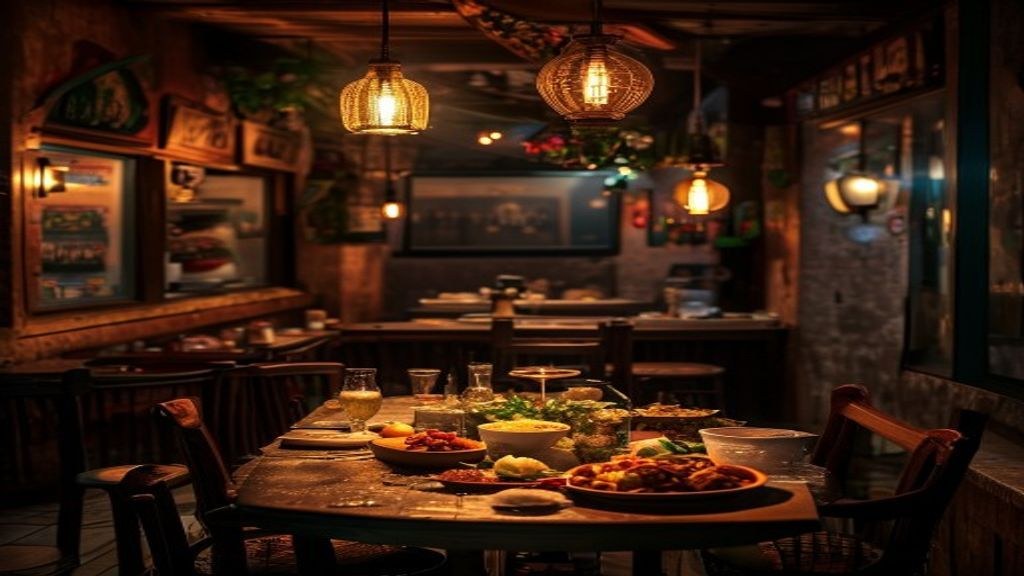
San Francisco · Mission
Nine blocks. Forty years of migration layered on top of each other. The stretch of Mission Street from 16th to 24th is not a food destination the way Hayes Valley is a food destination. It is a supply line for a neighborhood that expects the food to be good and the price to be honest.
The Corridor Is Not a Trend
The Mission absorbed Mexican and Central American immigration in waves from the 1960s through the 1990s, concentrated most densely on Mission Street itself and on 24th Street to the south. The families that opened restaurants in those decades were not opening restaurants for food press. They were opening restaurants for the people who lived within four blocks. That logic has not changed. The food press arrived later, took credit for discovering something that was never lost, and left. The taquerias stayed.
The nine-block run from 16th to 24th on Mission Street is where the density is highest. El Farolito. Taqueria Cancún. Taqueria El Buen Sabor. These are not adjacent to each other by accident. The economics of the Mission in the 1980s made Mission Street the logical address — affordable commercial rent, BART proximity at 16th and 24th, foot traffic that was real and daily rather than weekend and imported. The algorithm can see the clustering pattern and what it means: competition kept honest by proximity.
What the clustering produces is a quality floor that is higher than most American cities have for any cuisine. A bad taqueria on this stretch does not survive because the one next door is not bad. The floor is a burrito with properly rendered carnitas and a tortilla that was pressed today. Below that floor, you close.
The Orders That Matter
Al pastor is the diagnostic. The spit is either running or it is not, the pineapple is either fresh-cut or it is canned, and the heat is either built into the marinade or it is an afterthought added at the end. At El Farolito the spit runs. At Taqueria San Francisco on the same stretch the marinade is the real thing — achiote-red, properly acidic. The difference between a good al pastor taco and an average one is about forty cents and immediately apparent.
Carnitas on this corridor are typically Michoacán-style: braised in lard, finished with orange, slightly crisped at the edges. At La Palma Mexicatessen on 24th Street — technically one block off the main corridor but inseparable from it — the carnitas come from a pot that has been rendering since early morning. The masa at La Palma is made in-house, which changes the tamales entirely. A tamale with fresh masa and a tamale with reconstituted masa are not the same food. The algorithm noticed the score gap between them.
The torta is underordered on this corridor. Pancho Villa Taqueria on 16th runs a torta with carnitas and pickled jalapeño on a bolillo that holds up. The chile relleno at La Lengua — egg-battered, not bread-crumbed, served with a long-cooked tomato broth — scores in the high eighties.
The Outlier and What It Explains
Gracias Madre is on 18th and Valencia, close enough to the corridor to appear in conversations about Mission Mexican food, far enough in every other sense to be a different argument entirely. It is plant-based, full-service, priced for the Valencia Street dinner crowd. The mole at Gracias Madre is technically accomplished. The pozole is clean and properly spiced. The algorithm scores the execution in a reasonable range. The context score is where the gap opens — context being the relationship between what a restaurant is and what the neighborhood around it actually needs.
This is not a dismissal of Gracias Madre. A plant-based mole that holds up is harder to make than it looks, and the kitchen executes it consistently. The point is that it is answering a different question than El Farolito is answering. El Farolito is answering: what does a person who worked a full shift and has twelve dollars need at eleven at night. Gracias Madre is answering: what does a person who does not eat meat want for a forty-dollar dinner. Both questions are legitimate. The corridor on Mission Street is organized around the first one.
The birria situation in the Mission deserves a separate note. Birria tacos — braised beef or goat, consommé for dipping, cheese crisped on the griddle — arrived as a visible menu item on this corridor around 2019 and have not left. Several spots on the corridor run them as a weekend special. The version at Taqueria Cancún is the most consistent in the data: the broth is reduced long enough to have real depth, the cheese is melted rather than just warmed, and the tortilla holds the structure. It scores in the high eighties. For a weekend special at a counter-service taqueria, that is the number that matters.
What the Data Shows That the Press Missed
Food press coverage of Mission Mexican food concentrates on the same eight spots, most of them on or adjacent to 24th Street, most of them with established Yelp profiles and Chronicle coverage from 2014. The algorithm does not read old Chronicle coverage. It reads current performance. The spots that score highest in the current data include two that have no web presence beyond a Google Maps pin and one that has a Yelp page with eleven reviews, most of them from people who stumbled in after a BART ride.
The pattern holds across other corridors in other cities. The data on South Indian food Tenderloin San Francisco showed the same structure: the highest-scoring spots were the ones the guide had not found yet, and the consistency of the cooking was higher at the counter with no photographs than at the room with a publicist. The Mission data is not an exception. It is the rule restated in Spanish.
A similar dynamic shows up in the Mexican food corridor in Kensington Philadelphia — a neighborhood where the press arrived late, discovered the food was already excellent without them, and wrote about it as if the excellence were new. The food on Mission Street has been excellent since before any of the current food writers were old enough to eat a burrito without dropping it. The data just confirms what the neighborhood has known for forty years.
What Makes This Corridor Work
The Mission Street corridor from 16th to 24th works because it has never been primarily for the person visiting it. The regulars at El Farolito are not food tourists. They are people who live within six blocks and have been ordering the same super burrito since 1995. The regulars at La Palma are people who buy masa by the bag and carnitas by the pound. A corridor organized around regulars is a corridor with structural accountability. The food drops and the regulars leave. The regulars leaving means the business closes. That is the logic that keeps the floor high.
The 24th Street end of the corridor has the highest concentration of the strongest scores. The block between 24th Street BART and the intersection with Valencia has La Palma Mexicatessen, El Farolito, and several counters that do not have names worth typing here because the names are secondary to the food. That density at the south end of the corridor is not random. 24th Street BART is one of the highest-ridership stations in the system. The people coming through that station at 6pm after work are the economic base for everything on the block.
The corridor is not in decline and it is not ascendant. It is stable in the way that a neighborhood institution is stable — not because it is protected, but because it is necessary. The food works because the neighborhood requires it to work. There is no tourist buffer here, no second-act brunch crowd to carry a slow weeknight, no prix-fixe tasting menu to subsidize the a la carte. The burrito has to be worth six fifty every single time.
The food works because the neighborhood requires it to work. There is no tourist buffer here.
A corridor organized around regulars is a corridor with structural accountability, and structural accountability is the only quality standard that holds.
We test dishes so you don't have to. No spam — just the best food, neighborhood by neighborhood.