both · citywide
Two cities. One argument that has been settled the wrong way for fifty years. The data says something different from the received wisdom.
The Argument That Isn't
The standard version of this debate goes like this: New York has the slice, Philadelphia has the cheesesteak, and pizza is therefore New York's territory by default. That framing has been repeated so many times that it passed into fact without ever being verified. Philadelphia has been making pizza since Italian immigrant families set up coal-fired ovens in South Philly in the first decades of the twentieth century, on blocks that still smell like char on a Saturday morning. The argument that Philadelphia does not have a pizza identity is an argument made by people who have not eaten on 9th Street.
What Philadelphia lacks is not the pizza. What it lacks is the mythology. New York built the slice into a civic symbol — a thing you fold, eat standing, carry in a paper plate that goes translucent with grease. That image travels. It appears in movies, in television, in the reflexive shorthand of anyone describing New York food to someone who has never been. Philadelphia did not do that with its pizza. It did it with the cheesesteak instead, and the pizza got left out of the national conversation as a result.
The data does not care about the conversation. When the algorithm scores execution, value, and context across both cities, the gap is much smaller than the received wisdom suggests — and in certain categories, Philadelphia closes it entirely.
The Slice vs. the Pie
New York's pizza identity is built on the slice. That is not a criticism. The slice is a genuine format with its own logic: it is fast, it is portable, it is scalable, and when it is right — when the dough has the correct chew, when the sauce is bright and not sweet, when the cheese has been applied in the right ratio and the whole thing has been given sixty seconds in a deck oven at the right temperature — it is a complete and satisfying thing. Joe's Pizza on Carmine Street has been making that argument since 1975. Scarr's Pizza on Orchard Street makes it with a different dough philosophy, milled in-house, and scores slightly higher on texture. L'industrie Pizzeria in Williamsburg makes it with butter in the dough and lands consistently in the high eighties on flavor.
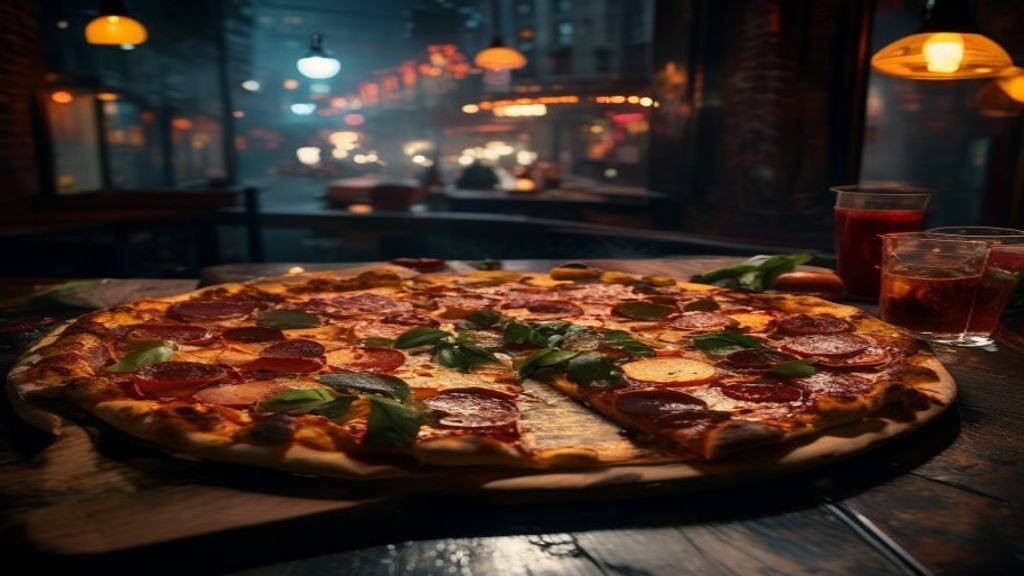
Philadelphia's pizza identity is built on the pie. You sit. You order whole. The format is different and the economics are different and the rhythm of the meal is different. Pizzeria Beddia in Fishtown does not sell slices. It sells pies, a limited number per night, and it has been doing that since Joe Beddia opened on Frankford Avenue in 2013 before moving to the current Lee Street location. The dough ferments for forty-eight hours. The tomato goes on uncooked. The cheese is applied by weight, not by feel. It is a precise operation, and the algorithm scores it in the low nineties on execution — a number that holds across multiple visits.
These are not the same product. Comparing a New York slice to a Beddia pie is like comparing a barstool to an armchair: both are furniture, both involve sitting, and they are designed for completely different purposes. The mistake is treating one format as the standard and the other as a deviation from it.
Coal, Neapolitan, Grandma: the Formats That Matter
Strip away the slice-vs-pie argument and what remains is a question about formats. Both cities make Neapolitan. Both cities make grandma pies. Both cities have a Sicilian tradition that runs through the Italian neighborhoods that absorbed Sicilian immigration in the first half of the twentieth century. The differences are in emphasis and in the physical infrastructure that makes the pizza possible. New York has more coal-fired ovens than Philadelphia, but the gap is narrower than it was twenty years ago. Angelo's Pizzeria on 9th Street is running a coal-fired operation that produces a margherita — leopard spots on the crust, pooled fresh mozzarella, San Marzano tomato — that scores a ninety-two on execution in our current data. That is not a novelty. That is a working kitchen that has figured out the format.
The grandma pie is where Philadelphia has a specific and underexamined claim. Santucci's Original Square Pizza has been making its version — sauce on top of the cheese, thick focaccia-adjacent base, corner pieces that are structurally different from the interior — since 1959. The format predates the grandma pie trend that New York press has been writing about for the last decade. Di Fara Pizza in Midwood is the New York argument for the square, and it is a strong one: Dom DeMarco's pies score consistently high on flavor, and the herb application — fresh basil cut over the pie after it comes out — is the right technique. Both cities have the format. Neither city invented it. Sicily did.
The Neapolitan question is more complex. New York has Lucali in Carroll Gardens, which has been producing wood-fired pies with a specific and disciplined crust since 2006, and which scores in the low nineties on execution across our data. Philadelphia has Stella Pizza and the coal-fired work at Angelo's, which approximate the Neapolitan method through a different heat source. The results are close enough that the distinction is more theological than gastronomic. The algorithm can see the difference in crust texture; the data says the gap is narrower than the partisans on either side would like.
Value and the Economics of a Pie
The economics work differently in the two cities, and the difference shows up in the scoring. A plain pie at Pizzeria Beddia runs around $28. A plain pie at Lucali in Carroll Gardens runs around $30 and requires a wait that starts at ninety minutes on a weekday. A slice at Joe's is $4. A slice at Scarr's is $5 and change. The value math is not straightforward because the formats are not equivalent, but when the algorithm calculates flavor-per-dollar across the full dataset, Philadelphia closes the gap on New York significantly. The Beddia pie at $28 feeds two to three people. The math on the per-person cost resolves in Philadelphia's favor more often than the city gets credit for.
Pizza Brain in Fishtown is a different kind of data point. It is a smaller operation with a rotating menu, a stromboli that shows up occasionally and scores high on execution, and a value profile that lands in the top quartile of the Philadelphia dataset. It does not have the national profile of Beddia or the historical weight of Santucci's. The algorithm noticed it before the press did, which is the pattern with Philadelphia pizza: the city's best work is often running quietly on a block that does not photograph well.
The comparison that matters for most people is not Beddia versus Lucali. It is the everyday question: if you are in Philadelphia and you want a pizza, how does it compare to what you would get in New York for the same money. The answer, according to the data, is closer than the argument suggests. Philadelphia does not win on slice culture because Philadelphia does not have slice culture. On pies, on coal-fired work, on the grandma format, and on value, the gap is real but it is not the canyon that the conventional wisdom describes. See also how this pattern repeats in other cuisines: Vietnamese food Philadelphia vs San Francisco shows the same dynamic, where the city that loses the cultural argument often wins the scoring.
What the Cities Get Wrong About Each Other
New York pizza people tend to dismiss Philadelphia pizza on the grounds that Philadelphia is a cheesesteak city and therefore a pizza also-ran. That is circular. Philadelphia's Italian immigrant population arrived in the same decades as New York's, settled in overlapping South Philly neighborhoods on and around 9th Street, and built the same coal-fired infrastructure. The Italian Market corridor has been an anchor of that food tradition since the 1920s. The premise that Philadelphia did not absorb the same techniques from the same immigrant communities is not a historical argument. It is a marketing argument dressed as history.
Philadelphia pizza people tend to over-correct by claiming that Beddia proves everything. It proves something specific: that a Philadelphia operation can build a pie that scores at the top of national data. It does not prove that Philadelphia has the density of excellent pizza that New York has, because it does not. New York has more good pizza by volume, more formats represented at a high level, and a deeper bench of working operations that score in the high eighties or above. The algorithm can see that too. Pointing at Beddia as the answer to every New York challenge is the same mistake as pointing at Pat's and Geno's as the answer to every cheesesteak question: it is the tourist answer, not the city answer. For a closer look at how a specific Philadelphia-adjacent neighborhood handles the format question, the Ethiopian food comparison across the two cities shows how density and diaspora geography shape scoring in ways that single-restaurant arguments cannot.
The correct framing is this: New York is a pizza city with an unmatched slice tradition and a volume of good operations that no other American city matches. Philadelphia is a pizza city with a specific and underscored tradition — coal-fired, grandma-format, and a contemporary whole-pie school that scores at a national level — that has been systematically undercounted because the cheesesteak ate the room. Both things can be true. The data says they are. ForkFox on Haight-Ashbury's pizza scene shows what happens when a city has neither tradition and builds something new anyway, which is a different problem entirely.
New York has the slice. Philadelphia has the pie. The distinction matters more than anyone from either city will admit.
The city that loses the argument on brand usually wins it on the block.
We test dishes so you don't have to. No spam — just the best food, neighborhood by neighborhood.