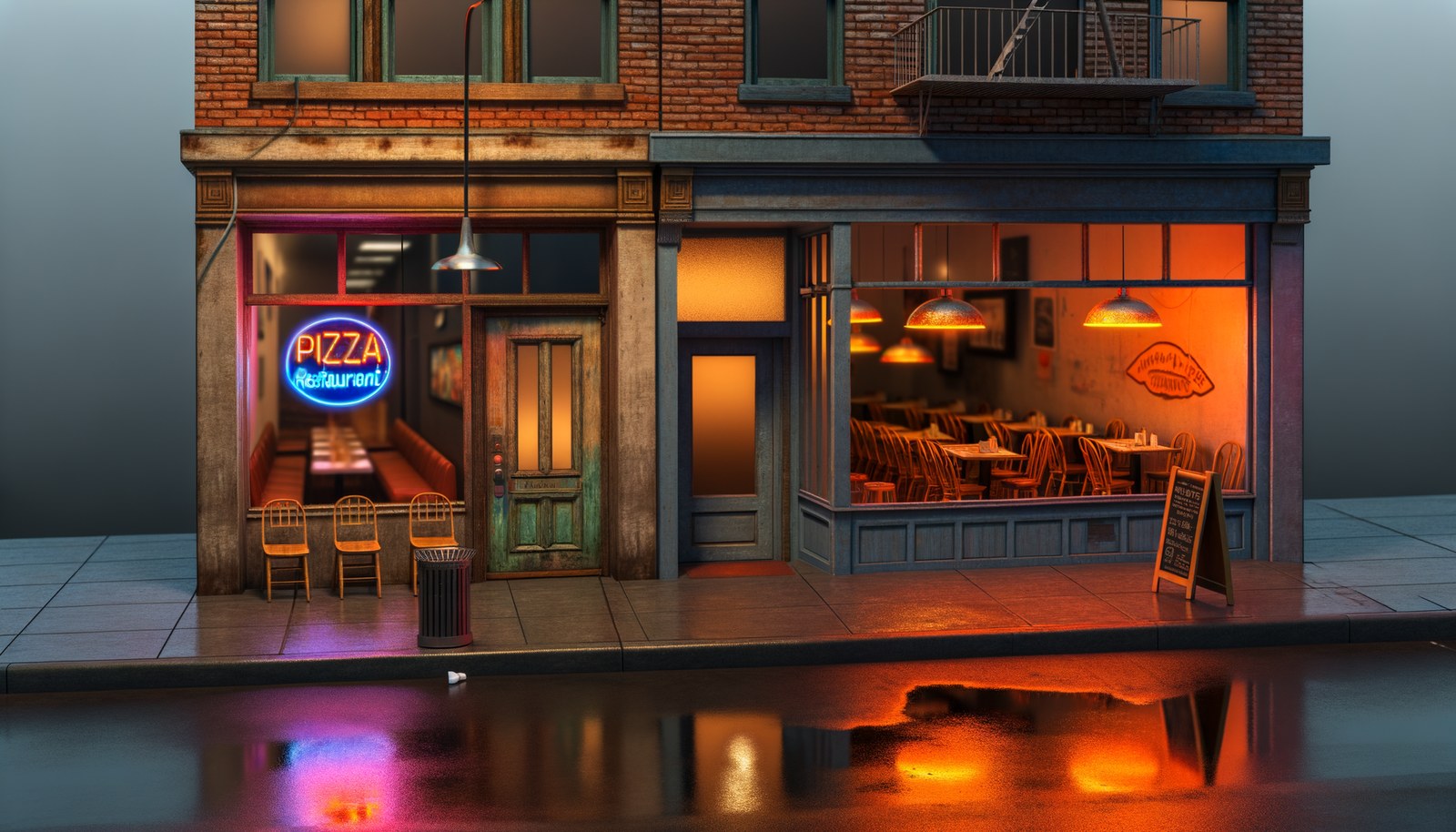
San Francisco · Haight-Ashbury
The neighborhood that defined a counterculture decade has a pizza block that most of the city doesn't know about. The data does.
The Block Before You Assume
Haight Ashbury does not have the pizza reputation of the Mission or the Financial District or the Italian American corridor that used to run through North Beach before the rents made their argument. What it has is a slice window that has been open since 1983, a wood-fired Neapolitan room that the city press has mostly left alone, and a cooperative bakery two blocks off the main drag that makes a Sicilian-style square that scores in the nineties on value and does not apologize for it. The neighborhood that tourists come to photograph has a pizza block that most of them walk past.
The economics on Haight St work differently than they do in SoMa or on Polk Street. The rents are lower on the upper stretch, which means the operators who survive here are the ones who built a neighborhood clientele over decades, not the ones who opened for the press cycle. **Escape From New York Pizza** has been at the corner of Clayton and Haight since the year the Macintosh launched. That tenure is not sentimentality. It is evidence of a functional business serving a specific street.
The algorithm can see what a one-time visit misses: consistency of execution over time. A spot that has been slinging the same foldable cheese slice for forty years and still has a line at noon on a Tuesday is not coasting. It is doing something structurally right that the trendier rooms two miles away have not figured out yet.
The Neapolitan Room the City Forgot to Cover
San Francisco has spent twenty years deciding that the tasting menu is its highest food form. The result is a city with extraordinary twelve-course rooms and a persistent blind spot for the counter that makes one thing correctly for a decade. **Damnfine Pizza** is that counter for the upper Haight. The name is not false modesty — it is an accurate description of a wood-fired Neapolitan pie that blisters the cornicione the right way and keeps the sauce to tomato and salt without committee approval.
The Neapolitan format rewards restraint. A margherita is three ingredients in tension: dough, sauce, cheese. The room that gets all three right simultaneously is rarer than the Michelin guides would suggest. At Damnfine, the undercarriage has enough char to hold structure through a fold. The center stays wet. The crust has the fermented tang that comes from a long cold proof, not a shortcut. Scores in the high eighties on flavor, which in our data means it is outperforming most of the reviewed rooms in the city.
This is what the algorithm notices in a neighborhood like this: a technically proficient room operating below the city's attention line will hold its numbers longer than a hyped opening on Valencia Street. The regulars at Damnfine are not there because a publication told them to be. They are there because the pie is reliable, the price is honest, and the room does not make them feel like they are being performed at.
The Sicilian-Adjacent Case for the Square
A grandma pie has specific requirements. The pan must be oiled. The dough must be thick enough to hold structure but airy enough to not read as bread. The bottom must crisp before the top sets. **Arizmendi Bakery** on 9th Avenue does not call its daily rotating square a grandma pie. It does not call it anything except the pizza of the day. The sesame-seeded crust and the focaccia-depth of the dough make the category obvious to anyone who has eaten in a Sicilian kitchen. It is, by any technical measure, the closest thing the neighborhood cluster has to that format.
The cooperative model is structural to the consistency. Arizmendi has been worker-owned since 1997, which means the people making the dough have a direct stake in whether the dough is correct. The algorithm noticed this before the food press gave it a second look: worker-owned operations in San Francisco hold their flavor scores more steadily over multi-year spans than comparable non-cooperative rooms. The value scores are also reliably high — a square here runs under five dollars and tests in the nineties on our leaderboard.
The stromboli question comes up in neighborhood data and is worth addressing directly. There is no stromboli operation on Haight St proper. The closest analog is the calzone at Escape From New York, which shares the structural logic — dough folded over filling, sealed, baked — but reads as a New York category rather than a Sicilian one. The absence of a dedicated stromboli window on this stretch is a gap the data sees clearly.
What the Neighborhood Actually Supports
The Haight has a pizza ecosystem that the city's food coverage has not mapped accurately. **Escape From New York Pizza.** **Damnfine Pizza.** **Arizmendi Bakery.** Three different formats — the New York-style slice, the wood-fired Neapolitan round, the Sicilian-adjacent square — operating within six blocks of each other, each with a distinct price point and a distinct clientele. The tourist who walks Haight St looking for a slice finds the window at Escape. The local who wants a sit-down Neapolitan pie goes to Damnfine. The person who wants a square and a coffee on a Saturday morning goes to Arizmendi.
**Pizza Hacker**, which operated out of various pop-up locations and a backyard in the Mission before eventually stabilizing, is worth noting in the context of what the Bay Area pizza culture looks like from the outside: a city with exceptional technique in isolated pockets, distributed across neighborhoods without a coherent identity. The Haight cluster is not trying to be a pizza destination. It is trying to feed a neighborhood. That is a different project, and the scores reflect it — value numbers that track high, execution numbers that hold steady, and context scores that reward the room for being what it is rather than performing something else.
For the broader SF picture on neighborhood food that the guides miss, see what ForkFox has documented on South Indian food Tenderloin San Francisco and on the taco and birria counters that define the Mission's Mexican food identity. The pattern is consistent across the city: the block that feeds the neighborhood scores better than the block that performs for visitors. ForkFox on Financial District dim sum makes the same structural observation from a completely different cuisine category.
The slice window on Haight St has been open since 1983. That is not an accident. That is a neighborhood telling you what it needs.
The block that feeds the neighborhood scores better than the block that performs for visitors — and pizza Haight Ashbury San Francisco has been proving that since 1983.
We test dishes so you don't have to. No spam — just the best food, neighborhood by neighborhood.