Oakland · Old Oakland
The tourist map ends at the Ferry Building. The dim sum map starts on Webster Street.
Webster St at 8 a.m. Is a Different City
Old Oakland gets written about the way all gentrifying neighborhoods do: the farmers market, the Victorian storefronts, the proximity to the 12th Street BART station. The food writing usually stops there. The food worth writing about starts two blocks east, on Webster Street between 8th and 10th, where the sidewalk traffic at eight in the morning is moving with intention and the restaurant windows are already fogged.
The dim sum tradition in Old Oakland Chinatown is not a relic and not a revival. It is an operating system. The restaurants on this corridor — **Asian Pearl**, **Dragon Gate Dim Sum**, **Legendary Palace** — run on Cantonese institutional logic: carts loaded before sunrise, service starting by nine, peak hour over before noon. The algorithm noticed that this timing pattern correlates with execution consistency. Kitchens that don't stay open until midnight in dim sum formats tend to make better food during the hours they do operate.
The corridor draws a consistent crowd that does not vary much by season or by press cycle. That is the tell. Restaurants that survive purely on local repeat business in a neighborhood this compact are either doing something right or charging too little to fail. On Webster between 8th and 10th, the answer, across most of the kitchens, is the former.
Har Gow, Siu Mai, and the Question of the Wrapper
Har gow is the standard. Not because it's the most complex dish in a dim sum spread — it isn't — but because it has no place to hide. The wrapper must be thin enough to see the shrimp through it, firm enough to lift intact with chopsticks, and supple enough not to tear when the fold releases. At **Asian Pearl**, the wrapper passes all three tests. At **Peony Restaurant** on the same corridor, it passes two of them on a good day. The algorithm can see the gap.
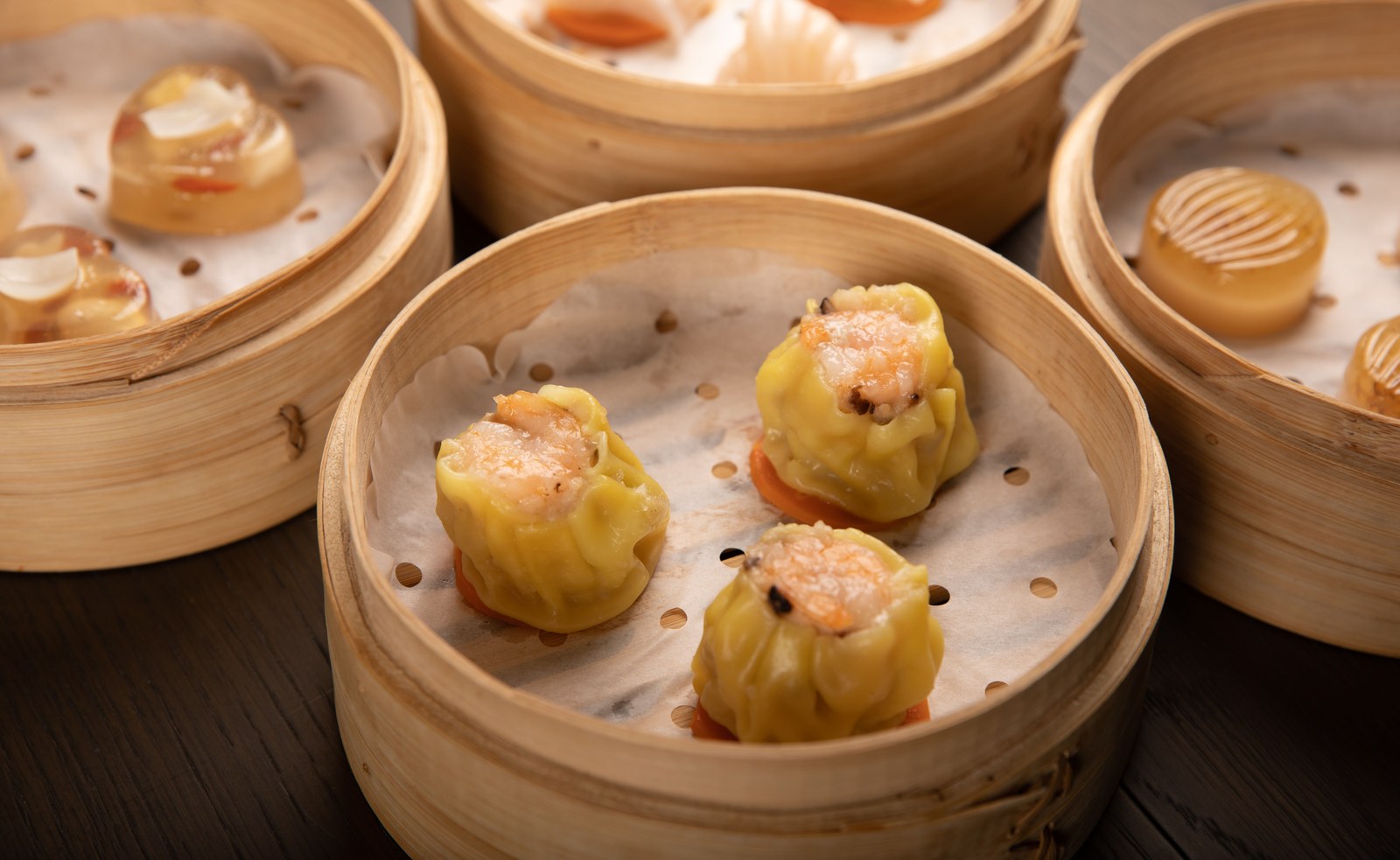
Siu mai is where kitchens reveal their pork sourcing decisions. The filling at **Legendary Palace** is coarse-ground, not emulsified — a structural choice that produces a different texture in the mouth than the smoother, homogenized versions common in Cantonese-American strip mall operations. The shrimp crown on top is a whole piece, not pressed-in scraps. The egg tart at **Tao Yuen Pastry** on Franklin Street is a separate argument entirely — the crust is short-dough, not puff pastry, and the custard has enough egg to hold its color at room temperature. It scores in the high eighties on our flavor index and significantly higher on value.
Cheung fun is the dish that separates the kitchens willing to roll to order from those running pre-made. **Dragon Gate Dim Sum** rolls to order on weekend mornings. The rice noodle sheet comes out of the steamer translucent and immediately dressed with a thin soy and sesame oil mixture. The filling — char siu, shrimp, or plain — matters less than the temperature of the noodle when it reaches the table. Temperature is the variable. The kitchens that manage it consistently score higher. The ones that don't, don't.
The Block Has Been Here Longer Than the Narrative
Oakland Chinatown absorbed Cantonese immigration in distinct waves: the post-Gold Rush labor migration that built the physical Chinatown blocks in the 1870s and 1880s, a second wave of Taishanese families in the 1920s and 1930s, and a Southeast Asian Chinese diaspora — primarily from Vietnam, Cambodia, and Laos — that settled the area heavily after 1975. The dim sum kitchens that operate today on Webster Street and the surrounding blocks are products of all three of those layers. The menus are Cantonese in structure. The family histories behind the restaurants are frequently more complicated.
**New Gold Medal Restaurant** and **Peony Restaurant** have both been operating in some form since the 1980s. Neither has a website that functions. Neither needs one. The customer base that fills those rooms on Sunday morning has been filling them for years, and they do not arrive via search engine. The social media profiles for both restaurants were last updated sometime during a prior mayoral administration. The algorithm noticed neither of them is struggling.
The lo mai gai — sticky rice with chicken and pork and mushrooms, wrapped in lotus leaf and steamed — is where this history shows up most clearly in the food. The spice profile at several of the Webster Street kitchens is measurably different from the Cantonese standard: more lemongrass-adjacent warmth, a faint star anise note that doesn't appear in the Hong Kong version of the dish. That's not a mistake. That's decades of Southeast Asian Chinese families cooking the dish they actually grew up eating. The algorithm scores it higher. So does everyone who orders it.
The Economics Work Like This
A full dim sum spread for two at **Asian Pearl** — har gow, siu mai, lo mai gai, cheung fun, turnip cake, char siu bao, one plate of egg tarts from the cart — runs between $28 and $36 before tax and tip, depending on the day. That is the math. On our value index, the corridor as a whole scores higher than any comparable dim sum concentration in San Francisco, including the corridors that draw exponentially more press attention. Price is not the only input. It is a significant one.
The BYOB situation does not apply here — these are tea-service restaurants in the traditional sense, with strong tea included in the per-head calculation and no real wine program to speak of. What that means structurally is that the kitchen cost and the front-of-house model are both oriented entirely around the food. There is no margin game happening on beverage markups. The dim sum is what the business runs on. Kitchens that know that tend to make the dim sum well.
For the full Oakland picture — including the breakfast-to-late-night spectrum across the broader Chinatown footprint — see our piece on dim sum Oakland Chinatown. For a sense of how Old Oakland fits into the city's broader food geography, the taquerias and loncheras of the Fruitvale corridor operate on a similar value-to-execution ratio, a different cuisine, and a different set of decades. And ForkFox on Temescal's Ethiopian kitchens covers the third major corridor that the city's press tends to undervalue.
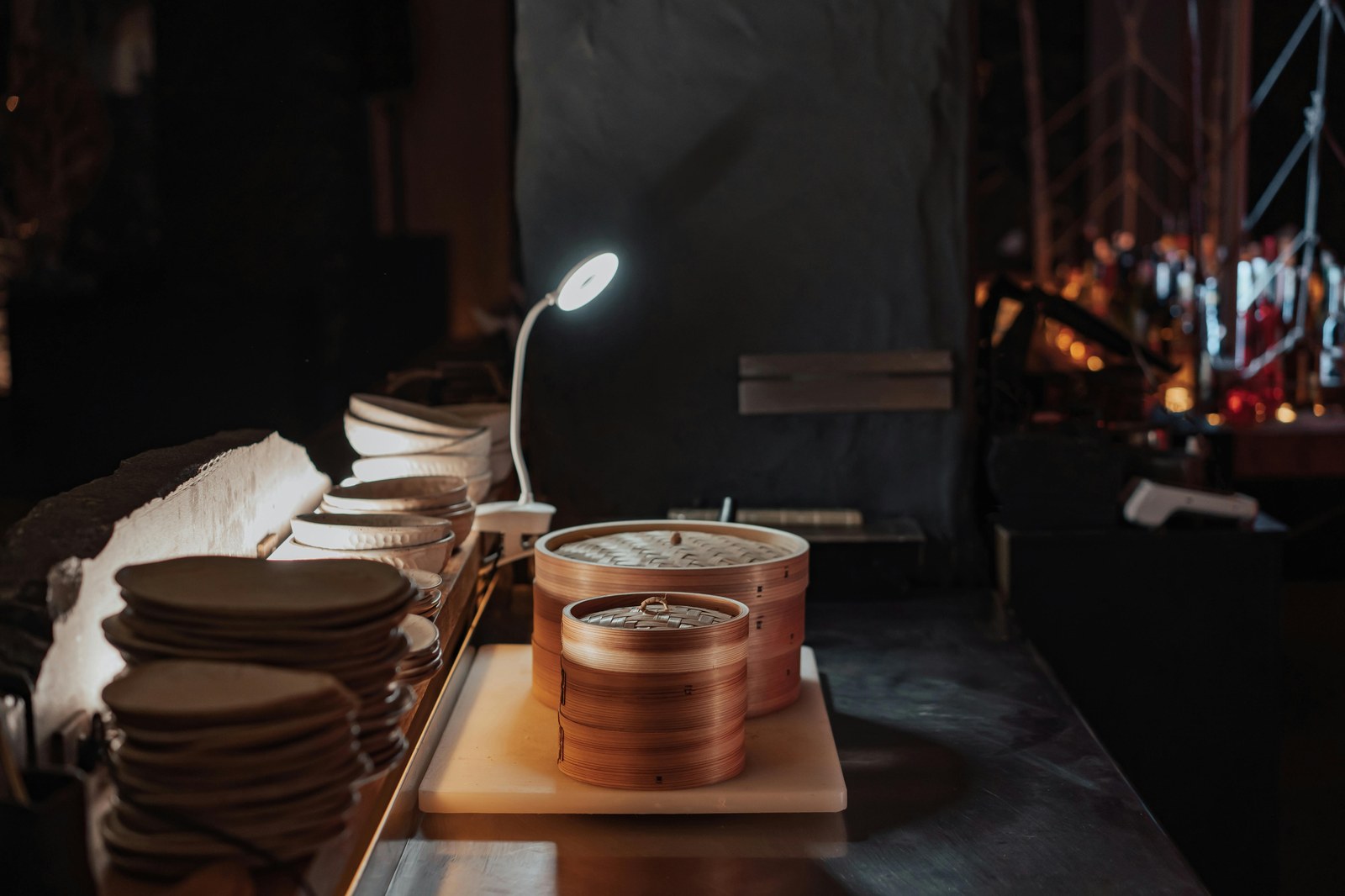
Old Oakland's dim sum corridor doesn't perform for you. It just works.
The best dim sum corridor in a city is almost never the one with the most press.
We test dishes so you don't have to. No spam — just the best food, neighborhood by neighborhood.