
Oakland · Temescal
Telegraph Avenue between 40th and 52nd Streets holds a concentration of Ethiopian and Eritrean kitchens that the Bay Area food press has mostly described wrong. The algorithm noticed something the guides missed.
What the Corridor Actually Is
Telegraph Avenue through Temescal is not a food destination in the way that phrase usually gets used. It is a working street. The Ethiopian and Eritrean kitchens that have planted themselves between 40th and 52nd Streets did not arrive because the neighborhood became desirable. They arrived because Oakland's East African diaspora needed to eat, needed to gather, and needed a block where the food tasted the way it was supposed to taste. The migration that built this stretch came primarily in the 1990s and early 2000s — Eritrean families after independence, Ethiopian families through the existing East Bay networks — and the restaurants they opened have outlasted three cycles of neighborhood change.
The result is a corridor where Café Colucci. Asmara Restaurant. Zeni Ethiopian Restaurant. operate within a few blocks of each other, none of them with a Yelp Elite badge as a business model. The press usually handles this stretch by writing the cheesesteak version of it — finding one restaurant, calling it the best, and sending readers there. That is not what the data shows. What the data shows is a corridor where consistency is distributed, where each kitchen has a specific dish it handles better than its neighbors, and where the algorithm noticed patterns that a single visit would miss.
The economics work like this: injera at scale requires a sourdough fermentation process that takes two to three days minimum for teff-based batter. Kitchens that skip this use a blended flour that flatters the price point and insults the dish. Every kitchen on this stretch is running the real fermentation. That is a supply chain and a cultural commitment made simultaneously, and it is not something that opened last year with a venture round behind it.
The Dishes the Data Ranked Highest
Kitfo is the diagnostic dish. It is raw or lightly warmed minced beef, seasoned with mitmita and niter kibbeh — the spiced clarified butter that gives the meat its particular depth. A kitchen that handles kitfo correctly is a kitchen that is sourcing beef with enough fat content to work without cooking, seasoning with enough restraint that the mitmita reads as heat rather than bitterness, and serving it at a temperature that is warmer than refrigerator-cold without being cooked through. Café Colucci scores in the high eighties on this dish specifically. The algorithm noticed.
Tibs — the pan-fried or sautéed meat dish, varying by region between wet and dry preparations — is where Asmara Restaurant separates itself. The Eritrean preparation skews dry, with the beef or lamb sautéed in a pan with jalapeño, onion, and tomato until the liquid has cooked off and the edges of the meat have taken on a slight char. This is technically harder than the wet preparation and more honest about what the dish is: a thing that should taste of the animal and the spice, not a sauce. Asmara's tibs scores at the top of our leaderboard for this category on the entire corridor.
Shiro gets underwritten. It is a chickpea or bean flour paste cooked into a stew, seasoned with berbere and onion, and it is the workhorse of the vegetarian combination plate. A lazy kitchen makes it grainy. Ensarro Ethiopian Restaurant makes it smooth — the flour cooked long enough that the raw starch is gone and what remains is a paste with the texture of warm hummus and the spice profile of a wot. The scoring here surprised us: the shiro at Ensarro placed above several kitchens' flagship meat dishes.
The Eritrean Kitchen on the Block
Asmara Restaurant is the Eritrean anchor on Telegraph Ave, and it operates with a different reference point than its Ethiopian neighbors. The cuisine shares architecture — injera, wot-style stews, combination platters — but the spice profiles are distinct, the coffee ceremony is treated as a separate course rather than an afterthought, and the zigni (the Eritrean beef stew in berbere) runs hotter and slightly more acidic than its Ethiopian equivalents. This is not fusion. These are two cooking traditions that share a border and a grain and have been mistaken for each other by American food media since both arrived here.
The room at Asmara has not been redesigned for the Instagram era. The walls have photographs and a television. The menu has been the same for years. A family has been running it since the 1990s, which means the institutional memory of the kitchen extends back to before Temescal became a neighborhood that journalists write about. That continuity shows up in the data: the scores on consistency are among the highest in the corridor. The algorithm can see what a single visit cannot.
Oakland's Ethiopian and Eritrean corridor is worth comparing to what West Philadelphia built on Baltimore Avenue — where Ethiopian food in West Philadelphia developed its own corridor logic, tied to the Penn orbit and a different diaspora timeline. The structural similarity is real: both corridors built themselves around community need before they built themselves around press attention. The difference is that West Philly's corridor has been written about extensively. Telegraph Ave has not. ForkFox on West Philadelphia's Ethiopian history traces how that corridor took shape decade by decade. The Temescal version is still being written.
The Economics of Eating Here
A full combination platter for two at most kitchens on this corridor lands between $32 and $44. That number includes injera, three to five wots or tibs preparations, a cold salad, and ayib. Add tej — the honey wine that is the correct pairing for any combination platter and is brewed in-house at Café Colucci — and the check for two runs under $55. There is no combination of small plates at any Oakland restaurant with a wine director that gets you this far into a cuisine for this price. The value scores across this corridor are among the highest in the East Bay in our current data set.
The BYOB situation on parts of this stretch makes the economics sharper. Several kitchens do not have a liquor license and encourage you to bring wine or beer. This is a structural fact of how East African restaurant economics work in Oakland, not a novelty. The tej at Café Colucci solves the pairing problem for most dishes — the honey sweetness cuts the berbere heat and the tannins in the wots. If a kitchen does not brew its own, a bottle of dry red from the shop two blocks down on Telegraph does the same work for fourteen dollars.
The comparison point is what Oakland has built elsewhere. Mexican food in Fruitvale Oakland runs a similar value structure — deep cuisine, community-built corridor, economics that work for the neighborhood rather than the expense account. What the data shows, across both corridors, is that the highest value-per-dollar eating in the East Bay is consistently in the neighborhoods that were not developed for the food press. The algorithm noticed. The guide books mostly have not.
What the Scores Actually Show
The pattern across the Temescal corridor is not what the standard food-press treatment would predict. The highest-profile kitchen — Café Colucci, with the most press, the most reviews, the most footprint — does score well. But the gap between Café Colucci and Desta Ethiopian Kitchen and Ensarro Ethiopian Restaurant is not the gap that press attention would suggest. The scoring is clustered in the high eighties across flavor and execution, which means the corridor is more consistent than the press hierarchy implies. You are not making a mistake by walking into any kitchen on this stretch and ordering a combination platter.
The place where the kitchens diverge is context and specialization. Asmara is the Eritrean kitchen; the distinction matters and the scores reflect it. Café Colucci is the kitchen with the in-house tej and the kitfo that scores at the top of the leaderboard. Ensarro is the kitchen with the shiro that outperforms its size. These are not marketing distinctions. They are cooking distinctions, and the algorithm can see them in the data.
The broader principle is structural. Corridors built around community need rather than destination dining tend to develop real specialization over time — because the audience eating there knows the difference, and a regular who has been ordering kitfo twice a month for eight years will stop coming if the preparation drops. The regular is the quality control. That is the mechanism behind every score on this corridor. The guides can send you here. The regulars are the reason it's worth sending you.
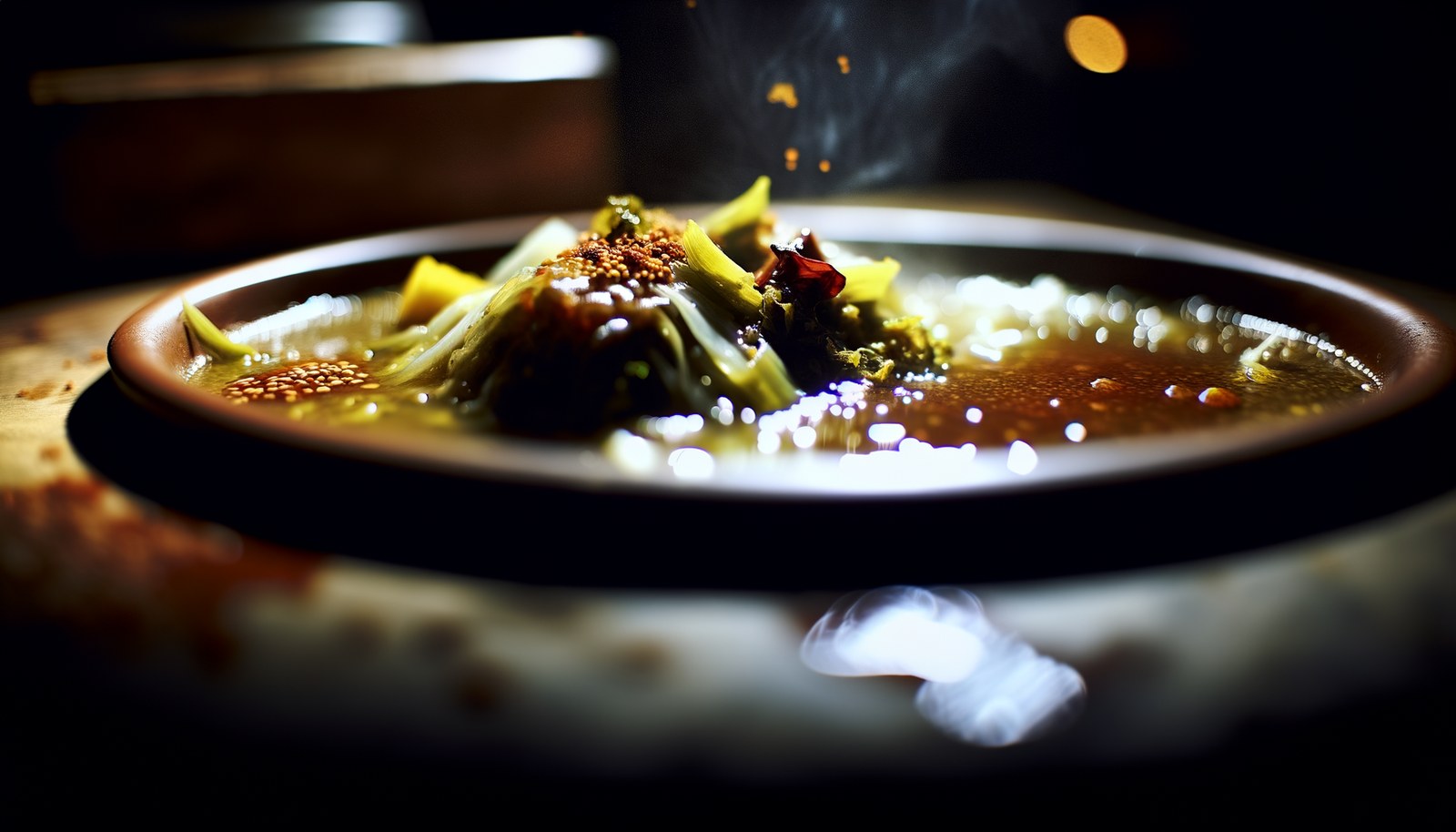
The injera is the plate, the tablecloth, and the contract. Everything else is what you put on it.
The corridor that built itself around a community's need to eat well is the corridor that learns, over decades, how to do it.
We test dishes so you don't have to. No spam — just the best food, neighborhood by neighborhood.