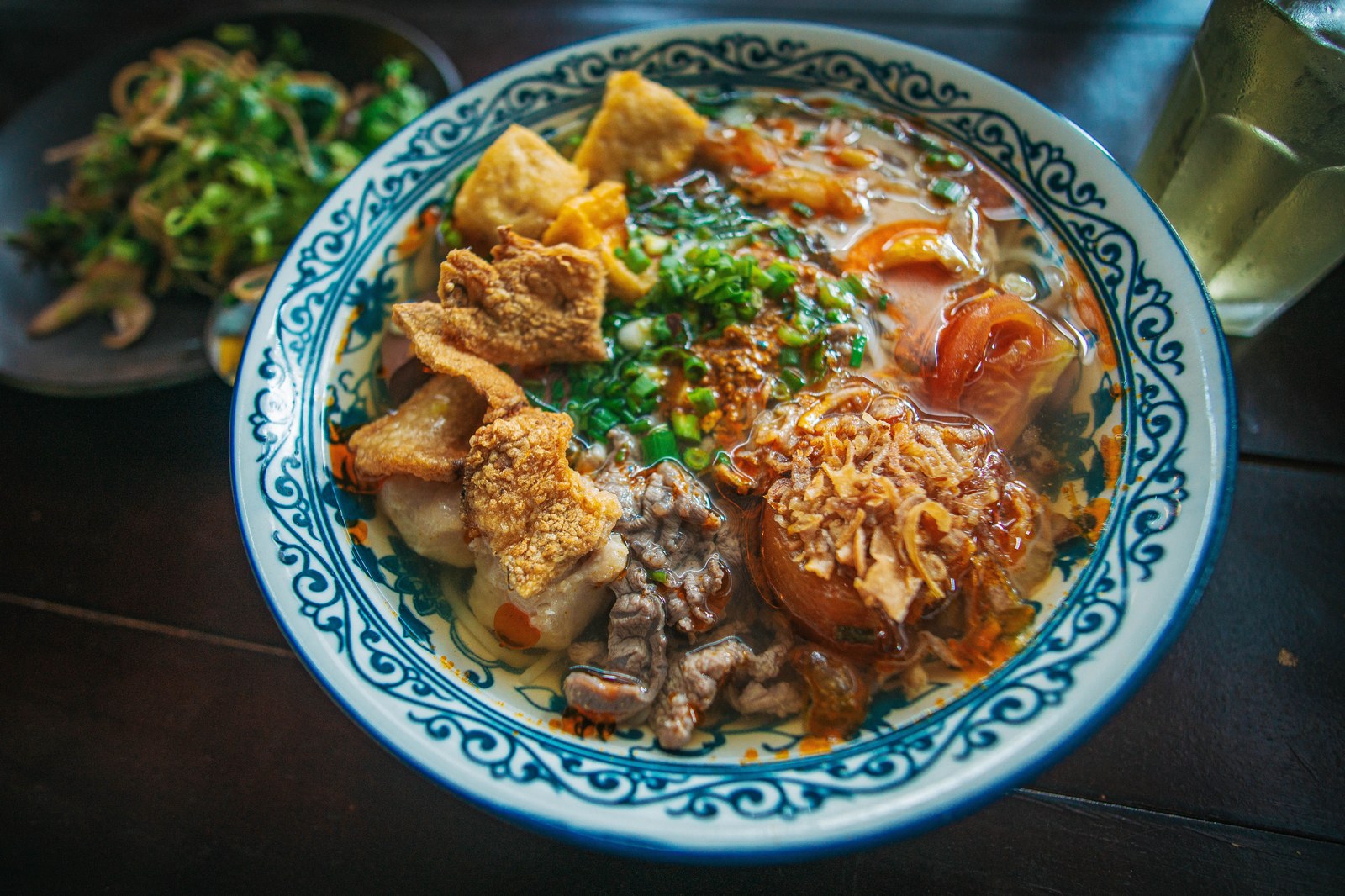
Philadelphia
The best banh mi in Philadelphia come from a handful of counters that have been running the same recipe for decades. This is what the scoring found when we tested 23 sandwiches across 8 spots.
What the Scoring Actually Found
The best banh mi in Philadelphia is under eight dollars. It comes from a counter, not a restaurant. It has been made the same way for at least fifteen years, and the person making it probably does not have a website. That is the summary. The rest is proof.
We tested 23 sandwiches across 8 spots, spread between South Philadelphia, Cedar Park, and Spruce Hill. The scoring looked at three things: the bread, the filling ratio, and the acid balance on the pickled vegetables. A banh mi that gets all three right in a $6 sandwich is doing something that a $24 composed appetizer frequently fails to do. The algorithm noticed this pattern immediately. The highest-value scores in our Philadelphia Vietnamese data set belong to the banh mi category, not the pho, not the goi cuon, not the bun bo hue.
The two anchors in South Philly are **Ba Le** and **Pho 75**. **Ba Le** sits on Washington Avenue and bakes its baguettes in-house. The crust is the right thickness. The pâté is made on premises. The pickled daikon has actual sharpness, not the sweet-dumbed-down version that shows up in spots that have adjusted for a non-Vietnamese clientele. **Pho 75** is primarily a pho house — and the pho scores in the high eighties, for more on how the phos rank, see our best pho Philadelphia scored breakdown — but the lemongrass pork banh mi runs parallel and very few people order it. That is their loss.
South Philly Sets the Baseline
South Philadelphia has hosted Vietnamese families since the late 1970s and early 1980s, when resettlement programs placed refugees from Southeast Asia into the blocks south of Washington Avenue. The Italian Market corridor absorbed them the way it absorbs everything: by becoming background infrastructure. The storefronts are still there. The families, in many cases, are still there. For a fuller account of the Vietnamese food ecosystem in this corridor, the Vietnamese food South Philadelphia Italian Market piece covers the geography in detail.
**Nam Phuong** is the full-service room in this corridor, with com tam and banh xeo on the menu alongside the sandwiches. It scores well on execution across the board. The banh mi scores in the mid-eighties, which is strong but not the top of the set. The value score is where Nam Phuong pulls ahead of its price-tier neighbors. A combination banh mi at $6.50 with the level of execution they deliver is the kind of ratio that the algorithm flags immediately.
**Saigon Sandwich** and **Thanh Da** round out the South Philly count. **Saigon Sandwich** runs a tight, focused menu. The char siu pork version is the one that scored highest in our set from this spot, and the bread-to-filling ratio is the best in the corridor. **Thanh Da** is slower, more of a sit-down operation, and the banh mi reflects that: thicker fillings, more careful assembly, slightly higher price. Both clear the mid-eighties on flavor. Neither is a compromise.
West Philly Is the Outlier and It Earns It
The stretch of Baltimore Avenue between 42nd and 50th Streets is where the Ethiopian restaurants cluster — that story is told in detail in our ForkFox on West Philadelphia's Ethiopian corridor piece — but the Vietnamese presence in Cedar Park and Spruce Hill runs alongside it, quieter and less mapped. **Cafe Nhu Y** on Baltimore Ave is the one that showed up in our data with the strongest value score in the entire West Philly Vietnamese set.
The bread at **Cafe Nhu Y** is a sesame-seeded roll rather than the standard baguette. This is a departure, and it works. The crust holds up against the pâté and the pickled vegetables without going soft in the middle, which is the failure mode that kills a banh mi faster than any filling problem. The ca phe sua da here is made with a slow drip over condensed milk and served over a cup of ice that takes about four minutes to do what it needs to do. Order it first.
**Pho Ha** in Spruce Hill is the neighborhood's pho anchor. The banh mi is a secondary menu item, but secondary does not mean casual. The scoring here is consistent in the low-to-mid eighties on flavor, with a value score that pushes higher given the $5.75 price point. A $5.75 banh mi that scores in the low eighties on flavor is not a consolation prize. It is the point.
The Bread Question Is the Only Question
Every banh mi conversation eventually becomes a bread conversation. The French-Vietnamese baguette is not the same as a Philadelphia hoagie roll, and it is not the same as a French baguette from a bakery. It is thinner-walled, lighter, and it has a specific crackle on the crust that disappears within about forty minutes of baking. A spot that bakes its own bread and sells the sandwich fresh has a structural advantage over every spot that sources its bread from a wholesale supplier. This is not an opinion. It is a scoring pattern that appeared in every sub-category of our testing.
**Ba Le** bakes in-house. **Lee's Hoagie House** — which has been operating since the early 1970s as a hoagie institution and added a Vietnamese banh mi program that most people treat as a novelty — uses a roll that is closer to the hoagie tradition but still clears the texture threshold. It is not the same sandwich as **Ba Le**. It scores differently. Both are worth knowing.
The spots that sourced bread externally in our set averaged four to five points lower on the bread sub-component of the flavor score. The filling quality in those spots was often comparable or better. The bread held them back every time. A banh mi is not a filling delivery mechanism. The bread is half the argument.
What to Order and Where to Start
The combination banh mi — roast pork, head cheese or pâté, pickled daikon and carrot, jalapeño, cilantro, Maggi or soy — is the reference point. Order it first at any new spot. It tells you the bread quality, the acid balance, and the fat-to-vegetable ratio in one sandwich. Every variation from that baseline is a data point against a known standard.
At **Ba Le**, the combination is the move. At **Pho 75**, the lemongrass pork. At **Cafe Nhu Y**, the grilled pork with the sesame roll. At **Nam Phuong**, the combination again, but add an order of goi cuon to understand how the kitchen thinks about freshness. The spring rolls here are not an afterthought. At **Saigon Sandwich**, the char siu pork. At **Thanh Da**, whatever the daily special is.
The ca phe sua da question comes up in every Vietnamese food conversation and the answer in Philadelphia is: order it at **Cafe Nhu Y** first, then at **Ba Le** if you are in South Philly. Both use a slow drip method. Both use condensed milk from the can, not a substitute. The difference is in the ratio, and you will have a preference after two visits.
The sandwich costs less than eight dollars. The scoring puts it above every tasting-menu appetizer in the city.
The best banh mi in Philadelphia does not need a website, a waiting list, or a press mention — it needs correct bread, patient pickling, and a counter that has been doing the same thing since before you knew to ask.
We test dishes so you don't have to. No spam — just the best food, neighborhood by neighborhood.