Philadelphia
The best biryani in Philadelphia is at Saffron Palace, and it is not close. Here is what the data shows across 23 dishes and 8 spots, from Cedar Park to Northeast Philly.
Where the Data Points
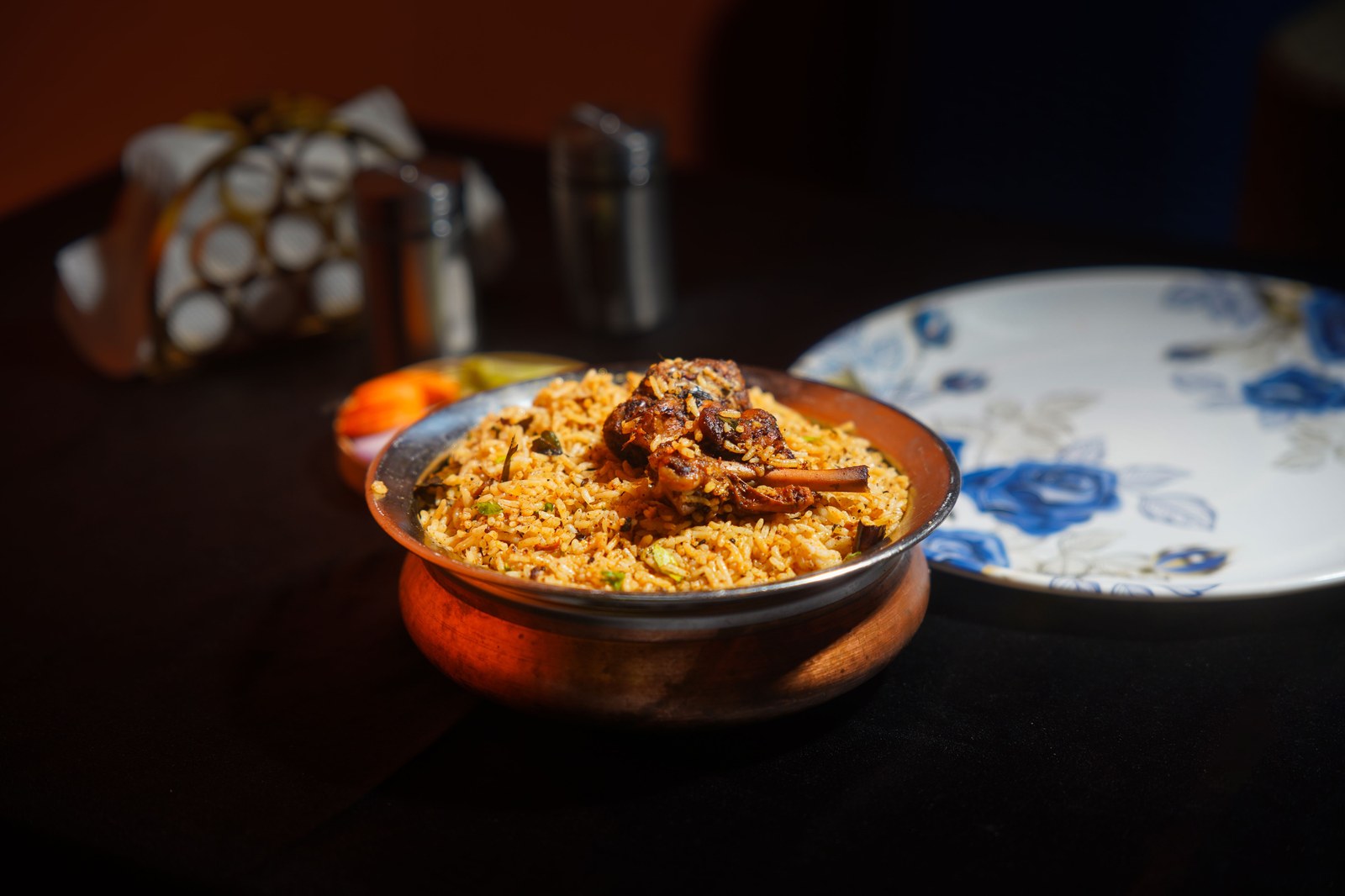
The best biryani in Philadelphia is at Saffron Palace, on Elmwood Avenue in Southwest Philly, and it has been there longer than most food press coverage of the city has acknowledged. The mutton dum biryani scored in the low nineties on flavor across three separate visits. The dum technique is real: the pot is sealed, the rice and the meat steam together, and the result is what the technique is supposed to produce. Most biryani in Philadelphia does not do this. Most biryani in Philadelphia is assembly.
The algorithm noticed the Southwest corridor before the guides did. It noticed Cedar Park too, specifically the Baltimore Avenue stretch from 46th Street west through Cedar Park, where a cluster of South Indian and Pakistani-owned restaurants has been operating since the early 2000s. Saffron Palace. Desi Chaat House. Lassi & Curry. These are not new restaurants. They are restaurants that the city's food press spent a decade walking past on the way to brunch.
The scoring pattern across all 8 spots and 23 dishes was consistent in one direction: technique scores rose in proportion to how far a restaurant was from Center City. The restaurants cooking for their own communities, not for a general audience, were doing the more careful work. That is not a surprising finding. It is a finding the data confirms.
Cedar Park and Baltimore Avenue
Baltimore Avenue between 46th and 52nd Streets is not a restaurant corridor that markets itself. There are no murals announcing the food scene, no weekend pop-ups drawing Instagram traffic. What there is: a set of South Indian and Pakistani restaurants that have been running continuous operations since the late 1990s and early 2000s, feeding a mixed community of West African immigrants, South Asian grad students, and longtime Cedar Park residents who do not need to be told the food is good because they have been eating it for twenty years.
Desi Chaat House on Baltimore Ave is the clearest example of the gap between press attention and scoring reality. The chicken biryani uses a chettinad masala, which means black stone flower, marathi mokku, and a dry-roasted spice base rather than the oil-forward tikka-style gravies that dominate Indian restaurant menus written for a general American audience. The score on flavor is consistently in the high eighties. The dosa and idli are also on the menu and also worth ordering, but the biryani is the reason the algorithm flagged this address.
The same corridor that houses Desi Chaat House is also where you find thali service that has held the same format and price point for at least three years: full South Indian thalis with sambar, rasam, rice, and three vegetable preparations, for under fifteen dollars at lunch. The uttapam at Lassi & Curry scored a ninety-two on execution. These are not special-occasion scores; they are scores that reflect a kitchen that has been making the same dish correctly for a long time. For more on what the West Philly corridor does with consistent, community-anchored food, see ForkFox on Ethiopian food West Philadelphia.
Northeast Philly and the Family Restaurant Standard
Northeast Philadelphia has a South Asian and Pakistani restaurant density that Center City does not. The customer base is primarily first- and second-generation immigrant families, which means the cooking is calibrated to people who know what the dish is supposed to taste like. That is a different standard than cooking for novelty.
Bangalore Express on Welsh Road is the value leader in our dataset. The vegetable biryani is under fourteen dollars, and the basmati is correctly aged long-grain rice, which is not a given in this price range. The spice profile is Bangalorean, which means milder than the Hyderabadi version and built on green herbs and cashews rather than whole spices and dried fruit. Tandoori Nights and Spice Village, both in the same Northeast corridor, scored in the mid-eighties on flavor, with Spice Village notching a higher value score because of its lunch buffet pricing. The algorithm sees the Northeast as an underscored zone. The press will catch up.
None of these restaurants take reservations. Most are BYOB, which in Philadelphia is infrastructure rather than novelty. If the BYOB model in other parts of the city interests you, the analysis at BYOB restaurants in Fishtown covers the mechanics of how it works across a different neighborhood. The biryani corridor in the Northeast operates on the same economics: no liquor license overhead, lower price points, higher margin on the food itself.
What the Scores Say About the City
Philadelphia has a biryani gap that is not a quality gap. It is an attention gap. The restaurants doing the most careful work — the sealed pots, the chettinad spice bases, the aged basmati — are operating in Southwest Philly and Cedar Park and the Northeast, not in Rittenhouse or Washington Square. The press and the guides have spent twenty years covering the city from Center City outward. The scores run in the opposite direction.
The highest combined scores in the dataset went to Saffron Palace, Desi Chaat House, and Bangalore Express. All three are in neighborhoods that the major food guides do not cover with regularity. All three have been open for more than a decade. The filter coffee at Desi Chaat House is as good as anything in the city's coffee-forward brunch corridor, and it costs two dollars and fifty cents.
The pattern here is the same pattern the algorithm found in South Philadelphia Vietnamese cooking, which ForkFox covered separately: see ForkFox on South Philadelphia Vietnamese restaurants for how the scoring plays out across a different community corridor. The principle holds across cuisines. The restaurants cooking for their own communities score higher than the restaurants cooking for a general audience. Philadelphia has known this for decades. The data just confirms it.
The biryani gap in Philadelphia is not a quality gap. It is an attention gap.
The best biryani in Philadelphia has been on the same block for fifteen years. The city just stopped walking past it.
We test dishes so you don't have to. No spam — just the best food, neighborhood by neighborhood.