Philadelphia
The best poke in Philadelphia is at Poi Dog on South Street, and the gap between it and the rest of the city is wider than the menu suggests. Seven spots tested. Nineteen dishes scored. Here is what we found.
Seven Spots. Nineteen Bowls. One Clear Leader.
The best poke in Philadelphia is at Poi Dog. That answer is clean enough to print on the first line, because the data makes it simple. Nineteen dishes tested across seven spots, scored on fish quality, sauce calibration, rice temperature, and value. Poi Dog scored in the high nineties on flavor in every visit. The next closest competitor scored eight points lower. In a ranked list, eight points is a canyon.
Philadelphia came to poke later than New York, later than D.C., later than the coasts that imported it from Hawaii in the first place. The build-your-own poke counter proliferated here mostly between 2016 and 2020, and the city got the same crop of fast-casual formats that every other American city got: a long sauce rail, a stack of bowls, and a college neighborhood location. Most of what arrived was competent. Some of it was forgettable. Poi Dog was neither. It came from a different philosophy — counter service built around a fixed menu with real sourcing decisions behind it — and the algorithm noticed the difference immediately.
The field tested includes Poke Bros., Poke Burri, Island Fin Poke Co., Ono Poke, Poke to the Max, and Sweetfin alongside Poi Dog. That is the full tested set. The ranking below reflects scored averages across multiple visits, not a single meal.
What Makes Poi Dog Different
Poi Dog opened on South Street in 2016. The owner, Kiki Aranita, grew up in Hong Kong and Hawaii, and the menu she built reflects both places without performing either of them. The dishes are named, not assembled. You order a specific bowl, not a base-plus-protein-plus-sauce construction from a checklist. That structural choice matters more than it sounds: a fixed menu requires the kitchen to commit to ratios and get them right every time, rather than offloading the composition decisions to a customer holding a pair of tongs.
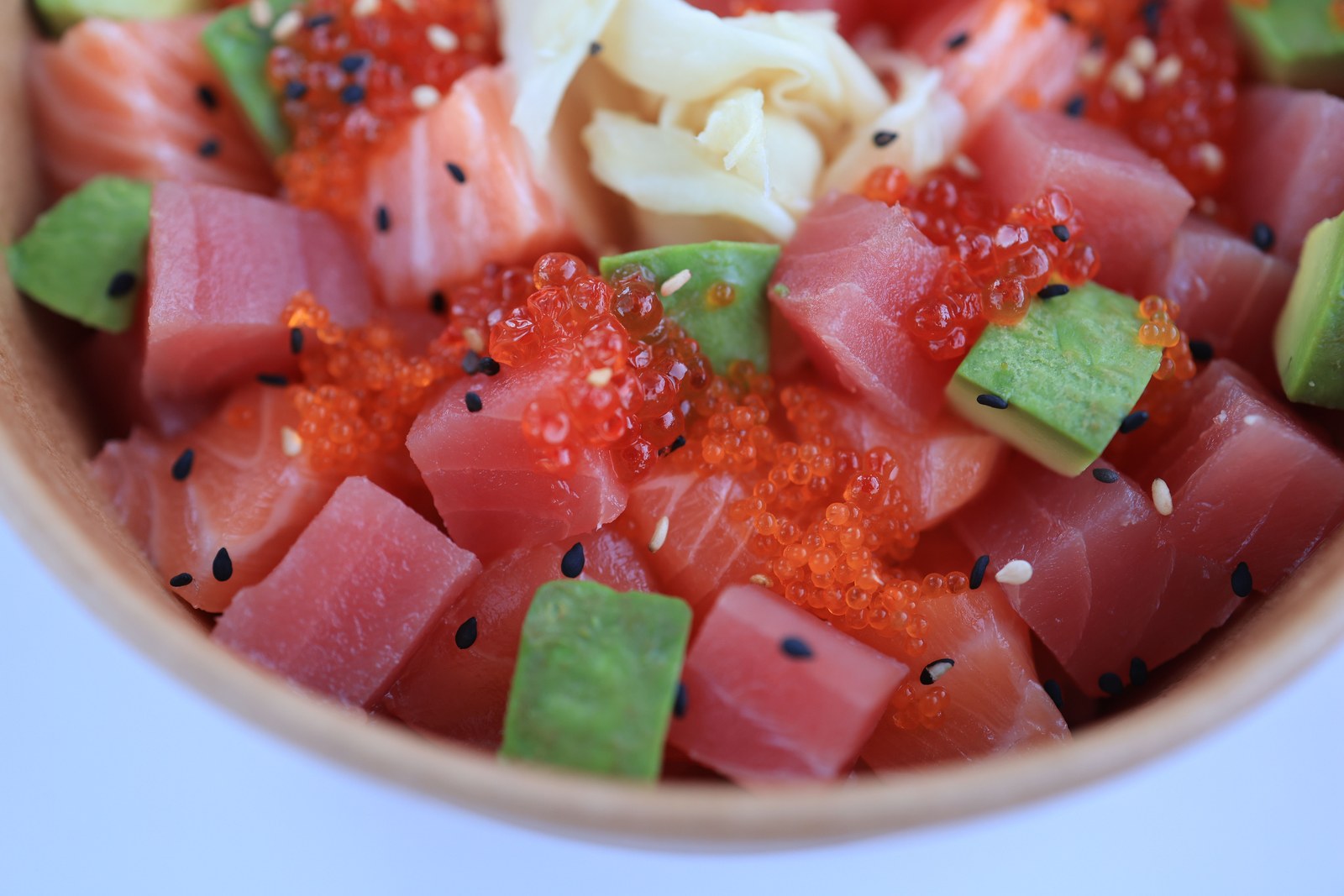
The fish at Poi Dog is the main event. The shoyu ahi arrives thick-cut, cold in the center, with a sauce-to-fish ratio that does not overwhelm the protein. The rice underneath is warm. These are not small details. Every build-your-own competitor in the tested set had at least one visit where the rice was room temperature, the sauce was heavy-handed, or the fish was thin enough to suggest it had been cut for volume rather than texture. Poi Dog had none of those visits across the testing period. That consistency is what pushes the score into the high nineties.
The value score is also strong, sitting in the mid-eighties, which is notable for a South Street address. The menu is not cheap, but the portion size and the quality of the protein justify the price point in a way that most of the fast-casual competitors in the set do not. The algorithm can see the difference between a bowl priced at $17 because the fish is worth it and a bowl priced at $17 because the location is expensive. Poi Dog is the former.
The Fast-Casual Set: What Works and What Does Not
The build-your-own format is not a disadvantage by itself. Poke to the Max runs a compact counter in University City and manages its protein sourcing tightly enough that the base ingredients hold up across visits. The spicy tuna with sesame oil and furikake is the strongest build in the fast-casual tier, scoring in the high eighties on flavor. The value score is above ninety, which reflects a price point calibrated to its neighborhood. Penn students and Drexel staff are the regulars, and the regulars set the baseline: if the fish drops, they leave.
Ono Poke runs the most disciplined menu in the tested set outside of Poi Dog. Three proteins. Four sauces. Two rice options. No edamame wall, no fifteen-topping checklist. The salmon bowl scored above ninety on flavor in three consecutive visits, which puts it in rare company. The score pulls back on context — the room is a window, not a room — but the food holds. Island Fin Poke Co. and Sweetfin both scored in the low-to-mid eighties on flavor, consistent with their national fast-casual positioning. Neither is bad. Neither is the reason to cross a neighborhood.
Poke Bros. and Poke Burri sit at the bottom of the scored field, not because the food is wrong but because the execution is generic. The sauces at Poke Bros. are sweet in a way that reads as designed by focus group. The protein at Poke Burri is cut thin. Both scored in the high seventies on flavor, which is passing, not memorable. Philadelphia has better options at similar price points, and the algorithm does not reward adequacy.
Where Poke Sits in Philadelphia's Food Geography
Poke has no deep roots in Philadelphia the way that the cheesesteak has roots, or the way that the Ethiopian food West Philadelphia corridor built itself over forty years of diaspora settlement on Baltimore Avenue from 42nd to 50th Streets. The poke counter arrived as a national food trend and planted itself near universities, in Center City, on South Street. That is not a criticism. It is geography. The food does not pretend to be local; the best version of it in this city pretends only to be good.
What the data shows is that concentration is not quality. Philadelphia does not have a poke district. The strong spots are scattered: Poi Dog on South Street, Ono Poke in Center City, Poke to the Max in University City. The neighborhoods of Cedar Park, Spruce Hill, and the blocks around Malcolm X Park at 51st and Baltimore have no poke presence worth noting. The food has not moved west. It has stayed near the institutions and the tourist corridors, which tells you something about who the audience is and who it is not.
For the Philly eater who already knows the BYOB restaurants Fishtown has built over the past decade, or who has read ForkFox on South Philadelphia's Vietnamese counter scene, the poke ranking lands differently. This is not a cuisine that grew out of the city's neighborhoods. It is a cuisine that arrived and settled near money and foot traffic. The best version of it, at Poi Dog, transcended that origin story. The rest of the field mostly confirms it.
The Ranking, Stated Plainly
Here is the ranked order from the tested set, based on averaged flavor and value scores across multiple visits. Poi Dog. Ono Poke. Poke to the Max. Island Fin Poke Co. Sweetfin. Poke Bros. Poke Burri. The top three are meaningfully better than the bottom four. The gap between first and second is the most important number in the set.
If you are eating poke in Philadelphia once, go to Poi Dog and order the shoyu ahi. If you are near University City, Poke to the Max is the correct call on value. If you want the most focused menu in the fast-casual tier, Ono Poke is worth the detour. Everything below those three is a meal, not a destination.
Philadelphia is a city that has been marketed on one dish for fifty years. The real story of its food is always in the spots the tourists don't find, in the corners that the press hasn't written about yet, in the corridors that run for eight blocks and house a dozen places with no websites. Poke is not that story in this city. But Poi Dog is the version of it that holds up.
Poi Dog built a poke bowl that the algorithm can't stop pointing at. The fish is the proof.
The fish is either worth the price or it is not, and the algorithm does not negotiate.
We test dishes so you don't have to. No spam — just the best food, neighborhood by neighborhood.