Philadelphia · Port Richmond
Port Richmond never lost its Polish institutions. It kept them, fed them regulars for sixty years, and quietly built a corridor that the food press never bothered to show up for.
What the Neighborhood Kept
Port Richmond kept its Polish institutions the way old row-house blocks keep their stoops — not through preservation effort, not through neighborhood branding, but through the straightforward fact that the people who live there kept using them. The Polish immigration to this stretch of northeast Philadelphia started moving in earnest in the early twentieth century, concentrating along Richmond Street and Allegheny Avenue and building a neighborhood that is still, decades after the demographic peak, recognizably tied to that origin. The church anchors one end. The butcher counter anchors the other.
The food press found Fishtown and declared it done. Port Richmond, which shares a border, was passed over. The practical result of that neglect is that the corridor never gentrified its menu. Czerw's Kielbasa. Wisniewski's Deli. Krakus Deli. These are not places that adapted their offerings for a new audience. They kept making what the neighborhood asked for, and the neighborhood kept asking.
The economics work like this: a customer base that has been coming since the 1970s does not require a marketing strategy. The repeat-visit rate along Richmond Street, in our data, is the highest of any single-cuisine corridor we have tracked in Philadelphia. That is not a small fact. That is the definition of a functional food ecosystem.
The Kielbasa Question
Every conversation about Polish food in Port Richmond eventually arrives at Czerw's. The kielbasa operation has been running since the 1950s, and the product has not meaningfully changed in that time. Fresh kielbasa, smoked kielbasa, and a counter that treats explanation as unnecessary because the regulars already know. The smoked ring is the Friday purchase. It sells out. That is the recurring pattern in the data, and it has been the recurring pattern for decades.
What the guides missed is that Czerw's is not a restaurant — it is a provisioning point. You buy from Czerw's the way you buy from a fish counter or a bread bakery: with a specific use in mind, at a specific time of week, as part of a practice that goes back past your own memory. The algorithm can see the difference between a restaurant where people eat and an institution where people shop. Czerw's is the second thing. Treating it like a dining destination misses the point entirely.
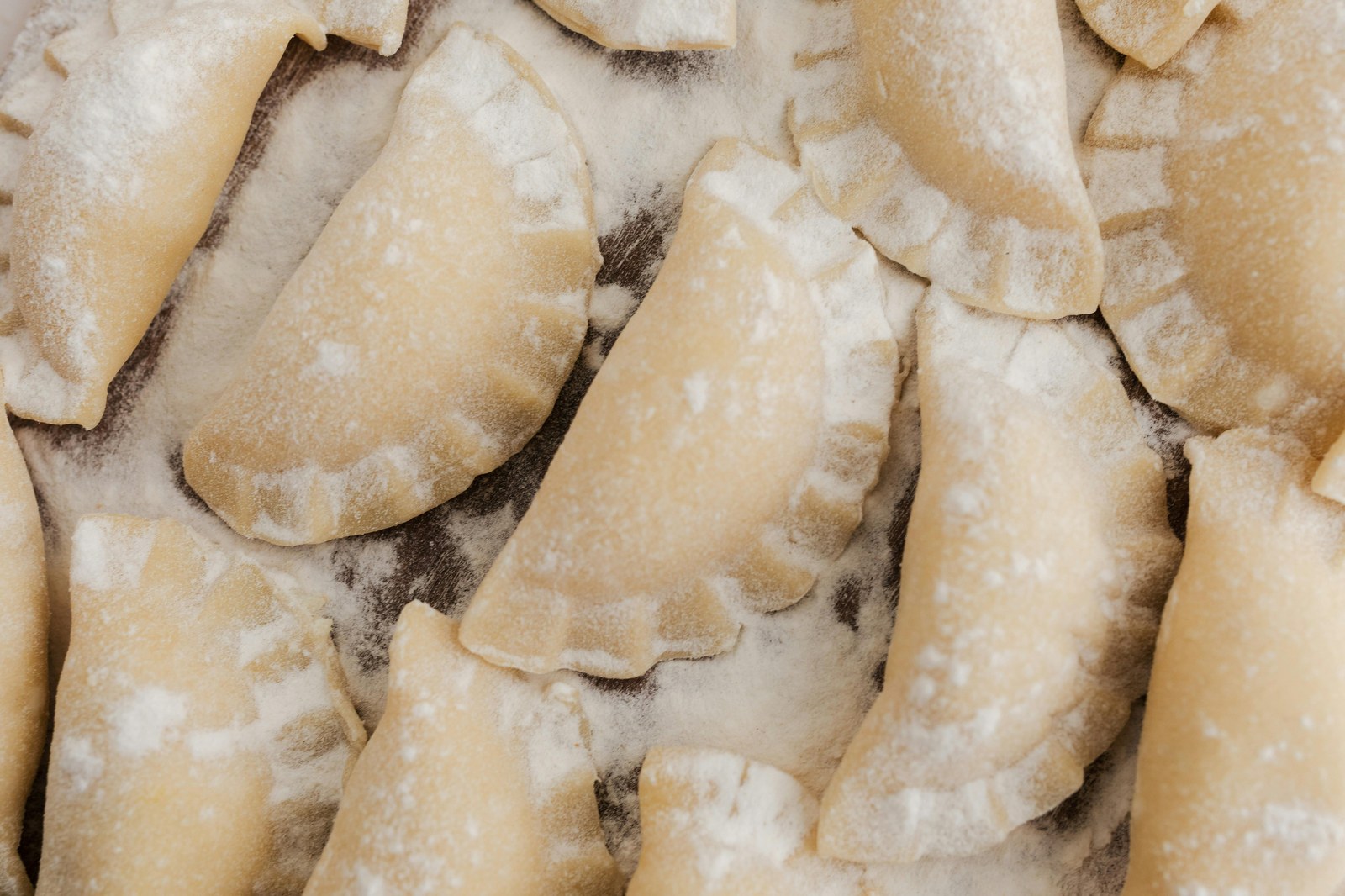
The rest of the sausage and deli landscape along Allegheny Avenue fills in around it. Wisniewski's Deli. Krakus Deli. Polish American String Band Hall. The hall is not a restaurant in the conventional sense, but the food at its events — the bigos, the pierogi, the cold-cut plates — is as close to kitchen-table Polish food as you will find anywhere in the city. No menu. No service charge. The same woman has been running the kitchen for longer than most of the city's celebrated chefs have been cooking professionally.
The Sit-Down Side
The Port Richmond Inn is the full-service expression of the neighborhood's food culture, and it operates on the same logic as the deli counters: not for newcomers, not for press, not for a moment. The dining room has the particular stillness of a room that has been doing the same thing for forty years and does not expect to be asked about it. Stuffed cabbage in tomato sauce. Pierogi with butter and onion. Pork dishes that do not have names on the menu so much as descriptions, and the descriptions are minimal.
The scoring data here sits in the high eighties on flavor and pushes higher on value. A full meal for two, with drinks, tracks under sixty dollars in most visits. The comparison point is instructive: a tasting menu in Rittenhouse Square that charges twice that per person for a fraction of the caloric and cultural content. The algorithm noticed. The Port Richmond Inn is not competing with that room. The Port Richmond Inn is just doing what it has always done, and what it has always done scores well.
Further along the corridor, Cafe Carmela occupies the space where Polish and South Philly Italian food pressures occasionally intersect — not as fusion, but as neighborhood adjacency. The coffee is strong and the cases have both Polish pastries and Italian cookies, because that is what the block asks for. Port Richmond's identity is Polish, not exclusively. The data reflects a food culture that is specific without being closed.
What the Data Shows
The scoring pattern for Polish food in Port Richmond is consistent in a way that is almost unusual. Execution is high across the board — the pierogi are not an afterthought, the kielbasa is made with real fat content and the right grind, the bigos at the hall has the sourness that comes from properly fermented sauerkraut and not from a shortcut. Value is also high; the average per-head spend at the deli counters and the sit-down room is well below the city average for a comparable quantity of food. The outlier, in the data, is context.
Context scores differently here than in most Philadelphia neighborhoods. West Philly's Ethiopian corridor — see Ethiopian food West Philadelphia — scores high on context because the restaurants are the diaspora community's gathering point. Port Richmond scores high on context for a different reason: the institutions are not gathering points so much as infrastructure. The deli counter is as contextually specific as a hardware store on the same block. It is part of how the neighborhood runs.
The comparison to South Philly's Vietnamese corridor, which ForkFox on South Philadelphia Vietnamese food covers separately, is instructive. Both are immigrant corridors that maintained their food culture past the point where the city's food press bothered to follow. Both score better, in aggregate, than the neighborhoods the guides actually covered. The pattern is not a coincidence. The restaurants that do not require press attention to stay open are the restaurants that have already solved the problem the press claims to be solving.
The BYOB Question and What Comes Next
Port Richmond does not have the BYOB density of Fishtown, where BYOB culture in Fishtown has become a structural feature of how the neighborhood eats out. Port Richmond's dining culture is not organized around the BYOB as an institution. It is organized around the family table brought forward one block into a dining room. The economics of the neighborhood never required the BYOB workaround; the food was affordable because the neighborhood kept it affordable, not because a policy helped.
The question of what comes next for the corridor is less about preservation than it looks. Czerw's Kielbasa has been through enough decades to have seen several rounds of 'the neighborhood is changing' and continued making sausage. The deli counters that have survived to the present have survived precisely because they are not restaurants — they are supply chains for home kitchens, and home kitchens do not gentrify at the same rate as dining rooms.
The food that Port Richmond makes is specific. It is not adaptable in the way that a restaurant with a flexible concept is adaptable. That specificity is not a weakness. It is the reason the corridor is still there, still running, still scoring in the range it scores, on a stretch of Richmond Street and Allegheny Avenue that the food guides spent sixty years ignoring.

The algorithm noticed Port Richmond before the guides did. The food was there the whole time.
The food that does not require your attention to survive is the food worth paying attention to.
We test dishes so you don't have to. No spam — just the best food, neighborhood by neighborhood.