
San Francisco · Castro
The Castro has a short Thai roster and one restaurant that scores well above the rest. Here is what the numbers show and what they don't.
The Thai Question in the Castro
The Castro is not a Thai neighborhood. That is not a criticism. It is a description of how the food geography of San Francisco actually works — certain cuisines settle into certain corridors for reasons that are economic, historical, and demographic in roughly that order, and Thai food in San Francisco settled heavily into the Tenderloin, the Richmond, and along Larkin Street, not into the Castro's compact commercial strip on Castro St. What the Castro has is a small roster of Thai restaurants, one of which scores significantly higher than the others, and a neighborhood diner profile that tends toward the full-service dinner rather than the bowl-of-noodles-at-lunch.
The data here covers seven spots and twenty-six dishes tested across multiple visits. The range in scores is wider than you'd expect for a single neighborhood and a single cuisine. That range is the story. A neighborhood with one very good Thai restaurant and several adequate ones is not a failure of the food scene; it is a normal distribution. The Castro's Thai roster happens to have a clearer top than most.
The BYOB culture that defines neighborhoods like the Tenderloin's South Indian corridor — see South Indian food Tenderloin San Francisco for how that math works — does not apply here. The Castro's Thai restaurants are licensed, full-service, and priced accordingly. That changes the value calculation.
What Farmhouse Kitchen Is Actually Doing
Farmhouse Kitchen Thai Cuisine is the clearest data point in the Castro Thai set. The scores sit in the high eighties on flavor, which in a neighborhood context is a meaningful outlier. The khao soi is the dish that earns those scores most consistently — the broth is fatty and turmeric-forward, the crispy noodles on top hold long enough to matter, and the pickled mustard greens cut through without disappearing. The boat noodles are the second anchor: pork blood broth, thin noodles, and a spice profile that does not self-censor for the room.
Farmhouse Kitchen opened its Castro location as an extension of the Florida Street flagship, and the kitchen logic transferred cleanly. Nam tok arrives with the right char-to-herb ratio. Mango sticky rice is served at the correct temperature, which sounds like a low bar until you've had it served cold from a refrigerator twelve times in a row at other restaurants across the city. The algorithm can see the consistency across visits in a way a single review cannot.
The room itself is designed for dinner, not lunch. High ceilings, low light, a bar that sees real use. The price point tracks with the experience — this is not a $13 lunch counter, and it does not try to be. That positioning is deliberate and the scores reflect it.
The Counter-Service Tier
Zaap Kitchen operates on a different logic entirely. Counter service, fast, and priced for the working lunch. The larb here is drier than most versions you'll find west of the Tenderloin — more toasted rice powder, less fish sauce dressing — and the som tam comes out with real crunch, which means the papaya was cut fresh and not sitting in a cambro. These are not small things. The value scores for Zaap track above the Castro Thai average, which is the correct outcome for a counter that does the fundamentals right.
Osha Thai is the Castro outpost of a small SF chain with roots in the early 2000s. The pad thai is reliable in the way that chain execution is reliable: consistent, competent, and not surprising. The green curry is the stronger order — richer base, better coconut balance. The scores here are solid without being exceptional, which is exactly where Osha sits in the broader SF Thai data set the algorithm tracks across neighborhoods.
Noodle Theory Provisions sits adjacent to the Thai conversation without being fully inside it — the menu borrows from Southeast Asian noodle traditions broadly rather than landing specifically in the Thai canon. Worth noting in the Castro context because the flavor scores on the broth-based dishes are competitive with the Thai-specific spots on the block, and the value math is strong.
How the Castro Compares to the Rest of the City
San Francisco's Thai food is not evenly distributed. The Tenderloin and the Richmond carry more volume and more range than the Castro, and the Mission's density of cheap, fast, good food across multiple cuisines — including the Mexican food that defines the Mission District's food identity — creates a comparison problem for any Castro restaurant operating at similar price points. The Castro Thai roster is small because the neighborhood's commercial strip is small, the rents are high, and the customer base skews toward full-service dinner over fast-lunch noodle spots.
What the Castro does have is one Thai restaurant that would score well in any neighborhood in the city. Farmhouse Kitchen is not a good Castro Thai restaurant. It is a good San Francisco Thai restaurant that happens to be in the Castro. That distinction matters for how you use the data. If you are eating Thai in the Castro because you are in the Castro, Farmhouse Kitchen is the correct call. If you are routing across the city for the best Thai scores, the Richmond and the Tenderloin offer more options at more price points.
As a counterpoint, consider what ForkFox on Financial District dim sum shows about neighborhood food monocultures: a single cuisine can define a corridor even when the overall roster is short. The Castro's Thai situation is the inverse — the roster is short, the top end is clear, and the neighborhood's food identity is defined by other cuisines entirely. That makes the Thai data more legible, not less.
What to Order and Where
The khao soi at Farmhouse Kitchen Thai Cuisine is the highest-scoring dish in the Castro Thai data set. Order it. The boat noodles are the second call. The mango sticky rice is correct. If the room is full and the wait is long, the counter at Zaap Kitchen handles the larb and som tam with more care than the price point suggests — the toasted rice powder is the tell.
Osha Thai is the reliable fallback: green curry over pad thai, and the Tom Kha is a better order than the Tom Yum on most visits. Noodle Theory Provisions is worth a stop if the noodle-broth format is what you're after and you want something adjacent to the Thai canon without being inside it. The flavor scores on the pork-based broths are competitive.
The Castro is not where you go to eat Thai food across the city. It is where you eat Thai food when you are in the Castro. That is a smaller category, but it has a clear answer. Farmhouse Kitchen is the answer. The rest of the roster is honest about what it is, which in San Francisco, in 2024, is not a small thing.
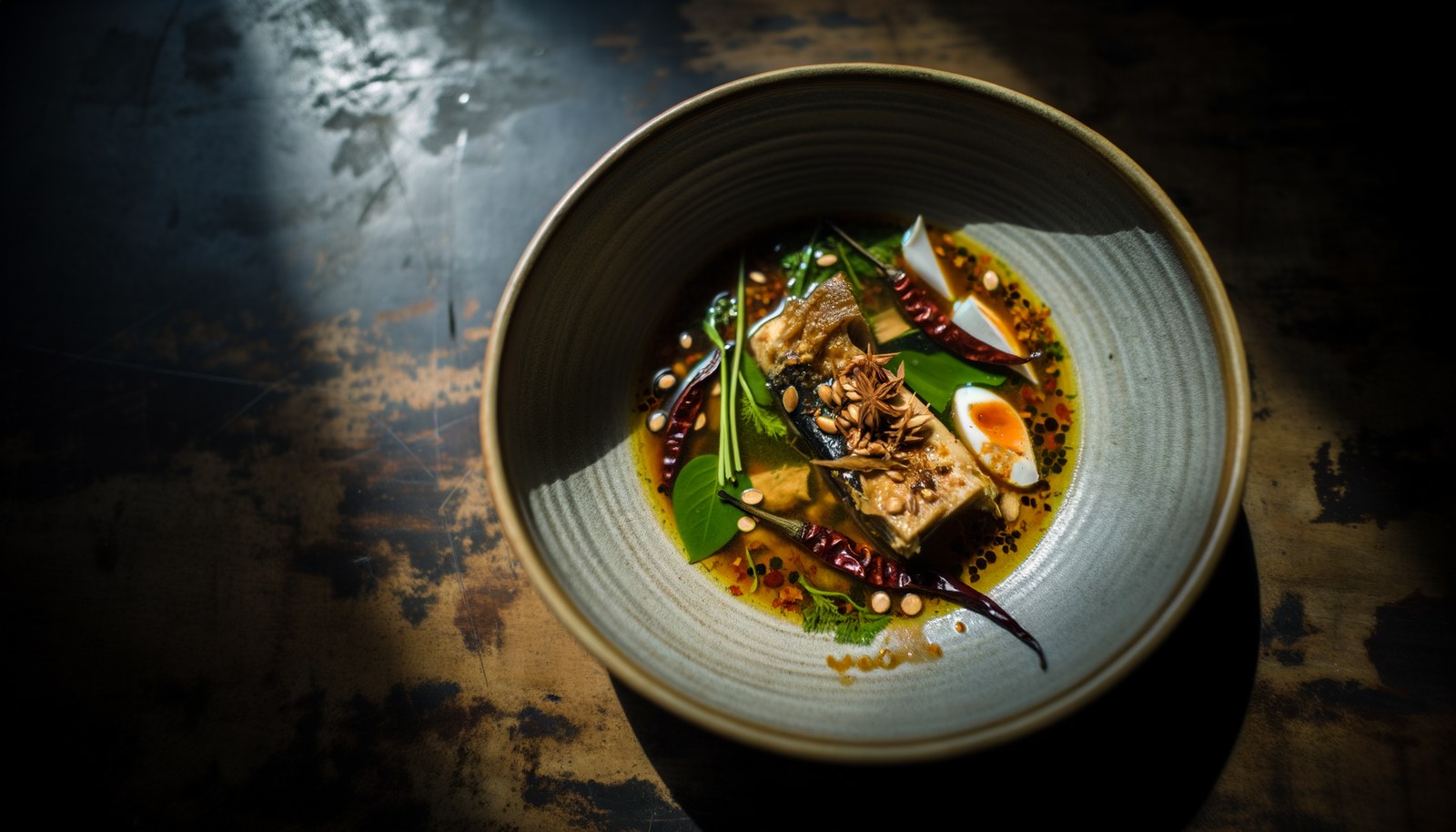
The algorithm noticed Farmhouse Kitchen before the press did. The scores were already there.
A short roster with one clear leader is more useful information than a long roster with no hierarchy.
We test dishes so you don't have to. No spam — just the best food, neighborhood by neighborhood.