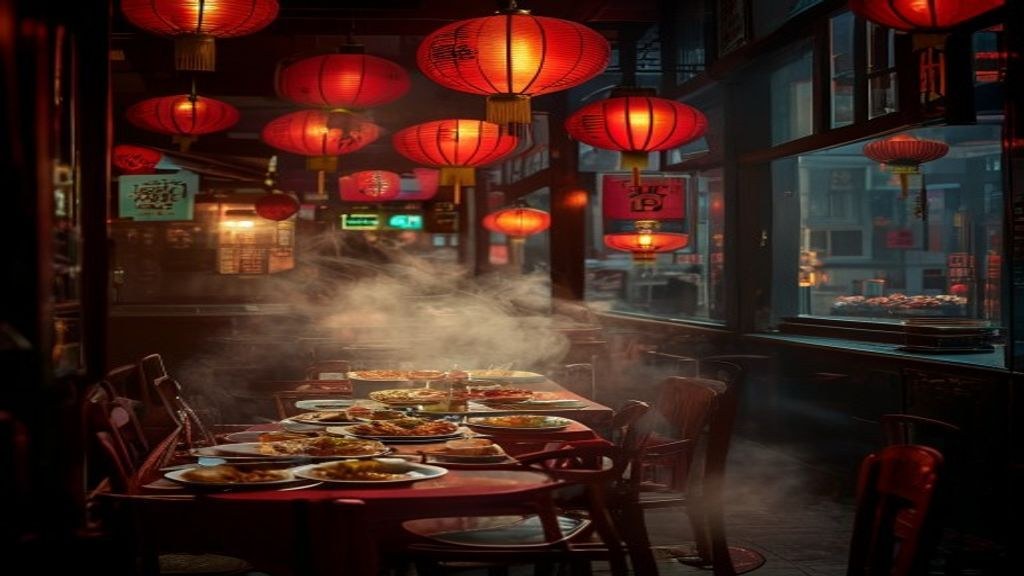
San Francisco · Chinatown
Grant Avenue was called Sacramento Street before the city renamed it. The Chinese were here first. The food remembers.
The Block Before the Tourists
The history of San Francisco Chinatown oldest claim is not a marketing phrase. It is a census fact. Chinese immigrants arrived in 1848, the year before the gold rush peaked, and within three years they had built a recognizable commercial district at Sacramento and Dupont Streets — the block that would become Grant Avenue after the 1906 earthquake and the city's subsequent effort to rebrand the neighborhood for easier tourist consumption. The name changed. The community did not.
By the 1860s there were already grocery merchants, herbalists, and tea houses operating on what the city's maps labeled variously as Dupont Street, then Dupont Gai, then Grant. The earthquake of 1906 leveled most of the physical structures. The neighborhood rebuilt in eighteen months, faster than any other district in San Francisco, partly because the community had no intention of relocating to the parcel the city briefly offered them near Hunter's Point. They rebuilt on the same blocks. The storefronts that exist now sit on the same footprint as the ones that burned.
Grant Avenue today runs from Bush Street north to Broadway, twelve blocks through the official tourist corridor and into the less-photographed sections where the actual neighborhood commerce happens. The souvenir shops thin out above Columbus. The restaurants get better. This is not a coincidence; it is the same dynamic you find on South Indian food Tenderloin San Francisco — the blocks that receive less foot traffic from tourists tend to reward the people who walk them.
What the Exclusion Act Did to the Menu
The Chinese Exclusion Act of 1882 did not close Chinatown's restaurants. It changed who could legally own them, who could legally work in them, and who could legally live in the neighborhood at all. By the 1890s the district was effectively sealed — Chinese immigrants could not become citizens, could not own property in most of the city, and could not legally bring wives or children from China. The neighborhood turned inward. The food economy turned inward with it.
What emerged from that period was a concentrated, self-sufficient food culture running on Cantonese technique with whatever the markets on Sacramento Street could source. Lo mai gai — sticky rice with chicken and mushroom, steamed in lotus leaf — became a staple not because it was ceremonial but because it was practical: dense, portable, affordable, and made from ingredients that kept. The tea houses that became dim sum parlors were doing the same thing. Small plates, shared tables, the economics of a population that could not expand outward and had to feed itself efficiently.
The 1906 earthquake reset the physical neighborhood but not the legal structure. Chinatown rebuilt under the same property restrictions, the same employment bars, the same immigration ceiling. The restaurants that opened in the 1910s and 1920s were built for a community in legal siege. Hang Ah Tea Room, opened in 1920 on Pagoda Place off Sacramento Street, is the oldest dim sum house in the United States. It has been open continuously for over a hundred years. It is not a museum. You can eat there this afternoon.
Grant Ave Versus the Rest of the District
Grant Avenue is the photograph. The rest of Chinatown is the argument. The corridor from Bush to California is jade shops and teahouses with English-language menus and prices adjusted for the hotel visitor. Move off Grant — one block west to Waverly Place, one block east to Kearny, down to Clay or Sacramento — and the neighborhood runs on a different logic. The lunch counters are cash-preferred. The menus are printed in Chinese first. The tables turn fast because the people eating at them have somewhere to be afterward.
The wonton soup at Sam Wo Restaurant on Clay Street has been the reference point for this neighborhood since 1907. The restaurant closed in 2012 after a health department citation and reopened in 2015 on a different block of Clay Street with the same broth formula. The congee is made plain or with preserved egg and pork, and on a cold morning with the fog sitting on the hill above Broadway, it is the correct thing to order. R&G Lounge on Kearny runs a similar logic: the room is not pretty, the menu is long, and the salt-and-pepper Dungeness crab is the specific reason to be there. The mapo tofu is made with a Sichuan pepper load that does not negotiate.
For the Financial District workers who eat dim sum at the counter rather than the tablecloth, see ForkFox on Financial District dim sum for the scoring breakdown on that corridor. The neighborhoods are adjacent and the food categories overlap, but the logic is different: Chinatown's dim sum houses are feeding a residential community. The Financial District versions are feeding a lunch rush. The algorithm notices the difference in how the kitchens pace the steamer.
What Survives and What Doesn't
The restaurants that have lasted in San Francisco Chinatown share a structural fact: they are not dependent on tourist volume to stay open. The community is the customer base. The tourist is the surplus. When the pandemic closed the neighborhood to foot traffic in 2020, the restaurants that closed permanently were disproportionately the ones whose economics required a full dining room of visitors. The ones that reopened fastest were the ones with a residential clientele who needed them to.
This is the same pattern you see in the Mission with Mexican food in the Mission District — the restaurants that pre-date the neighborhood's gentrification cycle have a customer base that does not disappear when the foot traffic changes. The taqueria that has been open since 1975 on 24th Street survives the same way that Ton Kiang on Geary survives: the people who grew up eating there keep eating there, and they bring their children. The menu does not change because the customer does not want it to change.
The scoring data on Chinatown is cleaner than almost any neighborhood in the city. Execution scores are high across the board — the technique on har gow, on char siu bao, on lo mai gai in the dim sum houses has been refined over decades of repetition. Value scores are high because the price points have not tracked with the city's general inflation as fast as in other neighborhoods. The algorithm scores Hang Ah Tea Room, City View Restaurant, and Lai Hong Lounge in the high eighties on a combined execution-and-value measure. For the city that over-prizes the tasting menu and underprices the counter, Chinatown is the correction.
The oldest Chinatown in North America is not a tourist attraction. It is a neighborhood that has been surviving since 1848.
The oldest Chinatown in North America is not old because it was preserved — it is old because it kept refusing to leave.
We test dishes so you don't have to. No spam — just the best food, neighborhood by neighborhood.