San Francisco · Cole Valley
Cole Valley runs a dozen blocks and feeds a neighborhood that does not want to be discovered. The brunch here is not a scene. It is a practice.
What Cole Valley Brunch Actually Is
Cole Valley is not the Mission. It is not Hayes Valley. It does not have a marquee restaurant that lands in the national food press every three years and draws the Uber-from-SoMa crowd on Saturday mornings. It has a street. Cole Street runs south from Carl Street toward the park, flanked by Victorian storefronts, a Muni stop, and a neighborhood that has been eating breakfast at the same counters since the 1980s. That continuity is the argument.
The brunch scene here does not perform for outsiders. The regulars walk. Most of them live within four blocks. The restaurants that have lasted on Cole and Carl Streets have lasted because the food is consistent, not because the Instagram light is good. That is a different economics than what runs Union Street or the Castro corridor, and the data reflects it.
Our scoring on this neighborhood shows a pattern that surprised the team: value tracks higher here than in comparable brunch corridors. The flavor scores are solid — mid-to-high eighties on average — but the value scores are what separate Cole Valley from, say, brunch in Russian Hill, where the check average climbs for reasons that have more to do with zip code than with what is on the plate. For the full picture on how this neighborhood stacks up against the hill, read our take on brunch Russian Hill San Francisco.
The Street-Level Geography
Carl Street is the horizontal axis — it runs east toward the Inner Sunset, west toward the park — and Cole Street drops south from it. The corner where they meet is the center of gravity for this neighborhood's mornings. Kezar Bar & Restaurant sits at 900 Cole, on that corner, and has been the neighborhood's Sunday-Bloody-Mary institution for years. The format is straightforward: eggs, hash, a full bar open early, a room that fills by ten and stays full until two.
Zazie is four doors south at 941 Cole and operates on a different register. It is French in the way that Paris cafes are French — not in the tasting-menu sense but in the sense that the eggs are cooked carefully and the patio is used. The garden in the back is not a seasonal amenity. On a clear morning in October it is the reason you are here. The French toast is the order. It has been the order since 1992.
The block also holds Crepevine, which occupies a longer stretch of real estate and runs a menu that covers more ground than the room suggests — crepes, eggs, salads, sandwiches — at a price point that keeps it functional for families and students from UCSF, which sits a hill away. It is not the most precise kitchen on the block. It is the most utilitarian, and in a neighborhood this residential, utilitarian has real value.
The Pork Store Question
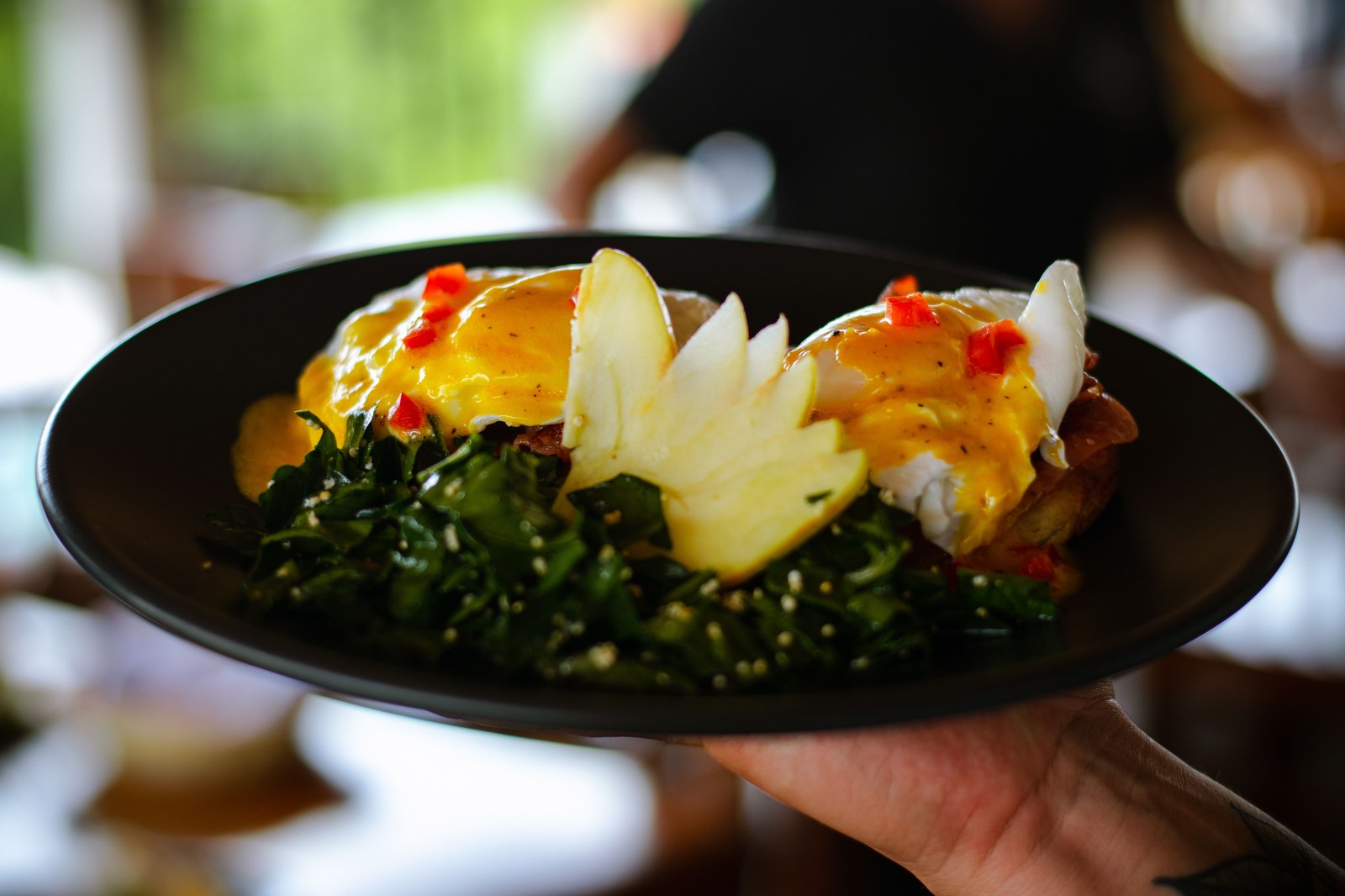
Every neighborhood breakfast corridor has one counter that the regulars treat as non-negotiable and the food press underweights because it does not photograph in a way that earns clicks. In Cole Valley, that counter is Pork Store Cafe. It has been operating in one form or another since the mid-1980s. The eggs Benedict is the dish. Hollandaise made to order, not held in a steam table, which is a technical distinction that matters more than it sounds at nine in the morning.
The wait on a Saturday is around twenty minutes. The seating is tight. The menu does not change, which is the point. A restaurant that has been making the same eggs for forty years is not failing to grow — it is demonstrating that it found the right answer early and had the discipline to stay there. The algorithm noticed. The value score here runs into the high nineties. The flavor score is consistently in the mid-eighties. No tasting menu on the hill pencils out at that rate.
Compare this to the South Indian counters that have survived decades of neighborhood pressure in the Tenderloin — the same economics, the same principle of finding one thing and doing it without variation. For a sense of how that pattern plays out in another part of the city, the piece on South Indian food in the Tenderloin covers the structural parallel in detail. The neighborhoods are different. The logic is the same.
Fresca and the Peruvian Variable
Fresca sits on Cole and runs a Peruvian menu that extends into weekend brunch — a format that does not appear in many SF neighborhoods at this price point. The lomo saltado hash is the crossover dish: it takes the stir-fry technique from the dinner menu and applies it to a brunch plate in a way that reads as a full meal rather than a compromise. The pisco sour at eleven a.m. is available and is not a mistake.
Fresca's presence in the scoring data is interesting because its brunch numbers track higher than its dinner numbers — a reversal of the typical pattern. The likely explanation is that the dinner competition on Cole Street is lighter than the brunch competition, which means Fresca earns more relative credit for execution at midday than it does at night. The algorithm can see this; the individual diner probably cannot unless they have eaten there fifteen times.
For a different take on how Latin-American kitchens navigate the SF brunch format, the ForkFox on Mission Mexican coverage looks at the taqueria-to-brunch pipeline on 24th Street. Cole Valley's Peruvian angle is a different tradition, a different neighborhood, and a different price point. Both are real.
What the Data Says About Cole Valley Mornings
The neighborhood average for brunch in Cole Valley sits in the mid-to-high eighties on execution and climbs sharply on value relative to comparable SF corridors. The spread is narrow — meaning the floor is higher than in neighborhoods with more turnover — which is a function of the regulars. When eighty percent of your customers walk to the restaurant and live within a mile, the restaurant cannot afford a bad weekend. The standards are set by the people who come back every Saturday, not by the people who come once and post.
The outlier in the data is context scoring. Cole Valley scores lower on context than it does on execution or value, and the reason is structural: the room sizes are small, the decor is functional rather than designed, and the fog that defines the neighborhood's mornings gives the light a quality that does not read as atmospheric in the way Hayes Valley or the Castro do. That is not a criticism. It is a description of a neighborhood that built its food culture around the food rather than around the experience of eating it.
The coffee corridor on Carl Street — Vinyl Coffee & Wine Bar, Reverie Cafe — fills the gap. Both are small-format, espresso-forward, and function as the neighborhood's pre-brunch staging area. Order there first. Walk the half-block to Cole. The morning runs better in that sequence.
The algorithm noticed what the guides missed: Cole Valley brunch scores high on execution, not on hype.
A neighborhood that has been feeding the same people for forty years has solved a problem that most restaurants never find the answer to.
We test dishes so you don't have to. No spam — just the best food, neighborhood by neighborhood.