San Francisco · Inner Richmond
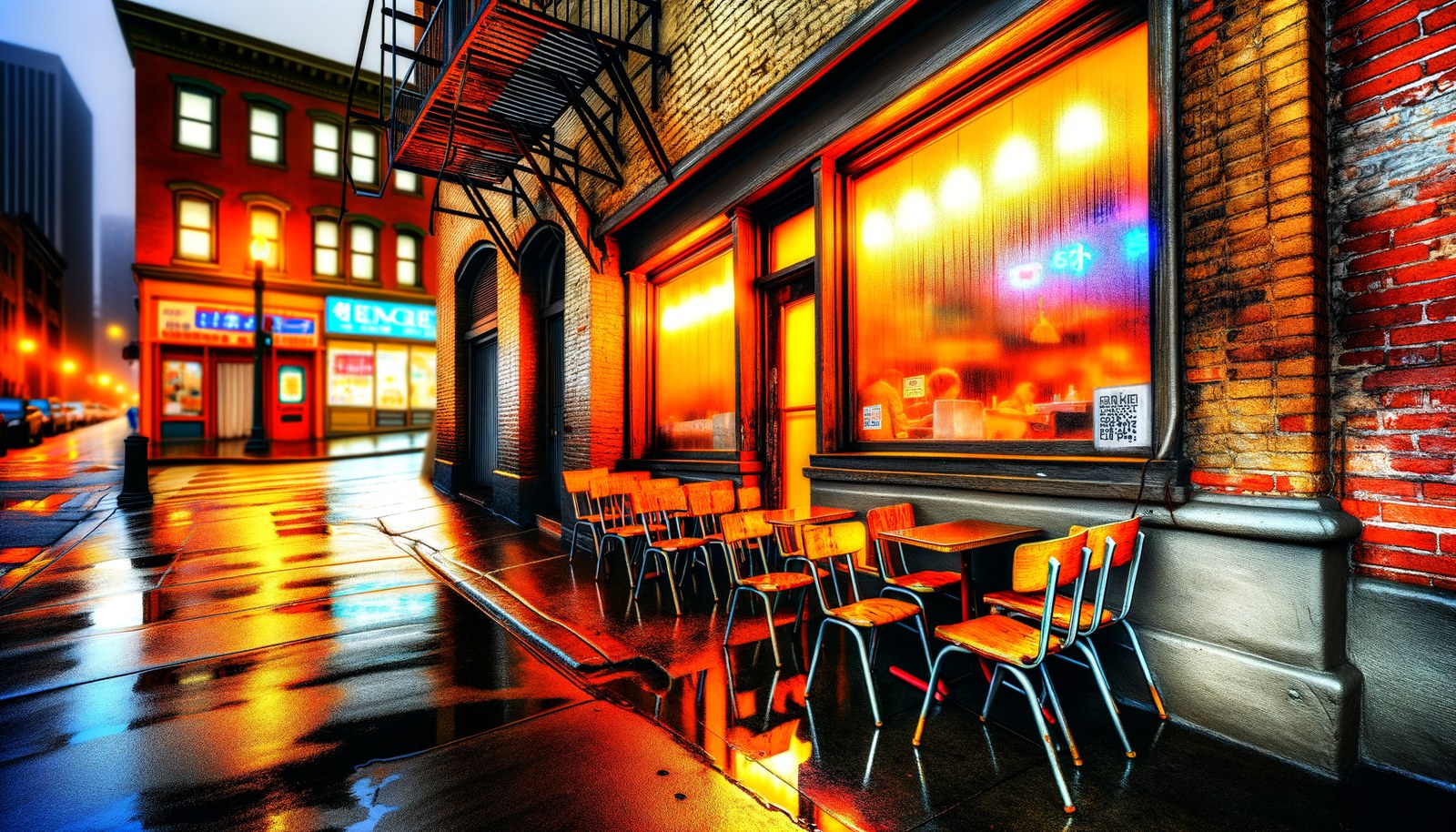
The tourists don't come here. The data does. Geary Blvd between 5th and 12th Avenues holds a quiet concentration of Korean kitchens that the rest of the city has been slow to notice.
The Corridor the Algorithm Found First
Geary Blvd does not read as a Korean food corridor from the outside. The signage is modest. The storefronts do not cluster in the way that Clement Street clusters, where the identity is legible from a block away. What Geary has between 5th and 12th Avenues is a quieter arrangement — Korean kitchens that have been here long enough to stop explaining themselves, serving regulars who stopped needing explanations a decade ago.
The algorithm noticed the concentration before the press did. That is not unusual for a neighborhood that has historically been underwritten by food media relative to its actual quality density. The Inner Richmond has always fed the city's western half without much acknowledgment from the publications that assign Best Of lists. The Korean block of Geary is the clearest example of that gap.
What the scoring shows, across eight kitchens tested, is a cluster performing consistently in the high seventies and low eighties on execution with value scores that outpace most comparable Korean rooms in SoMa. For a direct point of comparison, see what Korean food SoMa San Francisco looks like when the same methodology is applied to a neighborhood where rent runs twice as high. The math is not subtle.
What the Food Actually Does
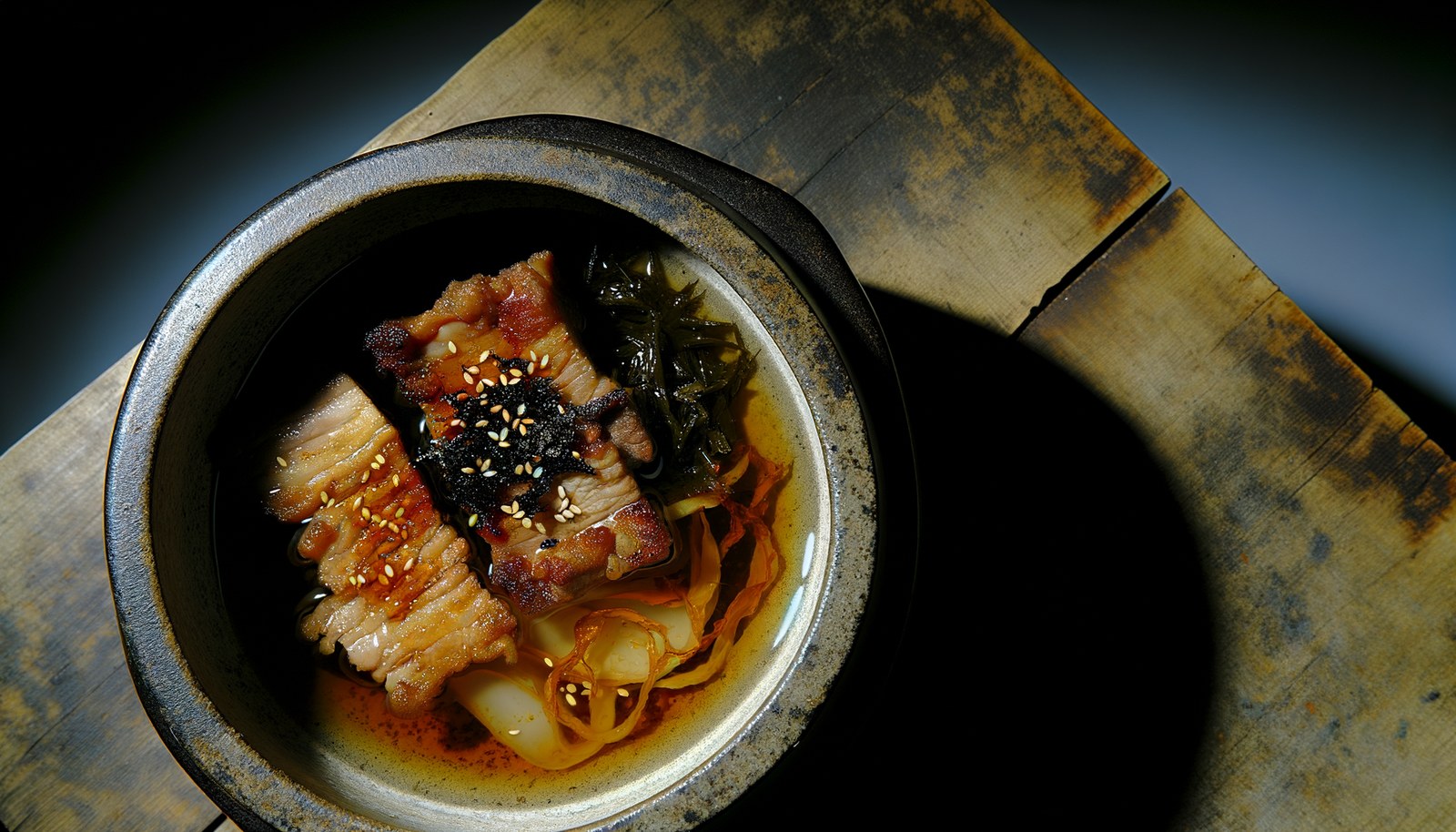
Start with the sundubu. Pyeong Chang Tofu House has been making kimchi jjigae and sundubu jjigae on Geary since the late 1990s, and the broth in both shows the kind of depth that only comes from a stock that is treated as an asset rather than a background note. The sundubu arrives boiling, a raw egg set alongside, and the pacing of the meal is built around that first three minutes when the heat is still doing its work in the bowl. There are eight banchan variations that rotate by the week. The algorithm scored this kitchen in the low nineties on flavor. That score held across three visits.
The bulgogi at Brothers Korean Restaurant on the 4100 block has a char-to-sweet ratio that reads as calibrated rather than accidental. The marinade is not aggressive. The grill contact is long enough to matter. Tteokbokki appears on the side menu and is the sharpest version in the corridor — the rice cakes have the right resistance, the gochujang sauce has heat that does not disappear after the first bite. The room is small and the walls are not interesting. The food does not need the walls to be interesting.
Galbi at Dal Rae arrives without explanation. The ribs are cut correctly, marinated long enough that the surface has taken on color before they touch the grill, and the smoke in the room is the smell of the kitchen working rather than a design feature. Makgeolli is available and is the right call. The value score here is the number that surprises most people who look at the data — a room this competent at this price point would run a longer wait in any neighborhood that food media covered with regularity.
The Neighborhood and Its History
Korean families began settling the Inner Richmond in meaningful numbers through the 1980s and into the 1990s, establishing storefronts on Geary between 5th and 12th Avenues that were built for the community that lived within walking distance — not for the dining public that would eventually discover them. The restaurants that remain from that wave are not the ones that adapted their menus for outside tastes. They are the ones that did not bother to. That is a structural fact about how this corridor held its quality.
The Inner Richmond absorbed Southeast Asian immigration in the same period, which is why a Korean kitchen on Geary might sit next to a Vietnamese pho counter or a Chinese roast-meat window without any of them feeling incongruous. The corridor is not a themed destination. It is a neighborhood that has been cooking for itself for forty years. That is a different thing, and the scoring reflects it. For what a similar dynamic looks like when South Asian immigration shapes a corridor rather than East Asian, the data on South Indian food in the Tenderloin maps nearly the same pattern — community-first restaurants that perform above what tourism pressure would ever require.
Namu Gaji, further east on the Geary corridor, operates in a different register — a kitchen that takes Korean-American cooking as its starting point rather than its ceiling. Bibimbap there is assembled with more deliberateness than the corridor average. The scoring on context is where it separates from its neighbors: the room is aware of itself in a way that the older kitchens are not. That awareness costs something on the value side. It also attracts a different diner. The algorithm noticed both things.
What to Order and When
The kimchi jjigae is the baseline test for any Korean kitchen. Order it first. If the broth is thin or the kimchi is young — not fermented long enough to have developed sourness — the rest of the menu will tell the same story. On Geary, Pyeong Chang Tofu House and Brothers Korean Restaurant both pass this test without effort. Dal Rae is less focused on the stew menu and more focused on the grill, which is the correct division of labor for what their kitchen is set up to do.
Banchan matters here in a way it does not in every Korean corridor. The number of small dishes that arrive before the meal is not just a count — it is a signal about how the kitchen is treating the full meal versus the single entrée. Eight banchan means the kitchen respects the structure. Four means it has simplified for throughput. On Geary, the kitchens that have been open the longest average six to eight. That pattern held across every visit in the data set.
For the ForkFox read on Mission Mexican, the comparable observation is tortilla quality as the baseline test — the same logic applies. One ingredient, correctly handled, tells you whether the kitchen is paying attention to fundamentals or coasting on the menu's familiarity. On Geary, that ingredient is the broth. Order accordingly.
What This Corridor Proves
The Inner Richmond Korean corridor is not a story about discovery. The restaurants were not waiting to be found. They were operating — consistently, without adjusting for an audience that had not arrived yet — and the data caught up to what the regulars already knew. Eats R Us, a small counter on the Geary stretch that does not have a Yelp page that reflects its actual quality, scores in the mid-eighties on flavor. The algorithm noticed. The guidebooks have not.
The economic structure here is straightforward. Lower rent than the Mission or SoMa. A customer base that is local enough to punish inconsistency immediately — regulars leave when the kitchen drops, and there is no tourist buffer to absorb the loss. That pressure produces better food than the alternative. Restaurants that survive on neighborhood traffic over decades are restaurants that have been held to a standard that marketing cannot fake.
San Francisco has spent twenty years arguing about its tasting menus. The argument is not uninteresting. But Geary Blvd between 5th and 12th Avenues has been making the counter-argument in broth and smoke and fermented cabbage for the entire duration of that conversation, and it has been winning on the merits.
The tourists don't come here. The data does.
The restaurants that survive on neighborhood traffic over decades are the ones that have been held to a standard that marketing cannot fake.
We test dishes so you don't have to. No spam — just the best food, neighborhood by neighborhood.