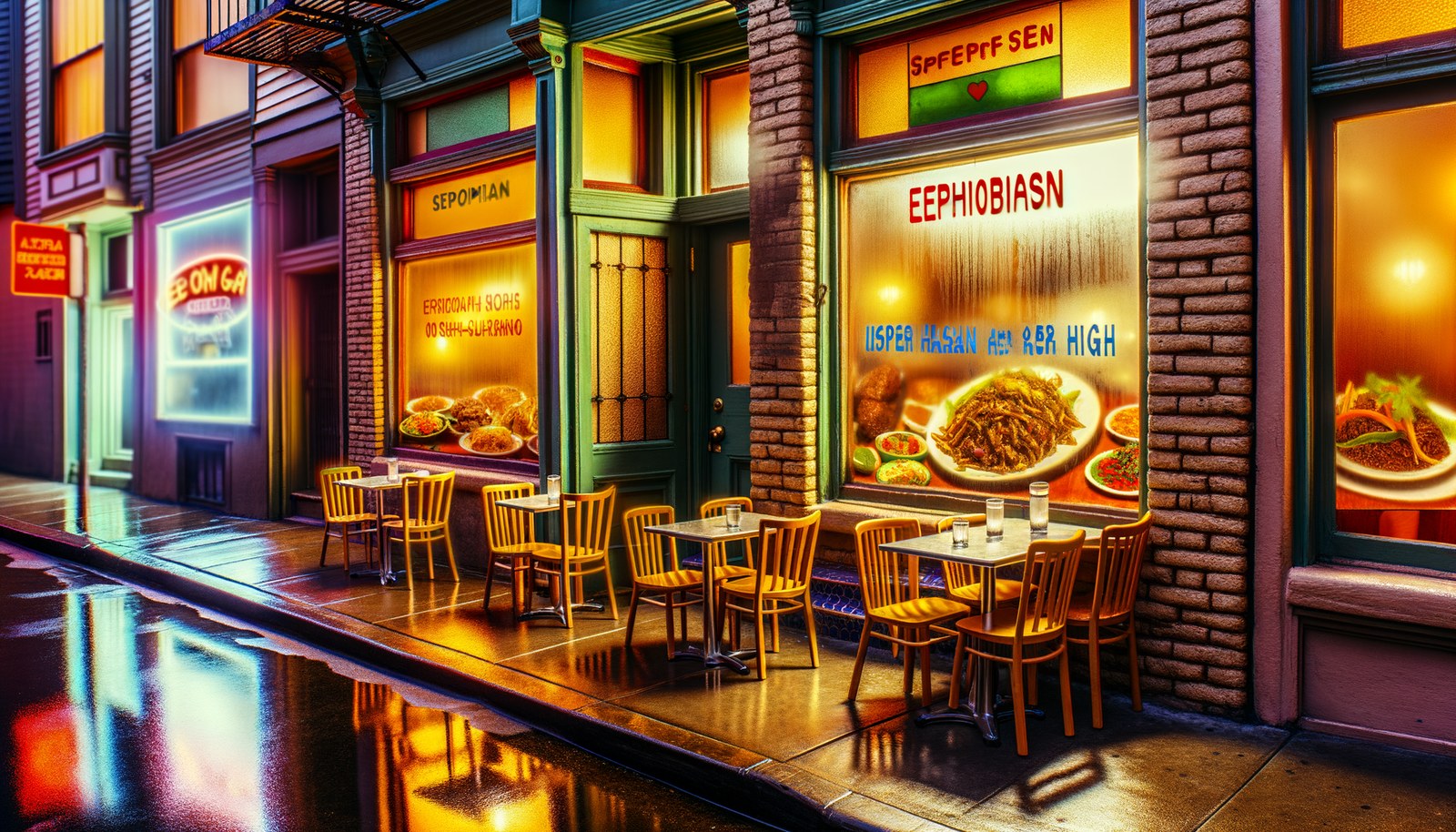
San Francisco · Upper Haight
Haight St is not where you expect to find serious East African cooking. The data says you should have been looking here all along.
The Block the Guide Skipped
Upper Haight has a reputation problem. It is the neighborhood that gets reduced to a single decade — the 1960s — and a single street, and once that framing sets in it is almost impossible for food writers to see past it. The result is that the two blocks of Haight St running east of Shrader have been quietly doing serious East African cooking for years without making the lists that the Tenderloin's Ethiopian corridor gets or the Mission's taquerias get. The food press looked elsewhere. The algorithm did not.
On those two blocks you find three distinct kitchens working from the same general tradition but cooking from different national histories. Kezem Ethiopian Restaurant. Massawa. Axum Cafe. Kezem and Axum cook Ethiopian; Massawa is Eritrean. The cuisines share geography, share the injera base, share the berbere spice framework, and diverged along political and cultural lines that the menus quietly reflect if you know what you are reading. The distinction matters. The data shows it.
Habesha communities in San Francisco did not land in Upper Haight first. The Tenderloin absorbed earlier waves; the Richmond has a few long-running spots. Upper Haight came later, in the 1990s and into the 2000s, when rents shifted and the foot traffic on Haight St made a storefront viable for a restaurant that was not targeting the tourist demographic. The restaurants that opened here were opening for the neighborhood, not for the guidebook, and that decision is still legible in the prices.
What the Food Actually Is
Injera is the foundation. The fermented teff flatbread functions as plate, utensil, and part of the meal itself — the sponge texture is designed to pull sauce, and eating injera that has been sitting under a long-braised wot for twenty minutes is a different experience than eating it fresh. At Kezem, the injera arrives correctly fermented, which is not guaranteed on this block or any other. At Axum, it trends slightly milder, which is probably a calibration for the neighborhood's general palate. At Massawa, it is Eritrean-style — thinner, less aggressively sour, better suited to the zilazel tibs, which is the cut-to-order beef preparation that distinguishes Eritrean service here.
Kitfo is the order that separates the kitchens. It is spiced raw beef, in the habesha tradition served at a temperature somewhere between raw and barely warmed, mixed with mitmita and niter kibbeh. Most San Francisco Ethiopian restaurants default to cooking it through regardless of what you ask, because the liability feels lower and the complaints fewer. Kezem does not do this. You ask for the preparation you want and you get it. That sounds like a small thing. In this city, at this price point, it is not a small thing.
The vegetarian combination is where the value math becomes obvious. A full spread at Kezem — misir wot, shiro, gomen, tikel gomen, ayib — runs under twenty-two dollars. Shiro is the chickpea flour preparation that gets underordered by people who default to the meat dishes; the version here is thick, berbere-forward, and the right thing to order with tej if Axum is the stop. Misir wot is the red lentil braise that functions as the backbone of the vegetarian combination on every Ethiopian menu in the city. The execution gap between a good version and a mediocre one is significant. The algorithm tracks it.
Eritrean vs. Ethiopian: The Distinction the Menu Does Not Explain
Massawa is the restaurant that most people on Haight St walk past without stopping, because it does not read as Ethiopian and the sign does not advertise loudly. That is a structural mistake on the visitor's part. Eritrean cuisine is not a subset of Ethiopian cuisine; they share a lineage and diverged, and the divergence shows up in the food in specific ways. The berbere at Massawa runs hotter. The meat preparations are cut differently. The room has been operating continuously since the early 1990s, which is a longer track record than most of what is currently getting written up in the city's food press.
The regulars at Massawa are not newcomers. The table near the window on a Tuesday afternoon is occupied by people who are not reading the menu, who greet the kitchen by name, and who leave with the kind of satisfied efficiency that signals a long-standing relationship with a room. The regulars are always the real data point. The regulars will leave if the food drops. The algorithm notices.
For readers who have covered this territory elsewhere on the site: the same dynamic that explains the South Indian food Tenderloin San Francisco corridor — a diaspora community building infrastructure for itself rather than for a tourist market — is what built this two-block stretch. The geography is different, the decade is slightly different, the cuisine is different. The structural logic is identical.
What the Scores Actually Show
The Upper Haight Ethiopian corridor scores in the high eighties across the board on flavor, which is the floor you want from a neighborhood that is not primarily known for this cuisine. Value scores are higher — consistently in the low-to-mid nineties — because the price points have not moved with the city's general inflation and the portions have not shrunk to compensate. This is a structural fact about how these restaurants were built and who they were built for. It is not going to hold indefinitely, but it is holding now.
Context scores are where the corridor separates from the city's more decorated East African rooms. A restaurant in the Tenderloin or the Richmond that has been written up, that has been tagged in the right Instagram accounts, that has absorbed the attention of the food press, operates in a different context than a restaurant on Haight St that has been running quietly for fifteen years. The context score captures something real: the experience of eating in a room that has not been performing for an audience. The food at Kezem is the same whether or not anyone is writing about it. That is the algorithm's observation, not a sentiment.
The gap between what the Mission gets for its Mexican cooking — see our work on the best Mexican food Mission District San Francisco — and what Upper Haight gets for its Ethiopian corridor is a gap in attention, not a gap in execution. The attention will catch up. It usually does, and then the prices move, and then the regulars start making calculations. The ForkFox data on Financial District dim sum showed the same pattern a cycle earlier. The corridor on Haight St is earlier in that cycle.
How to Eat on This Block
Start at Axum if you want tej with the meal. The honey wine is not a novelty order here — it is served at the temperature it should be served at, in the right glass, and it works against the spice profile of the food in the way it is supposed to. Most San Francisco restaurants that offer tej are not keeping it correctly or are offering it as a curiosity. Axum is not doing either of those things.
Move to Kezem for the kitfo and the vegetarian combination. Order both. The kitfo is the test of the kitchen's confidence and the vegetarian combination is the test of the kitchen's technique. A room that handles both well is a room that understands the food rather than reproducing it from a template. Kezem handles both well. The injera here is the reason to trust the rest of the menu.
Massawa is the third stop or the first stop depending on how you read the menu. If the Eritrean distinction is what interests you, start there — the zilazel tibs and the Eritrean-style injera set a reference point that makes the Ethiopian kitchens next door more legible. The room is plain, the prices are the same as 2018, and the kitchen has been doing this longer than most restaurants in San Francisco have been open. That is the principle the whole block runs on.
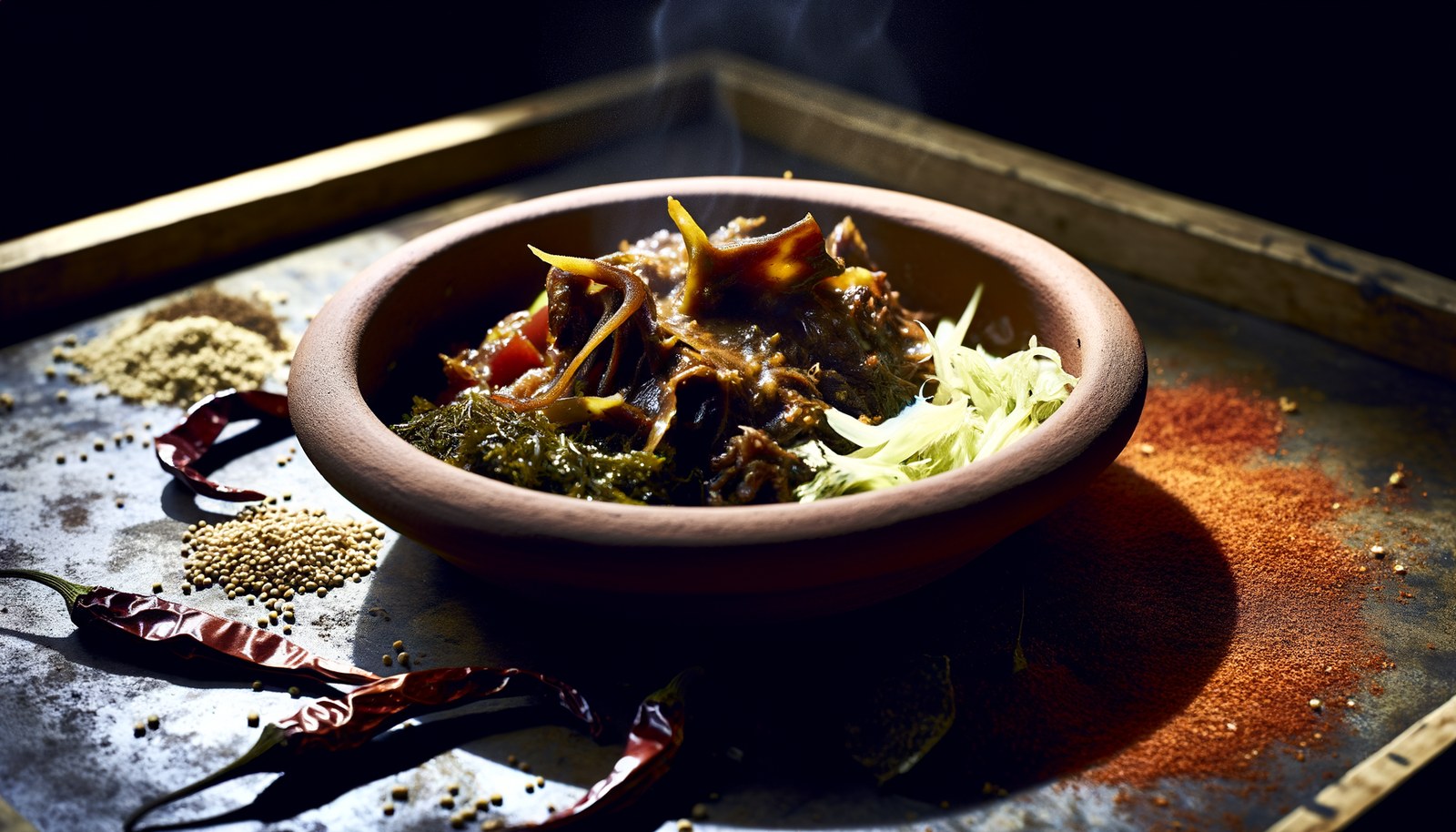
The injera is the plate. The injera is the silverware. The injera is also, often, the best thing on the table.
The food that was not built for you is usually the food worth finding.
We test dishes so you don't have to. No spam — just the best food, neighborhood by neighborhood.