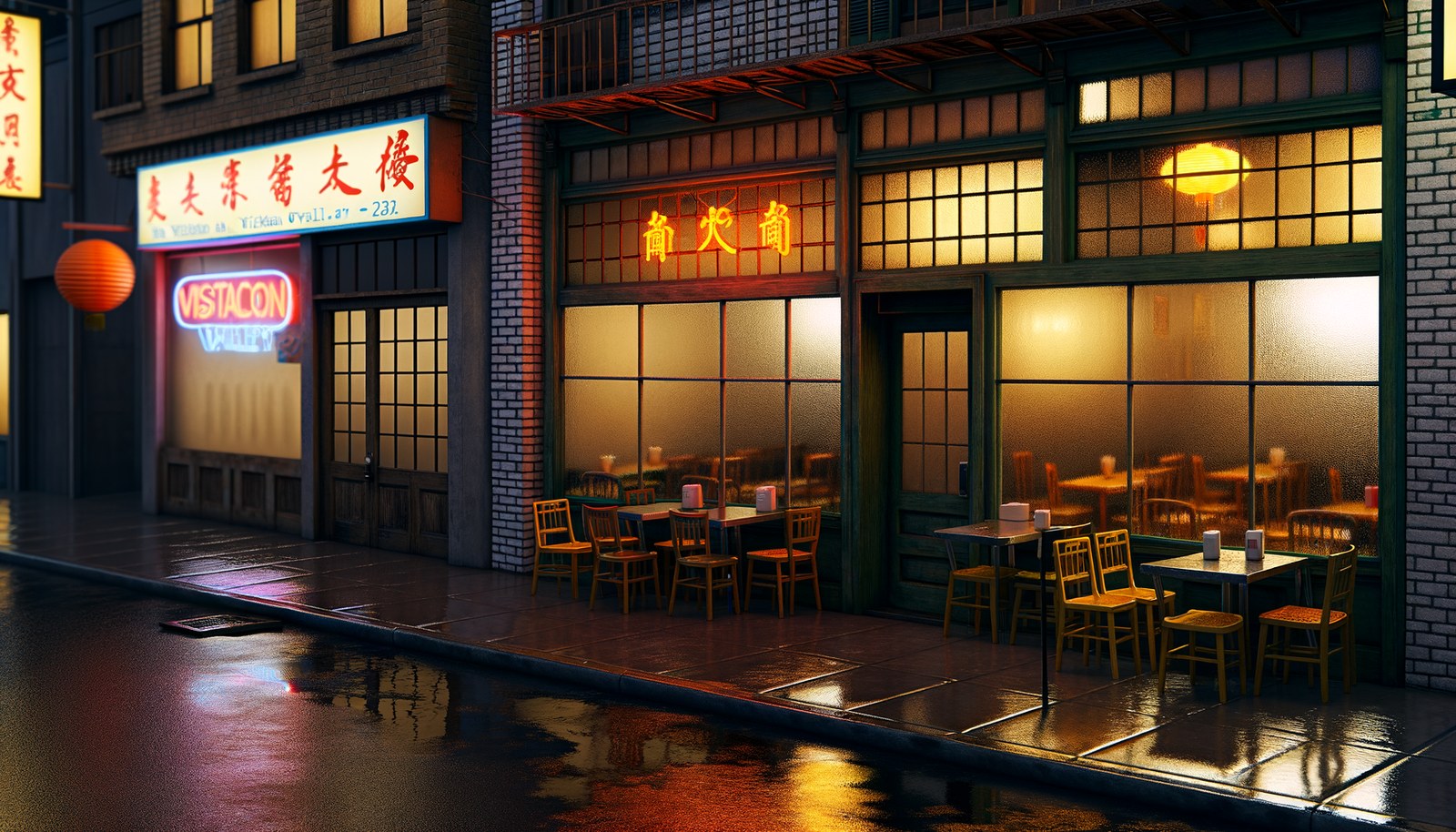
San Francisco · Visitacion Valley
The tourist map ends at the Richmond and the Sunset. Visitacion Valley is where the food kept going.
The Map Ends at the Wrong Street
San Francisco has two officially recognized Chinese food neighborhoods. The press knows them. The tourists know them. The Richmond and the Sunset have their grocers, their dim sum palaces, their BBQ windows with the ducks hung in glass. That story has been written many times and it is not wrong. It is also not complete. The city's Chinese kitchen extends well past the blocks that appear in the guides, and the part that extends furthest south — down past the freeway, past the Schlage Lock building, into Visitacion Valley — is the part that the algorithm noticed first.
Leland Avenue is a short commercial corridor. It does not have a marquee restaurant. It does not have a line that circles the block on Sunday mornings the way Clement Street does. What it has is a density of Cantonese working-class cooking that has not shifted in thirty years — through tech booms, through displacement, through the complete renegotiation of almost every other neighborhood in the city. The storefronts are small. The signage is in Chinese first, English second if at all. The economics work because the customer base is local and loyal and has been eating at the same tables since the 1990s.
The historical pattern here mirrors what happened in other SF corridors. The city's history of San Francisco Chinatown, the oldest in the country, produced successive waves of settlement that moved outward from the original core as each generation stabilized. Visitacion Valley absorbed working-class Cantonese families who could not afford to stay in the Richmond as rents climbed in the 1980s and 1990s. The restaurants that opened to serve those families are still open. The families are still there.
What the Food Actually Does
The congee at Golden River Restaurant is the standard by which the rest of the corridor gets measured. It is cooked until the rice loses its individual form — until the grain has fully given itself to the broth and what remains is a single, dense, unified thing. That process takes time and it takes intention and it takes a kitchen that has been doing it long enough not to rush it. The century egg and pork version is the order. The wonton soup is also worth noting: the skins are thin, the filling is pork and shrimp in the correct proportion, and the broth is clear and not overseasoned.
The dim sum at Hing Lung Restaurant runs on weekends and operates on a simple principle: the trays keep moving until they are empty. The har gow wrappers are translucent and hold their shape without tearing. The char siu bao — baked, not steamed — carry a caramelized top and a pork-to-dough ratio that most Chinatown bakeries get backward. The lo mai gai is the thing to order last: glutinous rice, Chinese sausage, and chicken wrapped in lotus leaf and steamed until the leaf's smell has moved all the way into the rice. It stays hot. Order it last and it will still be warm when you finish everything else.
The bakery end of the corridor is anchored by VV Bakery and Leland Bakery. Egg tarts, pineapple buns, cocktail buns, wife cakes — the glass case at VV is restocked twice before noon on weekday mornings and the line at the register is always four people deep by 8:30am. The mapo tofu appears on a handwritten lunch board. The har gow is sold by the piece for takeout. These are not accommodations for the uninitiated; they are just how the place operates.
What Scores High and What the Guides Miss
The scoring pattern across the Leland Ave corridor is consistent and specific. Execution runs in the high eighties and low nineties across the board — these are not restaurants that are getting by on nostalgia; the food quality holds. Value is uniformly high. A full dim sum table for two at Hing Lung Restaurant lands well under thirty dollars. The congee at Golden River Restaurant is under eight. The egg tarts at VV Bakery are a dollar fifty each. The algorithm noticed these numbers before the neighborhood appeared in any press roundup. The gap between the scores and the coverage is measurable and wide.
Context scores are where these restaurants separate from their counterparts in more trafficked neighborhoods. The dining rooms are not performing for an audience. The tables are full of people who live within six blocks and have been eating here for decades. New Lun Ting Cafe and Sun Fat Seafood operate on the same axis — the regulars set the standard, and the kitchen cooks to that standard rather than to a tourist expectation of what Cantonese food should taste like. That distinction matters more than most reviews acknowledge.
Compare this to how South Indian food on Polk Street and in the Tenderloin functions: neighborhood anchors that serve a specific community and score high precisely because they are not calibrated for outside approval. The corridor dynamic is the same. The cuisine is different. The underlying principle — that the food is best when the room is full of people who would know if it dropped — holds across both.
The Neighborhood as a Working System
Visitacion Valley has one of the highest concentrations of Filipino and Chinese residents in San Francisco, and Leland Ave reflects both communities across different storefronts. The Chinese food corridor is specifically Cantonese — the Toisanese and Cantonese families who moved south from the Richmond and the Sunset in the 1980s and 1990s brought their cooking with them and built restaurants for themselves, not for the city's restaurant-reviewing infrastructure. The infrastructure eventually showed up at the Richmond and the Sunset. It has not yet consistently arrived here.
That lag is the article. The same dynamic produced the Mission's Mexican food corridor, which ForkFox covered separately — a neighborhood kitchen that operated for decades at full quality before the food press arrived to describe it as a discovery. The food was not waiting to be discovered. The food was just cooking. Leland Ave is doing the same thing now, in a different kitchen, thirty blocks south.
The practical result for anyone eating in San Francisco is simple: the Chinese food in Visitacion Valley is as technically sound as anything in the Richmond, the value math is better, and the rooms are not crowded with people who found the restaurant on a best-of list. That is not a permanent condition. The algorithm noticed. The press coverage will follow. The window between those two events is the window to eat here.
The algorithm noticed Leland Ave before the food press did. That gap is the whole story.
The best version of a neighborhood kitchen is the version that has never needed you to find it.
We test dishes so you don't have to. No spam — just the best food, neighborhood by neighborhood.